
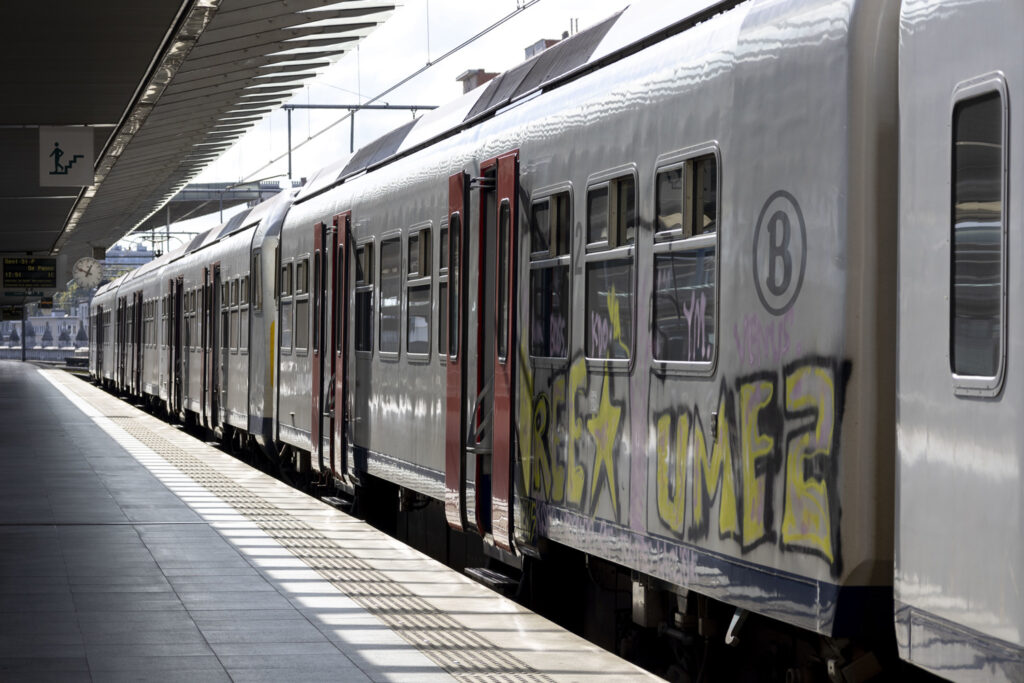
The board of directors of railway company SNCB confirmed the choice of Spanish train builder CAF as the preferred bidder for the supply of new railcars in a press release on Wednesday.
The order for new trainsets already has a long history. The tender was launched in December 2022. It involves up to 600 new railcars by 2034, at an estimated cost of between €1.7 billion and €3.4 billion. The first phase involves 180 railcars, accounting for 54,000 seats.
In late February this year, CAF was named as the preferred bidder. The Spanish company was reportedly not the cheapest candidate, but it scored best based on all criteria taken into account. For instance, CAF's trains would consume less energy, making a big difference in costs in the long run.
However, the Council of State suspended that first decision because it was not transparent enough. Thereupon, SNCB did some recalculations, where CAF again came out on top. And on Wednesday, "the board of directors decided to reconfirm CAF as the preferred bidder and this on the basis of a justification that takes into account the ruling of the Council of State," SNCB said.
The rail operator will now consult further with CAF to reach a final agreement. However, the other candidates - France's Alstom and Germany's Siemens - could still appeal the new decision again.
The choice of CAF was already widely criticised. This has mainly to do with Alstom's train factory in Bruges, which employs several hundred people. According to the unions, the factory is doomed if Alstom grabs next to the contract. Several politicians also do not understand why local employment was not chosen.
Mobility Minister Jean-Luc Crucke repeatedly stressed that SNCB had followed European tendering rules, which do not allow local production to be favoured. In the press release, SNCB said that the three candidates, and therefore CAF, "mention the use of local suppliers." The railway company asks CAF to make that slogan concrete.
Minister Crucke also hints at such a local return. "I expect this contract to benefit the Belgian economy in terms of employment, subcontracting and industrial innovation. The negotiations should now focus on that direction," he responded.
SNCB is furthermore asking the Spanish company to confirm that its operations respect international law and human rights, following criticism that it would cooperate with Israeli occupations.
The first delivery is planned in principle for 2029. "The trainsets will offer all the necessary comfort to passengers, with autonomous accessibility for persons with reduced mobility, quiet zones, information screens, connectivity and enough places for bikes. The order also includes battery trains that will eventually replace the current diesel trains," said SNCB.
The 2023-2032 public service contract that SNCB concluded with the state states that half of the train fleet will be renewed by 2032. This is necessary, among other things, "to cope with the expected growth in passenger numbers, to increase customer comfort and to replace obsolete, defect-prone rolling stock with more flexible and energy-efficient rolling stock."
Alstom responded in disappointment. "We will now take the time to evaluate the impact on Alstom and our options," the company expressed in a statement. Siemens did not wish to comment.
