
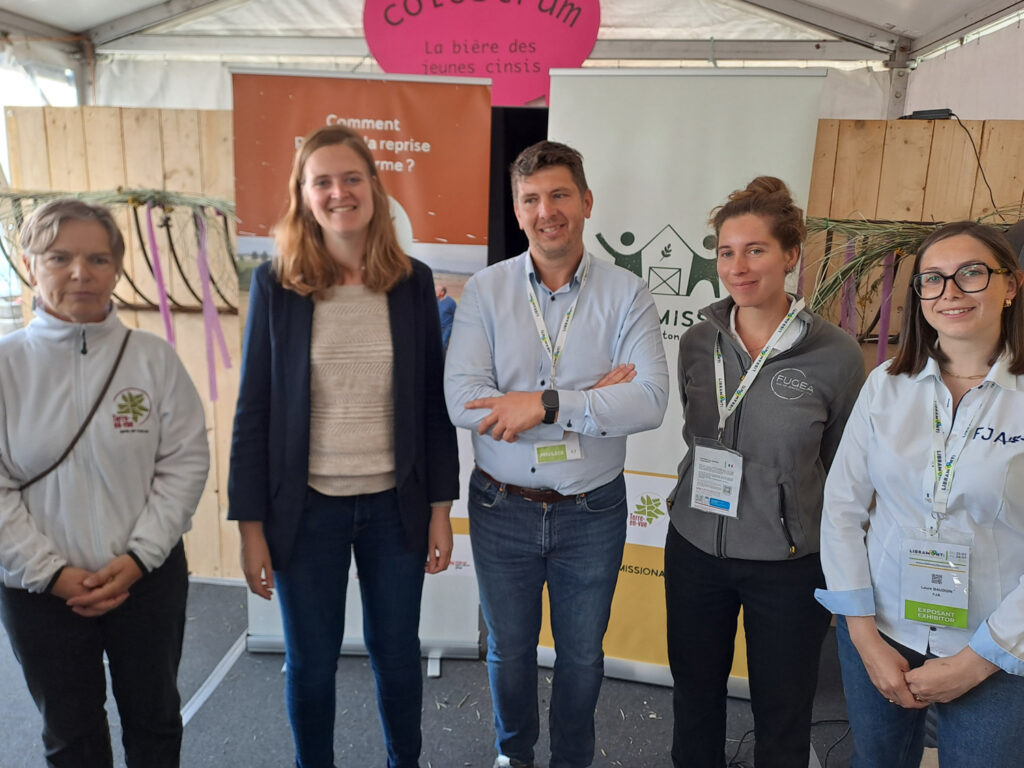
Family farming in Wallonia is ageing, and cannot afford to miss any opportunity for generational renewal, such as Trans’Mission, a pilot project dedicated to supporting farmers in the challenging process of farm succession.
The project is backed by Wallonia and driven by the agricultural unions FJA and Fugea, along with the non-profit organisation Terre-en-Vue.
More than half of Walloon farmers are over 50 years old, so significant changes could be expected in agriculture over the next 15 years.
Over 6,800 farms may stop operating by 2035
It is estimated that over 8,000 of the existing 12,500 farms in Wallonia will stop operating in the next decade, and only 20% of farmers eligible to pass on their farms have identified a successor.
This suggests that over 6,800 Walloon farms may be sold, dismantled, or absorbed by external actors by 2035.
Launched in 2022, Trans’Mission offers free, confidential support to farmers looking to transfer their farms—a complex process with substantial financial stakes that can be emotionally challenging.
This transition typically takes “three to five years” to complete, according to Fannie Jenot, project manager at Fugea for Trans’Mission.
In two years, Trans’Mission has supported nearly 200 farms, of which only 36 have successfully transitioned to non-family successors.
Need for focus on farms without successors
Project leaders stress the need to focus on farms without identified successors. These farms are deemed most difficult to reach and are at higher risk of disappearing, being dismantled, or being sold to the highest bidders, which prevents generational renewal.
Wallonia’s Minister of Agriculture, Anne-Catherine Dalcq, acknowledged the urgency, stating: “It is now that we need to act.”
She emphasised that establishing young farmers is essential not only for food autonomy but also for maintaining a vibrant agricultural landscape and preserving villages.
However, attracting young people to agriculture also requires better economic prospects in the sector and solutions to issues such as access to land, high land prices, and red tape.
