
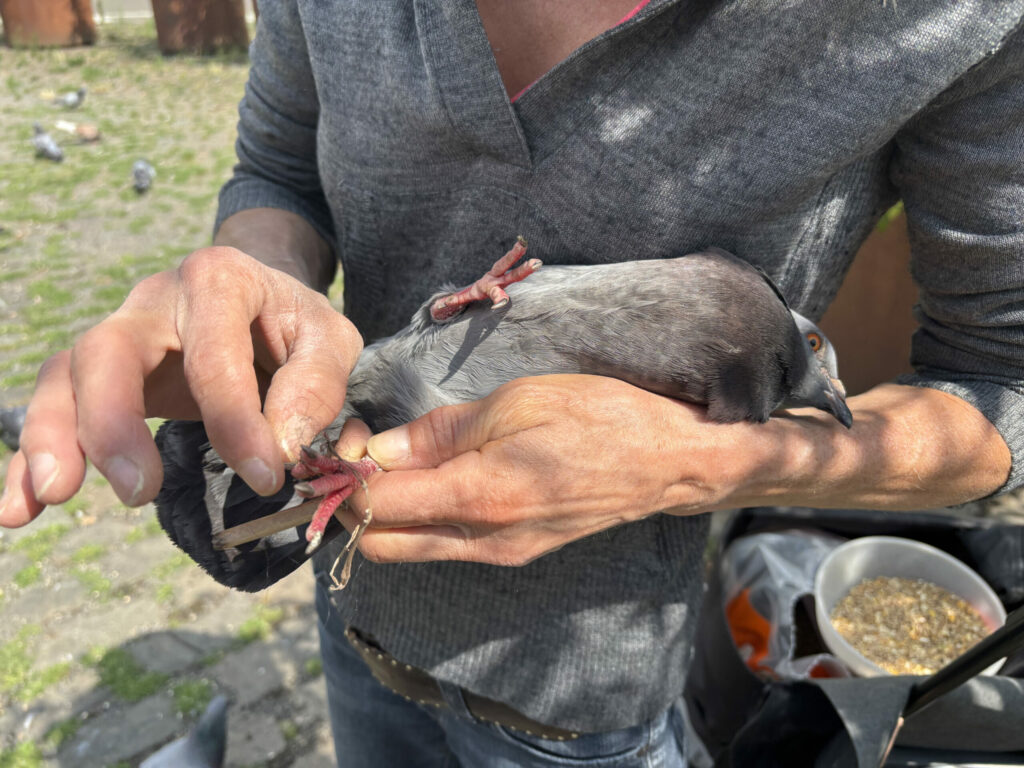
You might have seen her with a neon jacket and a bucket of grain in the middle of a flock of pigeons. Stéphanie De Jonghe walks through the leafy streets of Ixelles, feeding them. "The pigeon lady", as some may refer to her, has a quiet sense of mission. And it's greater than one might think.
It's 9 am and Stéphanie is already up around the ponds of Ixelles, a bit frail and grumpy but with great zeal. She rolls her cigarette, takes a sip of her hot coffee, and gazes into the flock, looking for any pigeon that appears different or is limping.
We met by accident on a cloudy day, and she invited me to accompany her on her afternoon mission to care for the pigeons.
Since 2016, Ixelles has taken a rather progressive approach to its pigeon population.
Instead of culling or poisoning, the previous administration launched a contraception programme: measured doses of nicarbazin-laced feed, distributed under controlled conditions, to gently reduce urban pigeon numbers while ensuring the birds stayed healthy and fed.
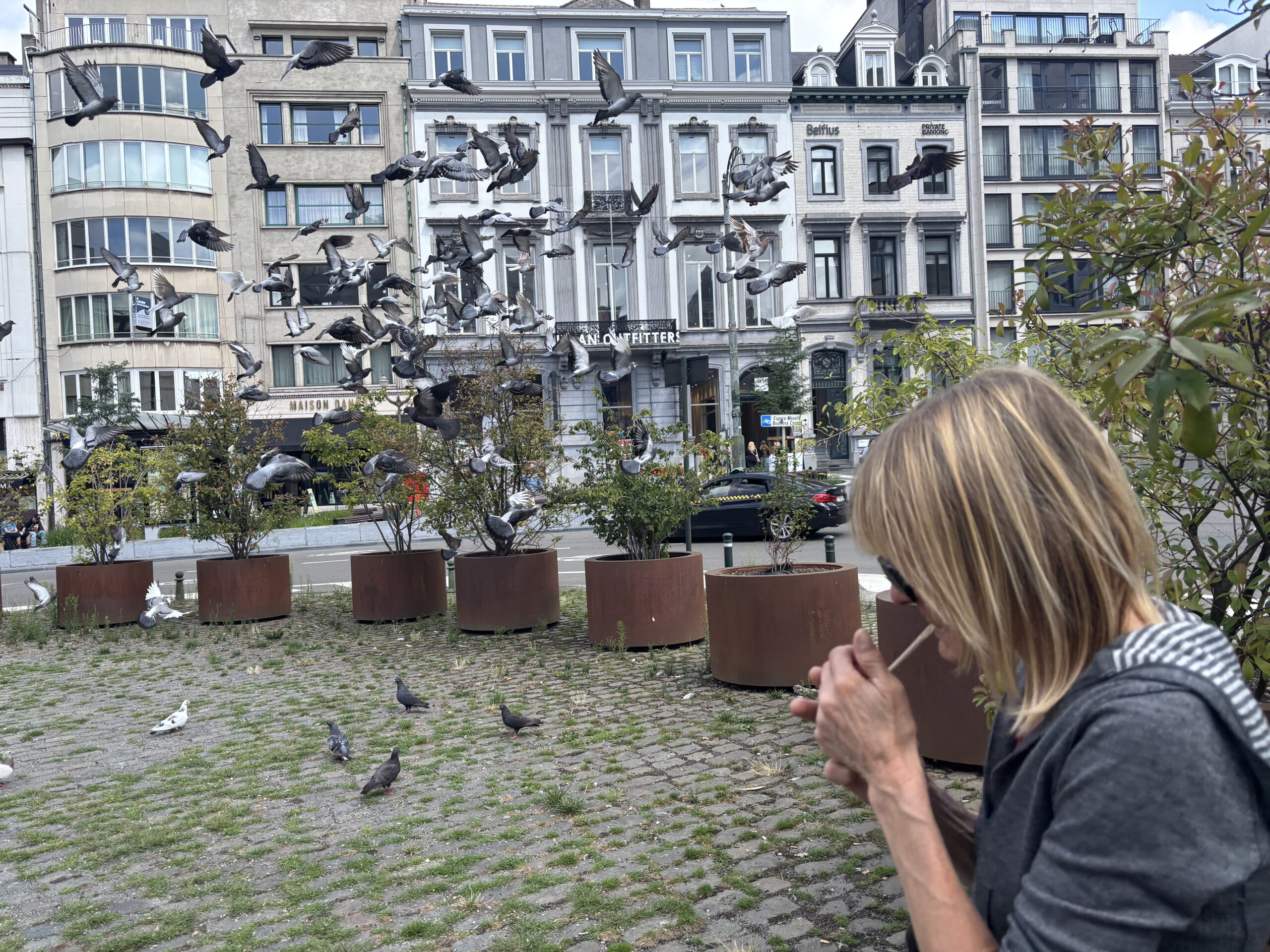
Stéphanie has been caring for pigeons for almost 16 years, more than a hobby for her, she has a mission to better protect their population by recovering the contraception programme in Ixelles.
However, that programme is now suspended. The local elections last October brought a power shift, and with it, a pause in policy.
A public contract managed by the former PS-Ecolo majority expired. The new coalition (PS-MR-Les Engagés) insists it is waiting for guidance from Bruxelles Environnement, the regional environmental body, before acting.
In the meantime, the contraception has stopped – and the pigeons are multiplying.
"It only takes a few months to lose years of work," Stéphanie tells me, frustration etched on her face.
"We’re seeing new chicks already. 40% of what we achieved in three years could be undone this summer alone."
Les Plumes d'Ixelles, her association, composed entirely of volunteers, feeds nearly 2,000 pigeons every day across Ixelles.
But their hands are tied: while the commune authorises them to feed the birds – a rare exception to a city-wide ban – they’re forbidden from using the contraceptive grain that once underpinned the entire programme.
The reason? The contraceptive might be harmful to the environment, and without ensuring it is not, the suspension is inevitable.
However, the real problem is that without a government in Brussels, it is hard to make any decisions, informed or not.
The story of the flying rodents
Most of us might think that pigeons are dirty, invasive, and downright a nuisance. But Stéphanie thinks otherwise. Their story is heartbreaking.
The pigeons we see roaming our city have a far nobler backstory than their modern reputation suggests. Domesticated over 5,000 years ago in the Middle East, ancient civilisations revered them for their homing instinct, intelligence, and beauty.
Romans used them to carry messages across empires; European nobility bred them for both food and pleasure. Even into the 20th century, war pigeons were decorated for their service in battle.
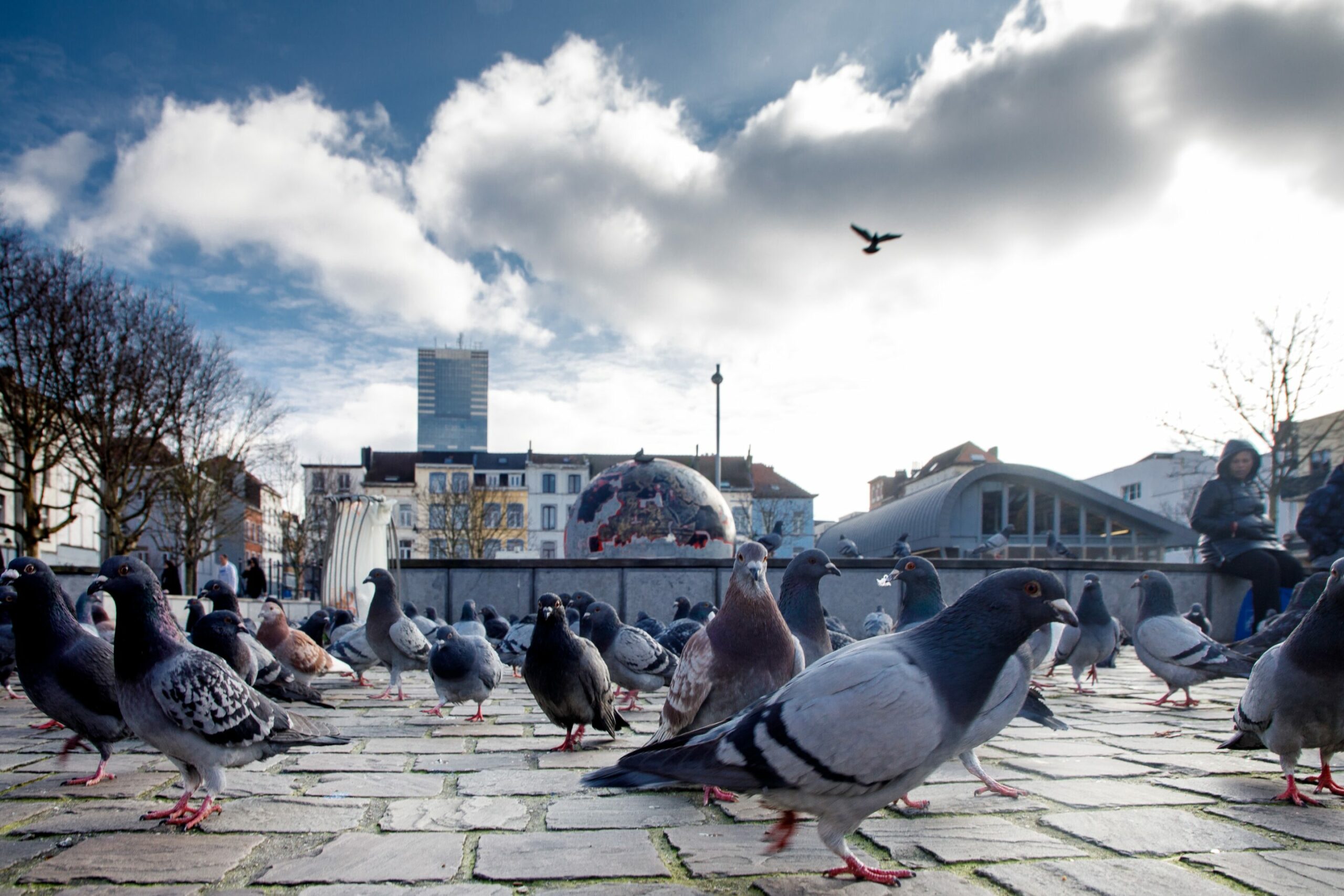
Pigeons pictured near the Clemenceau metro station after a deadly shooting, Sunday 16 February 2025. Credit : Belga/Hatim Kaghat
It was only with the advent of mass urbanisation that pigeons fell from grace.
As Brussels grew, and waste management struggled to keep pace, the once-prized birds became an easy scapegoat for mess and unsightly droppings; not to mention that they were bred and genetically modified to lay eggs every two months.
The saddest part is these urban pigeons, like the ones in Ixelles, are deeply dependent on human activity for food. In the absence of a structured feeding and population control system, they turn to bins, leftover kebabs, or anything else they can scavenge – prompting residents' complaints, which in turn fuel further crackdowns.
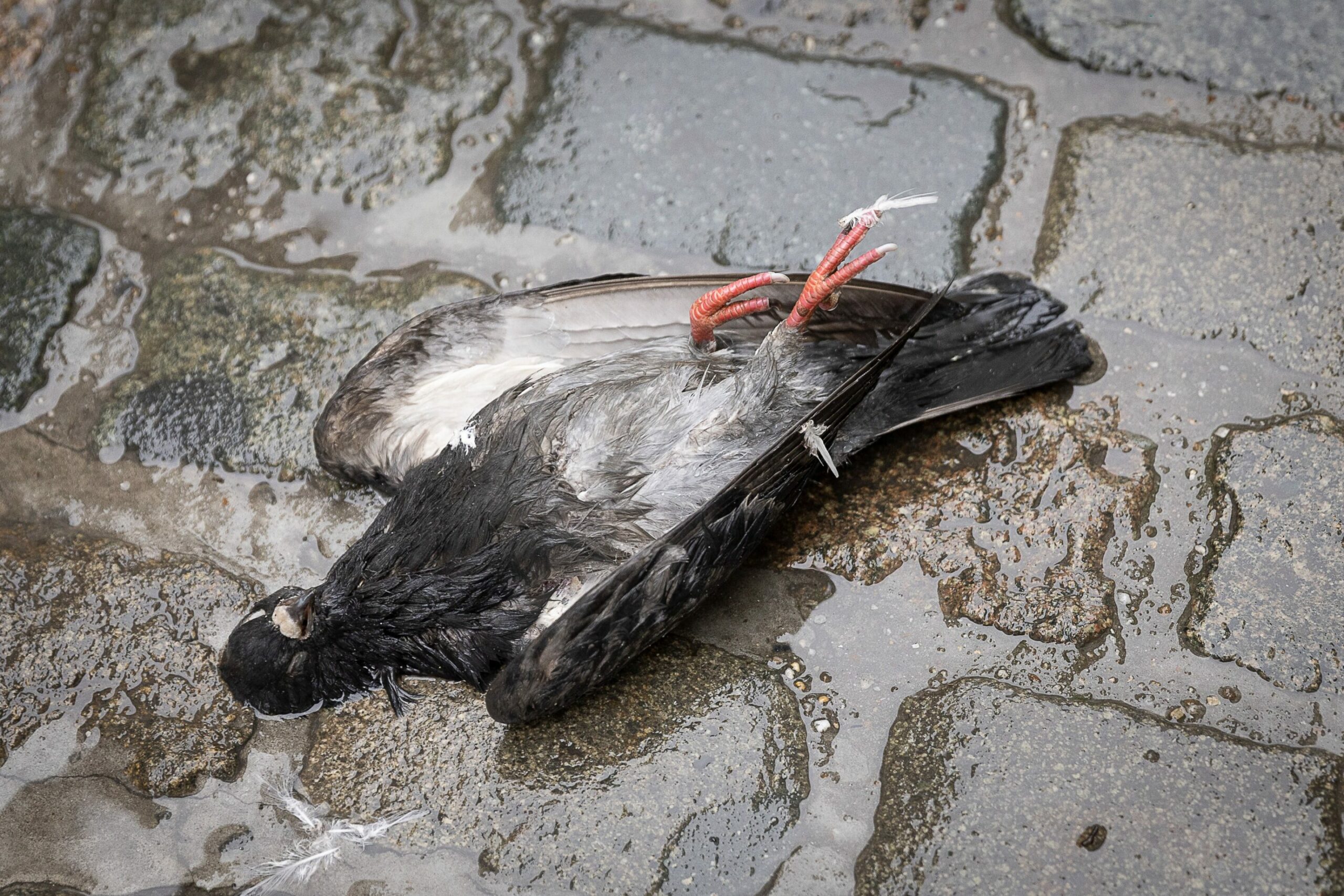
A dead pigeon pictured on the square outside a Minister's council meeting of the Flemish Government at the Minister-President's offices, in Brussels, Friday 10 March 2023. Credit: Belga/ James Arthur Gekiere
"The idea that if we stop feeding them, they’ll just go away is a fantasy," she tells me. "They’re already here. You either manage the population humanely, or you let chaos take over."
Although €70,000 remains earmarked in the Ixelles budget for population control, the funds are frozen pending approval. In the meantime, residents feed pigeons as a pastime: dry bread, junk food, snacks, and in some cases, even chicken meat.
Meanwhile volunteers are told to carry on - but without the one tool that made the system work.
Targeting pigeons
There's a product distributed in automatic machines around the city: pieces of hard corn coated with an anti-parasitic agent, which has contraception as a side effect.
The technique is recommended by several expert organisations, including GAIA, and is overseen by NeorniVet's Vets for City Pigeons, which specialises in avian medicine and veterinary products.
The system targets dominant pigeons which make up 15% of the pigeon populations and drive 90% of the reproduction.
Footage of feeding time shows that it takes about one minute, after which all pigeons leave. This means it is very difficult for other species to butt in and take the food.
The size of corn kernels means that all birds smaller than pigeons, such as sparrows and blackbirds, are anatomically unable to eat it.
Birds of prey that eat pigeons will also not become sterile because nicarbazin splits into two components when ingested by pigeons, meaning bigger birds don't come into contact with nicarbazine in its full form. This ensures there is no effect on their reproduction.
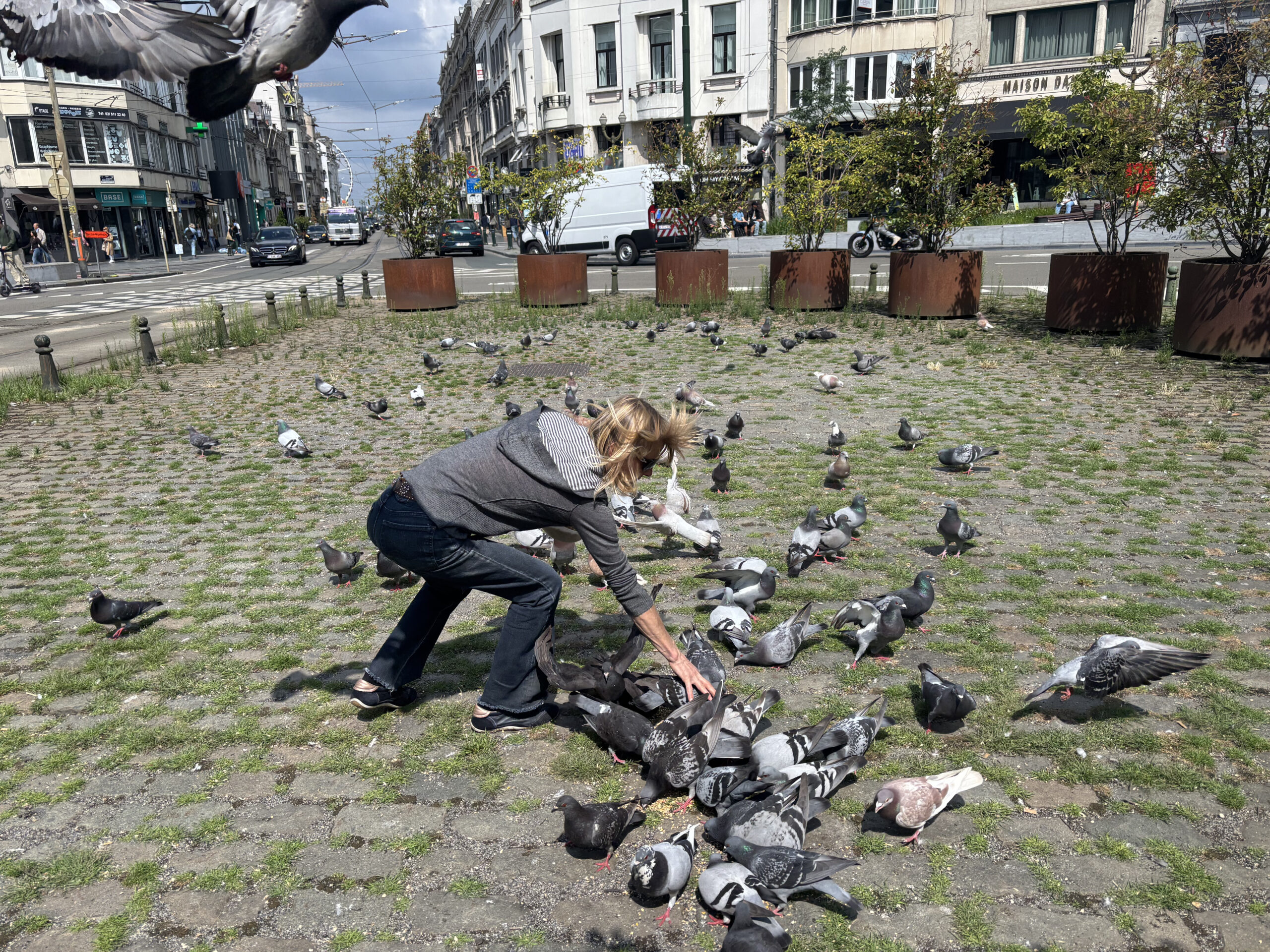
Stéphanie picking up a limping pigeon
As we go up to Rue du Levant, Stéphanie still looks for every detail in the grass, pond or street that might concern pigeons (even picking up a dead one).
She concludes our meeting by saying that she does what she does because no one else will. She argues that this is a wider reflection of how we treat the forgotten, the marginal, the inconvenient as a society.
If we can’t manage to care for pigeons (who are entirely here because of humans) what does that say about us? She fears nature will find a way. And it won't be pretty.
