
Belgium’s decision to raise the cost of acquiring citizenship from €150 to €1,000 is sparking concern among newcomers, who say the move may place meaningful integration further out of reach.
As part of the so-called “Easter Agreement,” the Belgian coalition has passed what it describes as the strictest migration and asylum policy in its history, including a seven-fold increase in the cost of acquiring nationality.
The standard declaration of nationality, previously priced at €150, will now cost €1,000, making Belgium one of the most expensive countries in the EU for naturalisation, behind only Austria, Ireland and the Netherlands.
Shaheen fled Palestine and now runs his own business in Ghent, having arrived in Belgium in 2021. Hor him, the change feels like a message — and not a welcoming one.
“Today, I have no home now because I’m from Palestine. So Belgian citizenship is important for me,” he told The Brussels Times. “But if my application is easily rejected, I will leave.”
Although he hasn’t yet applied for citizenship (applicants must have been legally residing in Belgium for at least five years prior to applying), he’s sceptical. If he has to leave Belgium, Shaheen will go to Spain where the cost for citizenship is €104.
“What the Belgian government is doing now is incomprehensible and illogical. These decisions go against all agreements. It feels like people like me are not welcomed," he said.
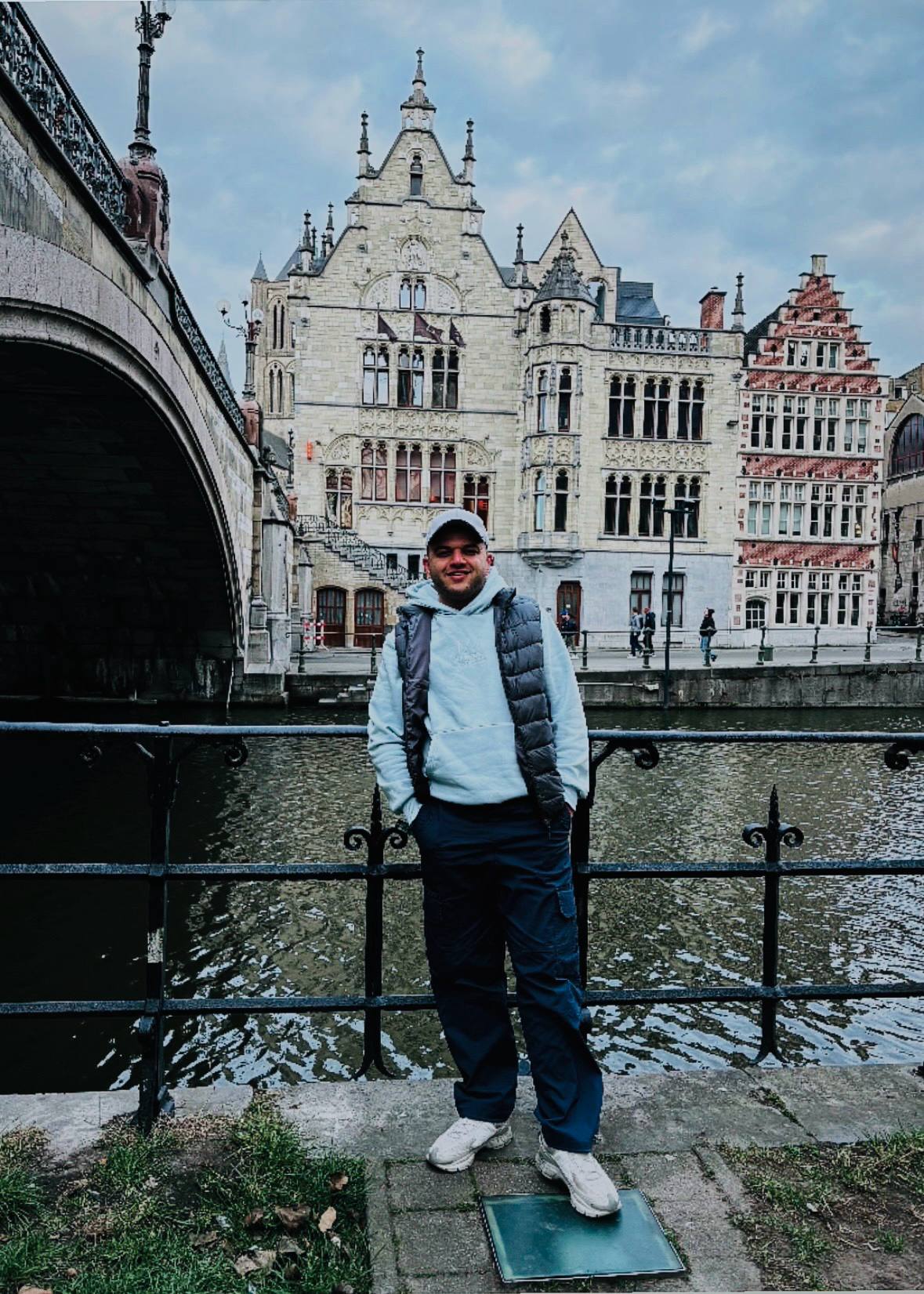
Shaheen pictured in Ghent. Credit: Léa Huppe.
Shaheen’s frustration is echoed by many immigration experts. Speaking to The Brussels Times, Thomas Huddleston, a migration researcher at the University of Liège, said: “While raising the cost of naturalisation sounds like something that is going to help the economy and integration, it actually does the exact opposite.
“Setting such an artificially high cost tells most immigrants, including expats and high-income ones, that citizenship is not for them.”
A new gate to integration
Under the new rules, aspiring Belgians will not only have to pay more, but also pass a mandatory language test at B1 level and a citizenship exam (which was A2 level), evaluating their understanding of core democratic values and Belgian governance. Previously, integration could be demonstrated through work, education, or successful participation in community life.
For Elie, a Lebanese senior finance team leader living in Brussels’ EU quarter, the new requirements are not a deal-breaker. “I understand the need to be selective,” he told us. “Belgium has the right to be more strict about who they give nationality to. I work, I pay taxes, and I speak French — I believe my application will be accepted."
Elio, who, like Shaheen, arrived in Belgium in 2021, plans to apply next year and says the cost, while high, is manageable for him. “My experience in Belgium has been good. It’s a good country to work, stable, with good income, and everything is available here,” he said.
A barrier, not a bridge?
In 2023, a record 55,000 people were granted Belgian citizenship. The new measures, which come into effect “as soon as possible” following publication in the Official Gazette, could reverse that trend.
Since the announcement of the new measures, Brussels municipalities have seen a sharp rise in the number of nationality-related cases coming across their desks.
Over the six-month period between 1 January 1 and 1 July, the number of nationality-related files being dealt with in Uccle increased by 20 to 25 % compared to the same period the previous year. Carine Gol-Lescot, the commune's alderwoman for civil registry said: “The number of accepted applications has grown by 25 %, but the increase in requests for information is even more significant."
Beyond the financial cost, the concern is existential. For Shaheen, citizenship is not just paperwork — it’s stability, a future. But with the new rules, he says he’s unsure whether that future includes Belgium.
