
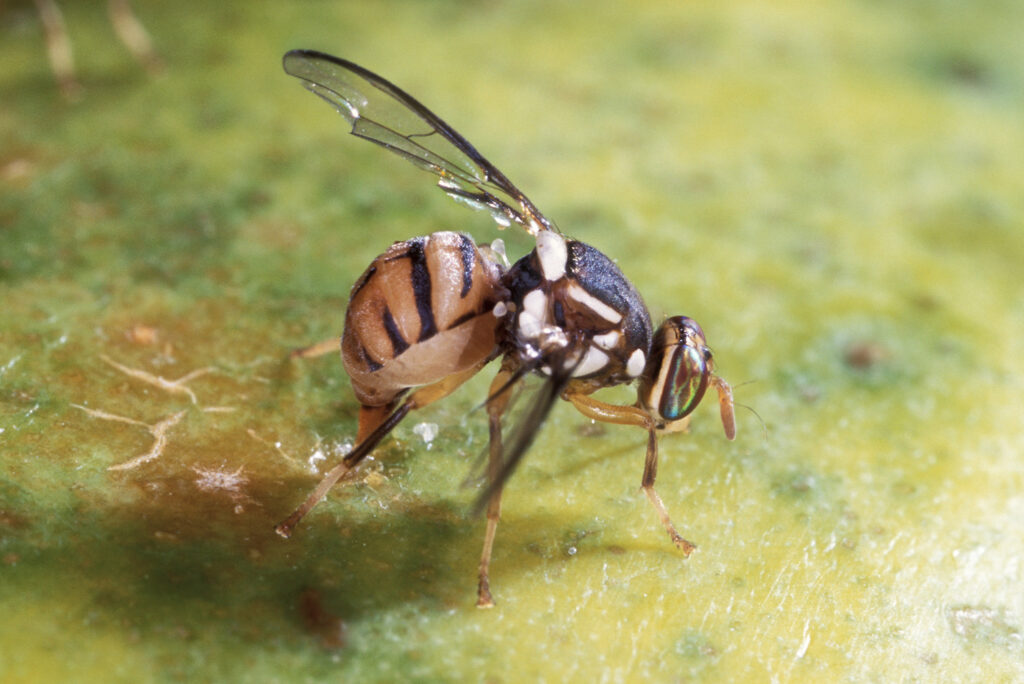
The Federal Agency for the Safety of the Food Chain (FAFSFC) reported last week that it found two specimens of the oriental fruit fly in Koekelberg and Antwerp, confirming the initial report by VRT NWS.
The insect poses no risk to humans or animals but is harmful to crops, as its larvae consume the flesh of fruits and vegetables, rendering them inedible. Since 2023, thirteen Oriental fruit flies have been detected in Belgium.
To curb its spread, FAFSFC monitors 30 high-risk sites each summer and continues to inspect imported fruit and vegetable crops year-round. This insect can grow up to one centimetre long and resembles a wasp.
Last week, FAFSFC confirmed one of the insects had been found in a trap in a Molenbeek market.
The oriental fruit fly is commonly found in warm countries in Africa and Asia. Afsca advises holidaymakers not to bring fruits or vegetables back from abroad to prevent their introduction. Belgium’s cold winters further reduce the chances of the fly establishing long-term residency.
Afsca urges consumers, producers, and traders to remain vigilant and report any sightings immediately via the observation.org website or the free Obsidentify app.
