
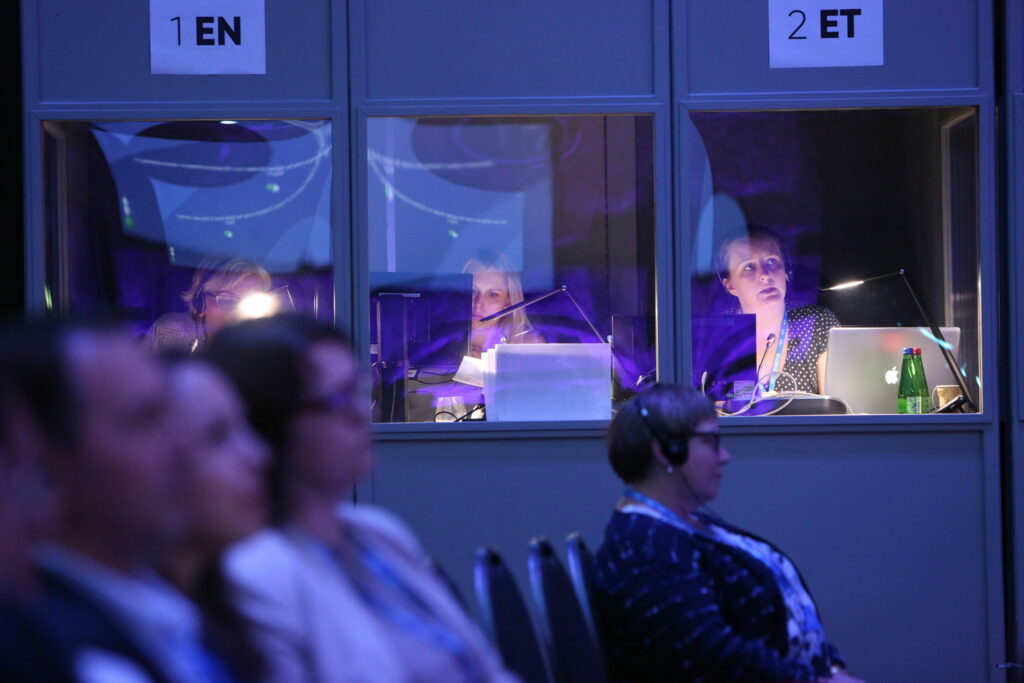
With the rise of artificial intelligence tools, there is a growing sense that technology is threatening jobs in sectors across the board. With the advent of language platform DeepL's latest voice translation tool, are interpreters at risk of being replaced by AI?
DeepL announced several updates to its real-time speech translation software, DeepL Voice, on 23 July. These updates include expanding the number of supported languages (adding Mandarin, Ukrainian and Romanian), and more features to increase productivity in business meetings (such as downloading full transcripts and translations of meetings).
The company added that these features will also soon be integrated into Zoom video conferences to strengthen "smooth multilingual communication in the international workplace" and combat operational problems due to language differences, according to a press release.
"Internationally operating companies cannot afford delays caused by language barriers," said Jarek Kutylowski, CEO and founder of DeepL. "The new updates for DeepL Voice […] will make multilingual communication even smoother, more accessible and more effective for international teams."
But if DeepL voice is making "multilingual communication even smoother, more accessible and more effective", where does this leave human interpreters who spend their lives perfecting their craft?
The beginning of the end?
UN-accredited freelance interpreter Jaciara Topley Lira believes interpreters' work will continue to decline as translation tools develop, predominantly to cut costs.
"With the huge funding cuts at the UN, I've heard a lot about using AI to cut costs. The obstacles right now are [regional] accents and less common languages but it's only a matter of time before the AI has enough data for it to be good enough," she tells The Brussels Times.
"As many of these tools weren't only developed by interpreters, the aim hasn't been only to improve communication: it's to drive costs down. Interpreters are seen as an expense that can be cut," she says, adding that the reason interpreters are expensive is due to the intense training and amount of time spent learning their languages.
"We live in an age where there's an obsession with cutting costs, as if costs aren't people's jobs."
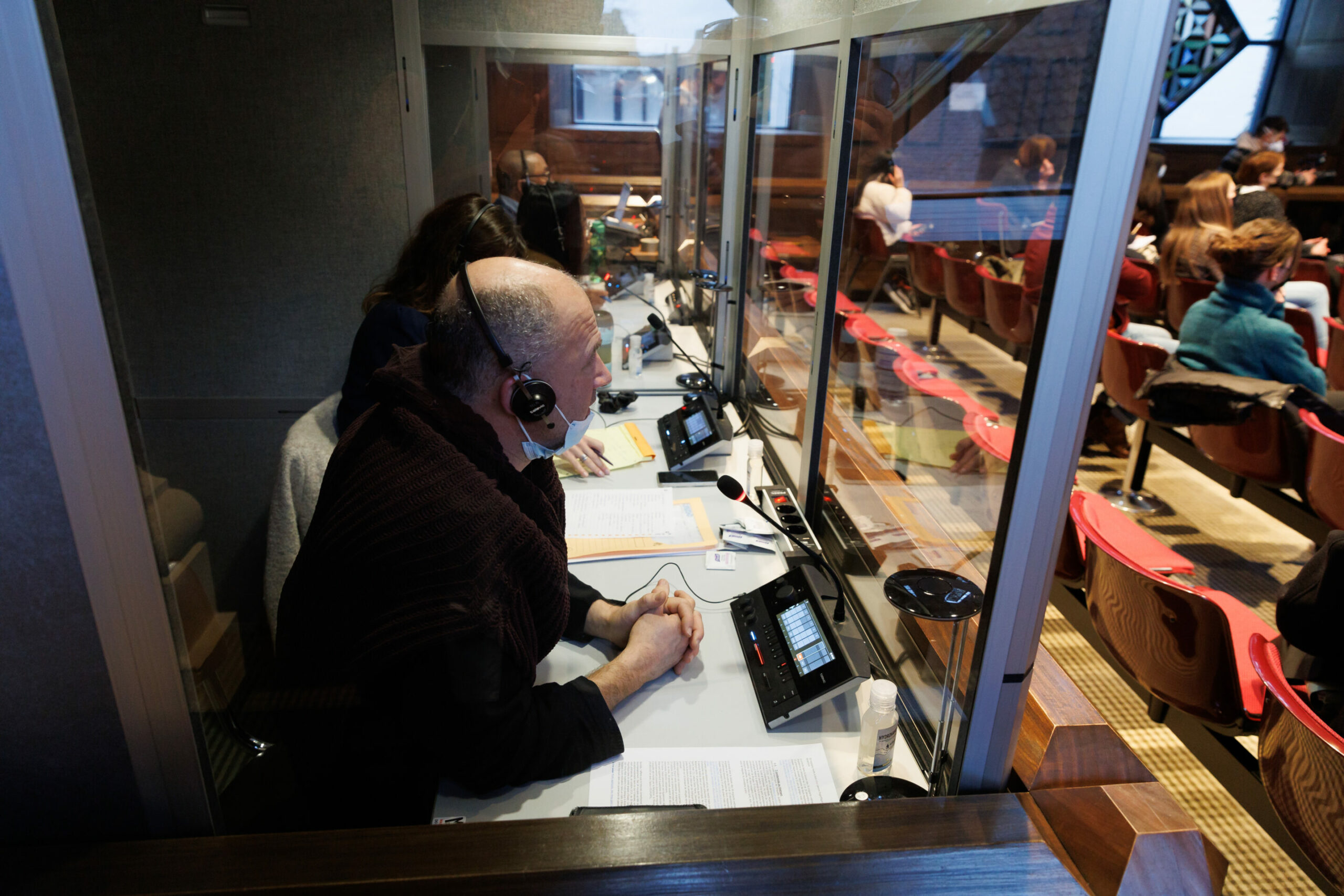
Interpreters pictured during a session in a court in Brugge. Credit: Belga / Kurt Desplenter
On the other hand, Professor Bart Defrancq, an experienced interpreter trainer and researcher in interpreting technologies at the University of Ghent, says DeepL Voice's expansion is nothing new and automated interpreting still poses a plethora of issues. He therefore does not believe human interpreters are at risk just yet.
"DeepL and Zoom are by no means the only or earliest provider of such technology. KUDO and Interprefy were among the first and started offering those services at the end of 2022," he tells The Brussels Times.
Defrancq says that, according to their usage reports, the introduction of automated interpreting has not shrunk the market of human interpreting. "It is rather an option that users choose who did not previously make use of interpretation."
He cites issues of confidentiality of data and accountability and in some contexts the legality of procedures as some reasons why automated interpreting does not (so far) constitute a real threat to human interpreting. Moreover, he says the quality of the service falls short of human interpreting.
"When you hear a machine, I think you lose something, emotion, more idiomatic language and maybe some listeners will zone out," Topley Lira adds.
It is nevertheless clear that the interpreting market isn't what it once was, and both interpreters and translators have seen a considerable drop in their work in recent years. "Because of AI, the interpreting market is changing. I wouldn't recommend anyone in their 20s study interpreting because the market will become much smaller," Topley Lira concludes.
