
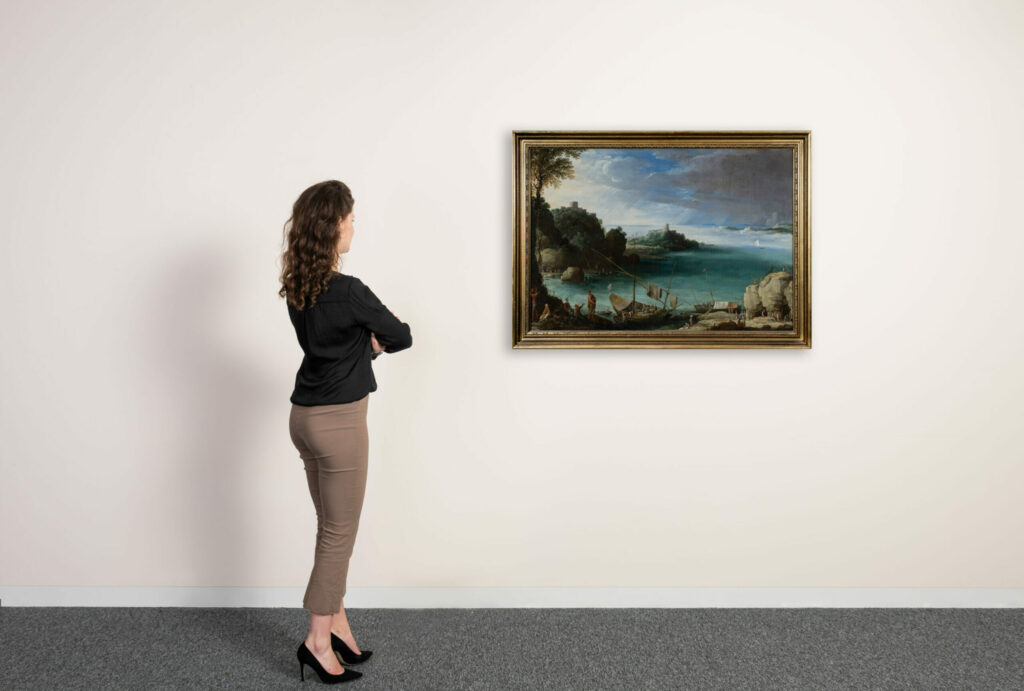
A previously unknown painting by influential Flemish landscape artist Paul Bril has been discovered in the UK. It will soon be put up for auction after having had its authenticity now confirmed.
Depicting a coastal landscape, the painting encapsulates a natural harbour on the Mediterranean coast, with fishermen and merchants on the shore.
The rare discovery marks a major addition to the oeuvre of one of the most influential painters in late 16th/early 17th century landscape painting in Italy and Northern Europe.
After having trained in Antwerp, Flemish painter Paul Bril (1554–1626) was among the many Flemish masters who moved to Rome, attracted by its classical ruins and patronage from local aristocracy and the Roman Catholic Church.
Bril moved there in 1575, following his older brother Matthijs. He soon became one of the leading landscape painters in the Eternal City, which in the sixteenth century was among the cradles of Western culture and art.
'Something special'
The previously unknown painting was recently brought in for evaluation at leading UK auctioneers Woolley and Wallis, after having been miscatalogued by another auction house. It was consigned from the private collection of the Charrington family of Winchfield House in Hampshire, UK.
During the evaluation, Woolley and Wallis’ art specialists were quick to spot certain features which led them to the work of the Flemish master.
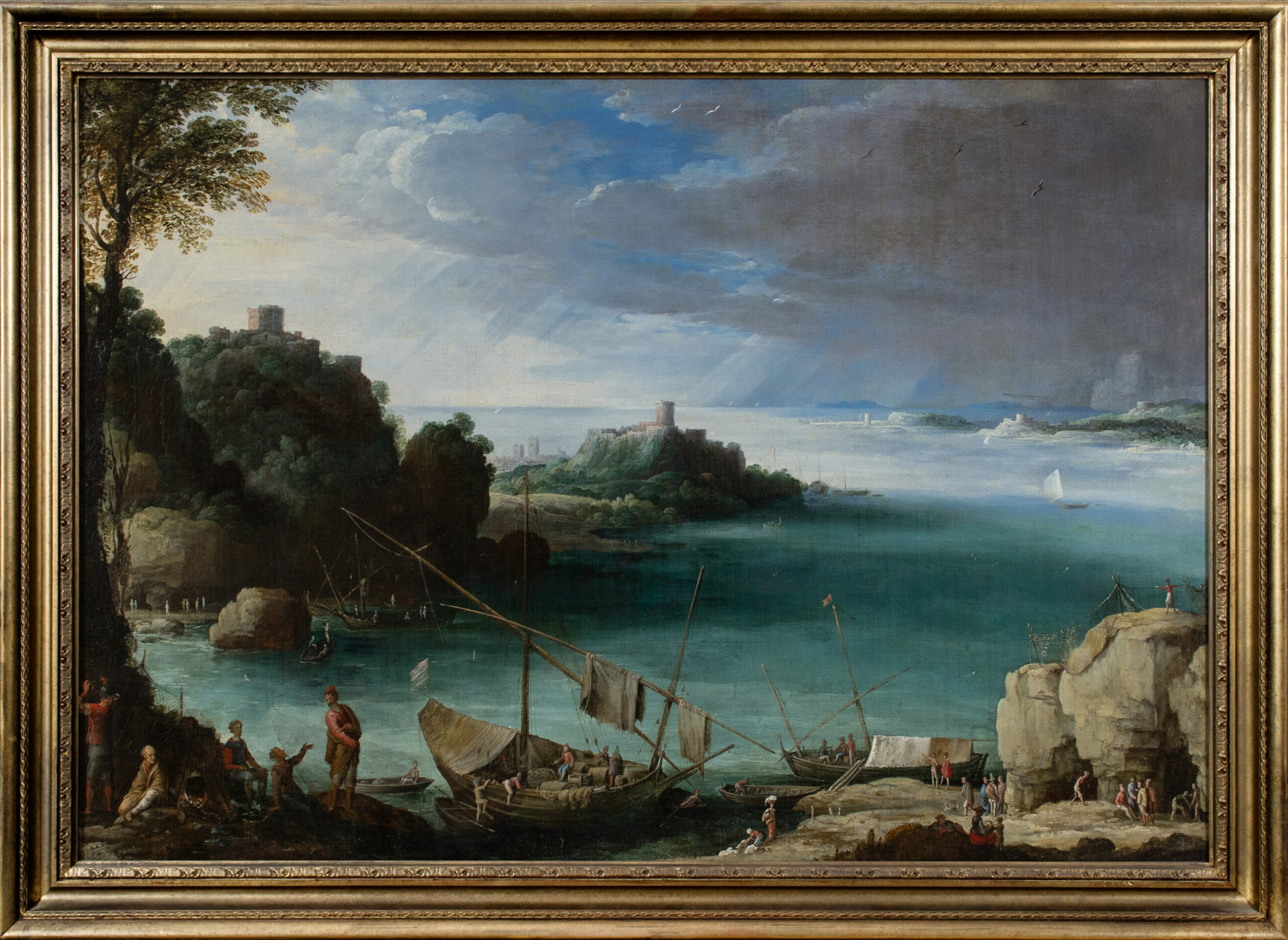
The recently discovered coastal landscape with a harbour, and fishermen and merchants on the shore, by Paul Bril (1554–1626). Undated. Oil on canvas. Credit: Woolley and Wallis
"The painting stood out straightaway as something special," said Ed Beer, art specialist at Woolley and Wallis. "The coastal landscape had all the hallmarks of a work by Bril; the luminous skies, rhythmic composition and delicate atmospheric dept."
They contacted the Dutch leading expert on his work, Drs. Luuk Pijl, who after evaluating the work confirmed it as an original by Paul Bril, who he describes as "the most influential landscape painter of his generation."
After some research, specialists found a copy of the painting that had been auctioned in Pairs in October 2023, alongside a pendant which also reproduced Bril's Italianate landscape with a hawking party approaching a villa.
The original of the pendant was sold at Sotheby's in London in 2003. It is thought that the present work and the Sotheby's painting were hanging as pendants when the copyist made their versions.
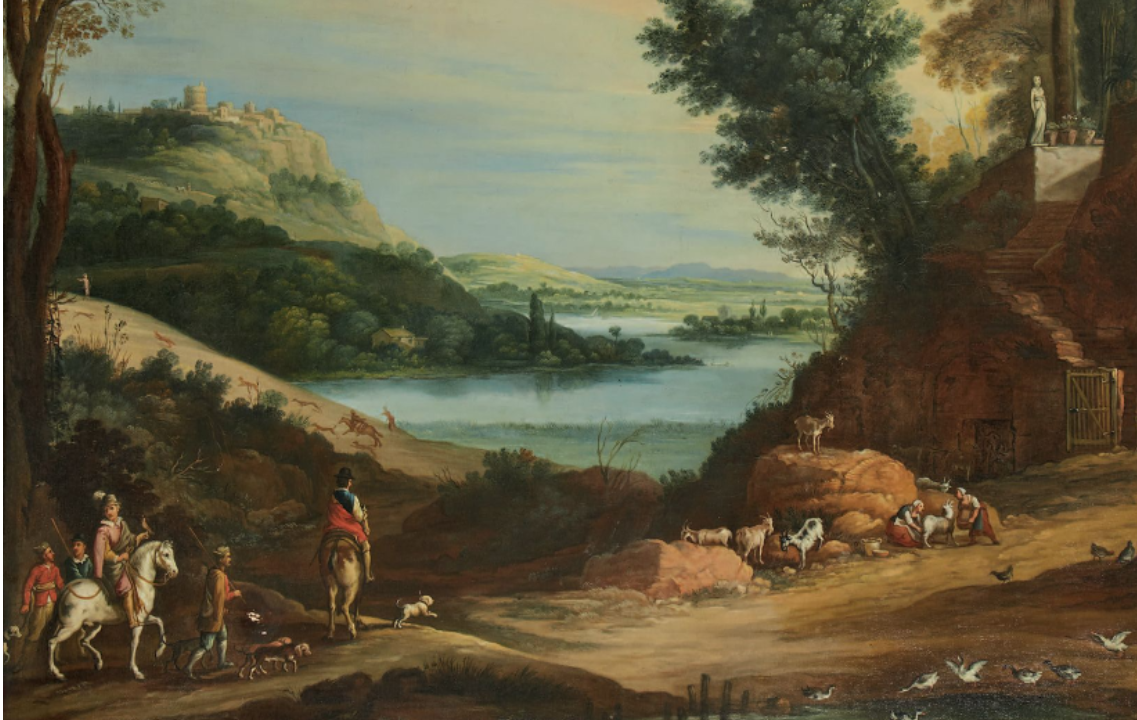
The pendant by Paul Bril sold in London in 2003
"The suggestion is that these two originals may have been hanging together in the past and that was when they were copied, but there is no information or provenance to corroborate this," Woolley and Wallis' Victor Fauvelle told The Brussels Times.
Moreover, the two Bril paintings, although similar in size, do not work particularly well as a pair according to the auctioneers, suggesting they were probably not conceived as pendants even if they were later displayed as such.
Series of harbour landscapes
The historical importance of the recent discovery was not downplayed by the leading Flemish masters expert Drs. Luuk Pijl. It was previously unknown to Bril scholarship and has never been recorded in any existing catalogues or academic publications.
"The present coastal landscape is a fine and significant addition to a small group of oil on canvas harbour landscapes painted on canvas by Bril (his early works were painted on copper)," said Drs Pijl.
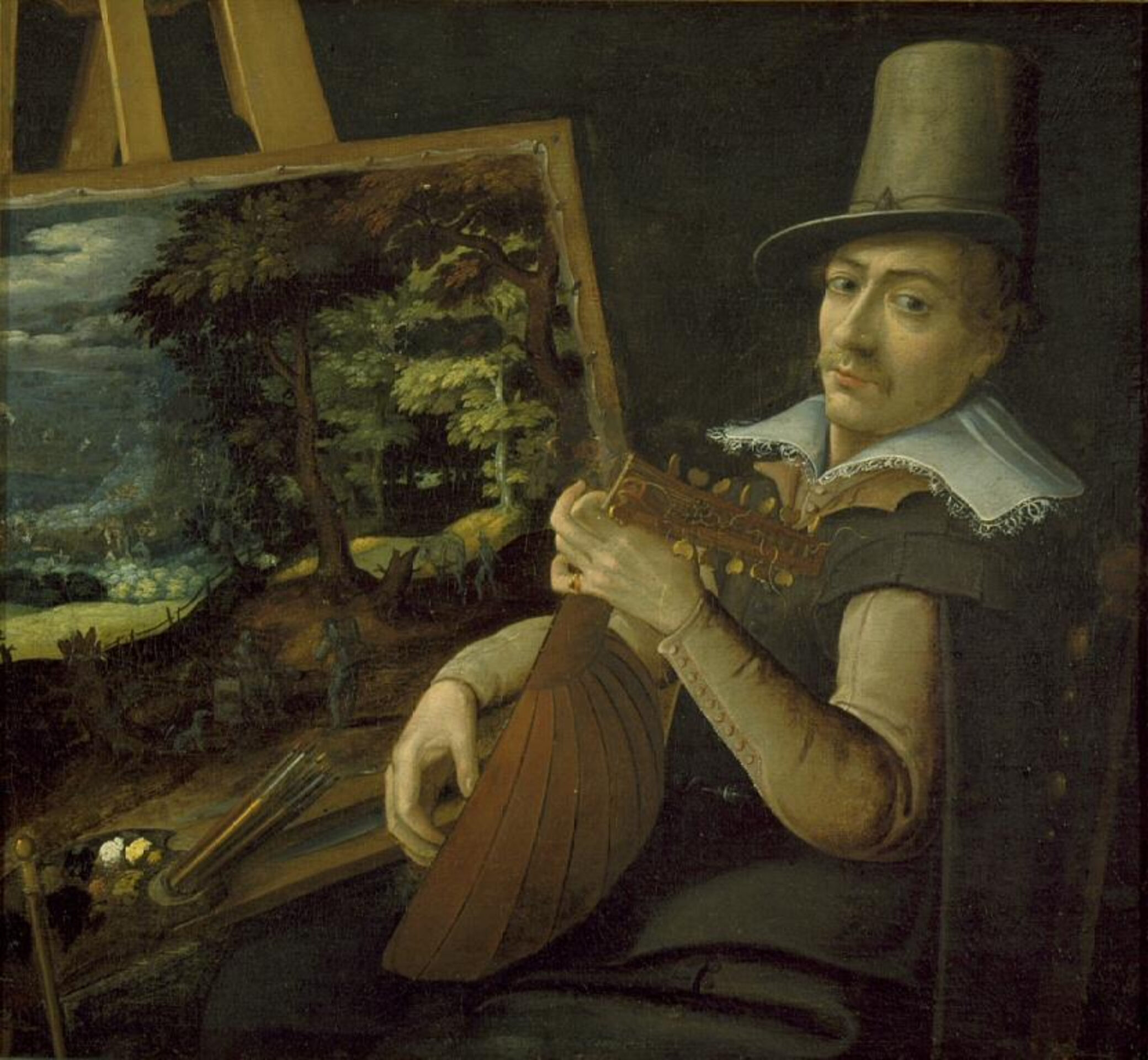
Self-portrait of Paul Bril
"None of the small group of harbour landscapes were dated, but in the context of Bril’s overall stylistic development, a date of 1610-1615 is feasible for this painting," he added.
The painting is known as an Italianate landscape, which resulted from Flemish and Dutch painters discovering the sunlight of southern Europe during their travels to Italy.
It soon became a key characteristic of their landscape depictions, where brightness contrasted with the darker style of Flemish masters.
'Enduring legacy'
"Paul Bril was one of the most important landscape painters working in Rome around 1600. He brought Northern precision to Italianate views, and his richly atmospheric landscapes had a formative influence on later masters, including Jan Brueghel the Elder, Adam Elsheimer and Claude Lorrain," Beer explained.
Indeed, Bril’s influence is attributed to having created landscape painting as a separate genre in itself. His older brother Matthijs also played an important role in this, but died young, with Paul taking over his commissions.
"Paul Brill left an enduring legacy," Fauvelle explained. "His long spell in Rome resulted in a blending of the Northern style of landscape painting with the Italian taste for the classical."
Fauvelle further explains that Bril's paintings had a distinctly Flemish theme in his early years, but in Rome his work became much more classical.
He "paved the way" for Claude Lorrain and Nicholas Poussin, who were also prominent French baroque painters known for their depictions of Rome's classic landscapes.
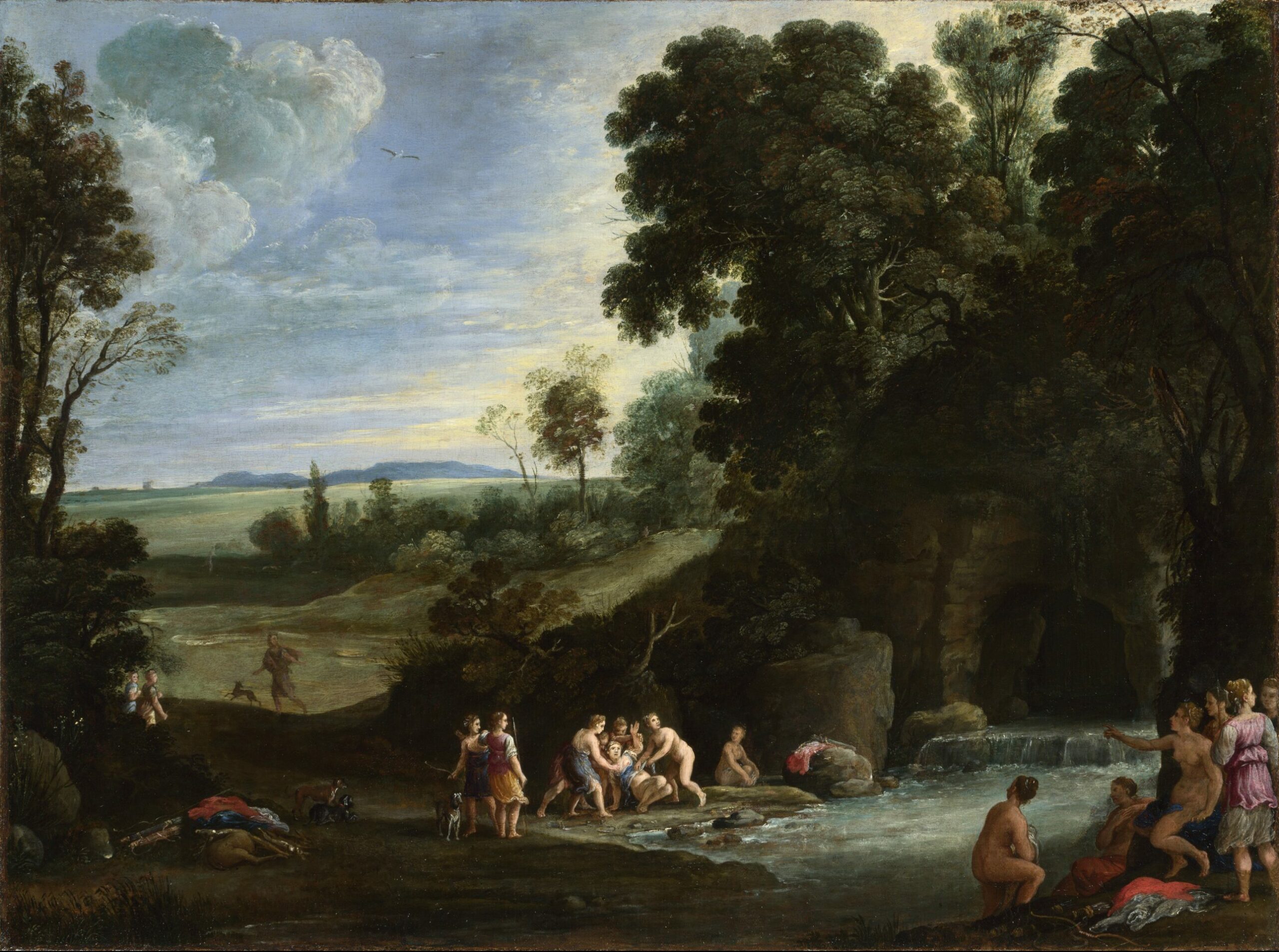
Paul Bril's Diana and Callisto, at the National Gallery in London
During his time in Rome, Paul was a favourite of the Papal court and received commissions from several popes. decorating the Vatican Palace and other major Roman landmarks with their unique frescos.
The painting was given an estimate of €17,000 to €22,000 (£15,000-£20,000). It will go up for auction on 3 September 2025 at a sale of Old Masters, British & European Paintings at Woolley and Wallis.
"This rediscovered painting sheds new light on a transitional period in Bril’s career, revealing his growing interest in classical narrative and the poetic potential of landscape," adds Beer. "The work has never before been exhibited or published and we expect it to attract strong institutional and private interest at auction."
