
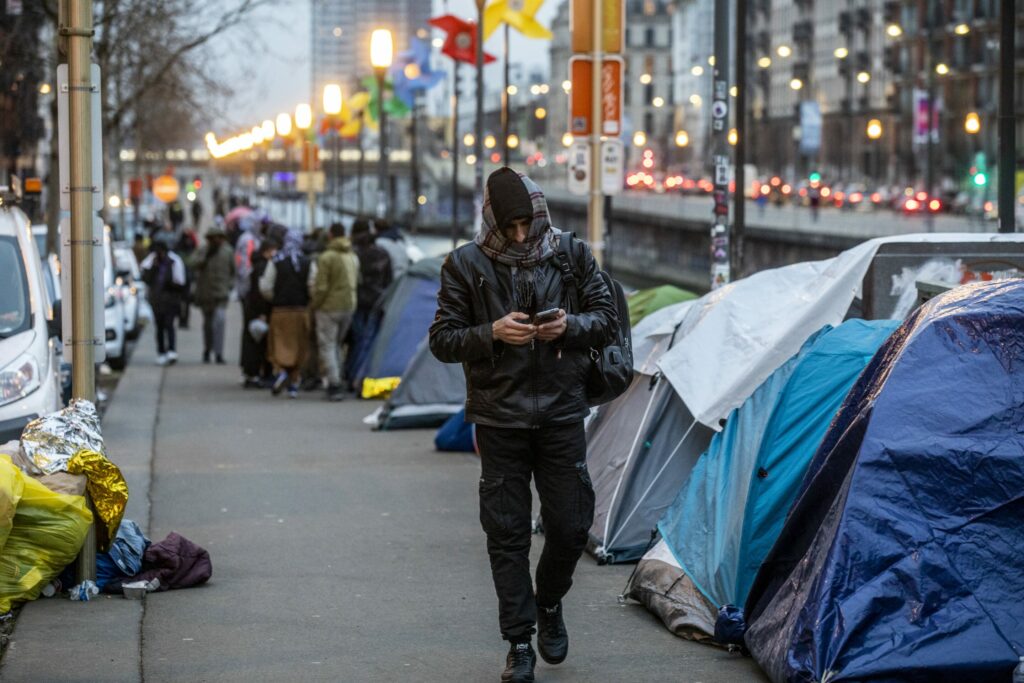
Since Monday, Belgium is refusing asylum to people who have applied for international protection in another EU Member State as a way to end 'asylum shopping'. What does the term refer to?
The current Federal Government is working hard to implement what Prime Minister Bart De Wever (N-VA) has called "the strictest migration policy you can have in Europe".
On Sunday, Migration and Asylum Minister Anneleen Van Bossuyt (N-VA) announced a series of restrictive migration measures, including one that "automatically considers inadmissible" asylum applications from people who have applied for asylum in another European country whether they were accepted or refused. Applications will only be examined based on new elements.
"Asylum is about protection. Those who have it elsewhere in Europe will no longer have access to our reception facilities. Asylum shopping must stop," Van Bossuyt stated.
'Asylum shopping' is often referenced by politicians, but what does it actually mean?
The Brussels Times spoke to Thomas Willekens, policy adviser at the Flemish refugee organisation Vluchtelingenwerk Vlaanderen to understand the term and its political deployment.
What does Minister Van Bossuyt mean by 'asylum shopping'?
The term describes an asylum seeker transiting from one EU Member State where they may have already asked for asylum in another Member State. The term is problematic because it gives the sense that [claiming asylum] is a voluntary choice based on complete awareness of how the system works, and that asylum seekers then voluntarily choose the best regime possible, like they would go to a restaurant and choose a meal on the menu.
But that completely denies the reality on the ground, namely that asylum seekers are not perfectly informed about systems in the EU and that they often do not voluntarily choose where they end up in the first place. They therefore go to a place where there is family or diaspora present.
Thirdly, it presupposes that the system is the same in every EU Member State, but this is not the case. Recognition rates differ between countries, as do reception standards and access to socioeconomic rights. That leads to people moving from one place to the other, mostly because they don't feel safe in their first country of arrival.
Even if people are 'asylum shopping', is it illegal?
Not at all. The Dublin procedure [EU legislation that determines which country must process the asylum claim, ed.] allows for exceptions for people to apply for asylum and then make the argument that they would like to stay in Belgium for family or humanitarian reasons, or if there is a systemic deficiency in the country that they left.
Before my current job, I was a Dublin caseworker at the immigration office, and I read hundreds upon hundreds of asylum interviews where people were asked, 'Why did you leave the responsible Member State and why did you come to Belgium?' And in a lot of cases, they left because of poor reception conditions, racist abuse or poor treatment by border guards – all very obvious push factors. And in a lot of other cases, they came to Belgium because they knew someone here – a very human reason.
And again, the Dublin Regulation allows for Member States to acknowledge this motivation via the humanitarian or discretionary clause. These measures exist, they're just never applied because they don't fit the asylum shopping narrative.
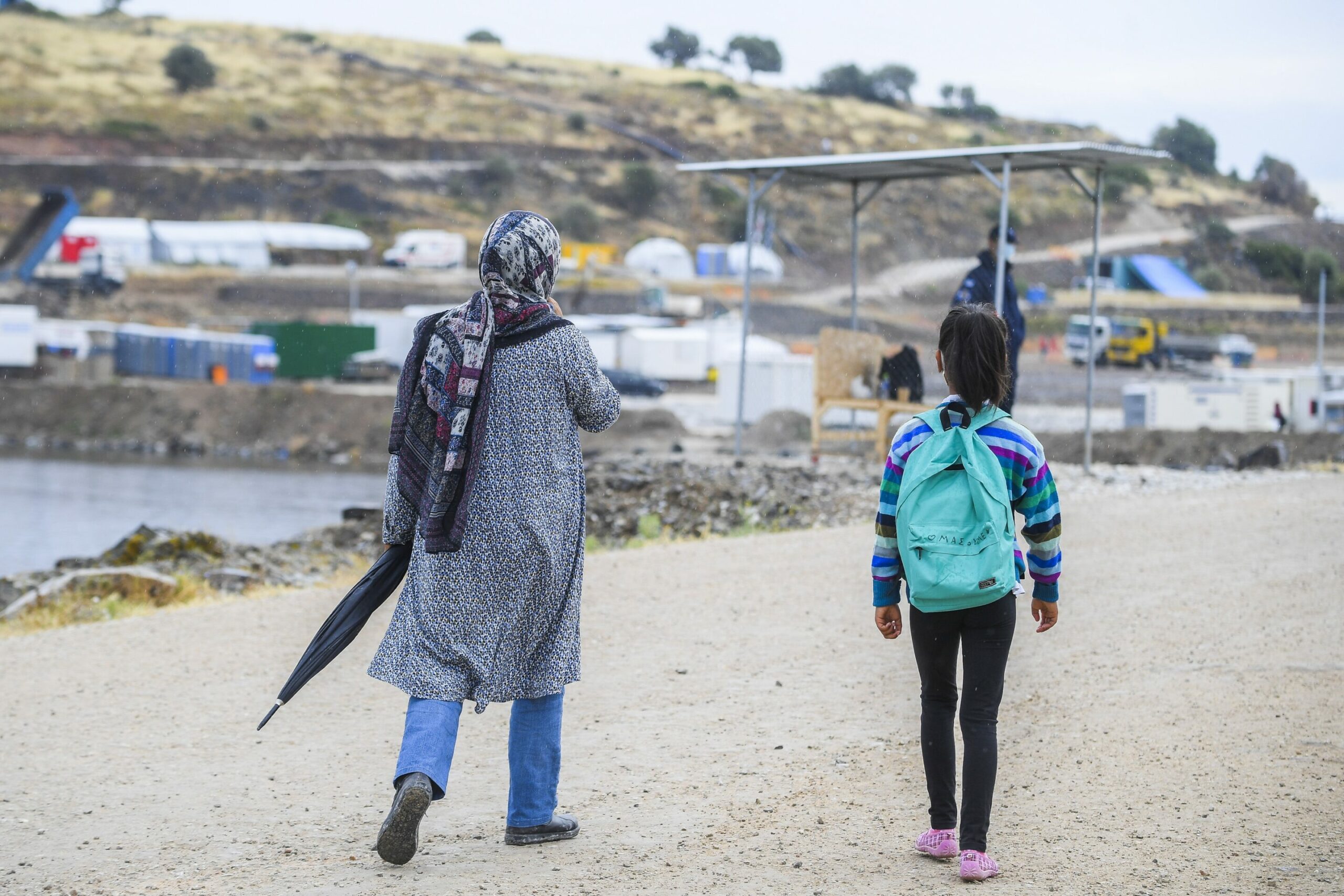
Mavrovouni refugee camp in Greece, 2021. Credit: Belga / Laurie Dieffembacq
Last year, Van Bossuyt's predecessor Nicole De Moor (CD&V) announced the suspension of asylum for Palestinians coming from Greece. Are this week's measures related to that decision?
100%. When De Moor issued those instructions, the Council of State indicated that they had no legal basis. This law provides the legal basis for that instruction to be used in general to all applicants with a positive decision in another Member State. It's an attempt to legalise a previously illegal situation.
Van Bossuyt says 15,000 out of 40,000 applicants last year had been accepted or refused in another EU Member State. How do you react to those numbers?
That statistic refers to applicants who have been fingerprinted elsewhere in the EU, either upon irregular entry into the EU or when they applied for asylum in another Member State that is put into the Eurodac database. It's not illogical that the number is relatively high simply because Belgium is not a border state: people can only arrive by transiting through another European country and chances are that at one point or another you're forced to give your fingerprints.
On Monday morning, you told VRT the new measures would do nothing to limit asylum applications in Belgium. Why is that?
If you look into the statistics of the past decades, you see that asylum rates fluctuate naturally between high peaks and low valleys. Peaks are almost always linked to external conflicts: the Balkan wars, Yugoslavia, the Syrian revolution and more recently, Afghanistan, Gaza, Ukraine and Sudan. Those are the driving factors of rising applications, not because EU policies are particularly attractive at a given point in time.
The EU has been trying to make their policy stricter ever since Schengen was created, and still rates fluctuate. [These measures] will have no impact on the number of applications, but there will be a very real impact on humans and on their ability to conduct a qualitative asylum procedure. It is highly difficult to prepare yourself for an interview while living on the street.
The Brussels Times contacted Minister Van Bossuyt asking her to explain how she had calculated asylum statistics but had not received a reply at time of publication.
Related News
- Council of Europe again condemns Belgium's 'clear refusal' to comply with the law
- New asylum measure is an 'ill-considered policy', says Flemish refugee group
- 'Sign of what's to come for society': What Belgium's asylum policy means for newcomers
- 'We should be afraid' - Amnesty International's damning report on human rights in Belgium
