
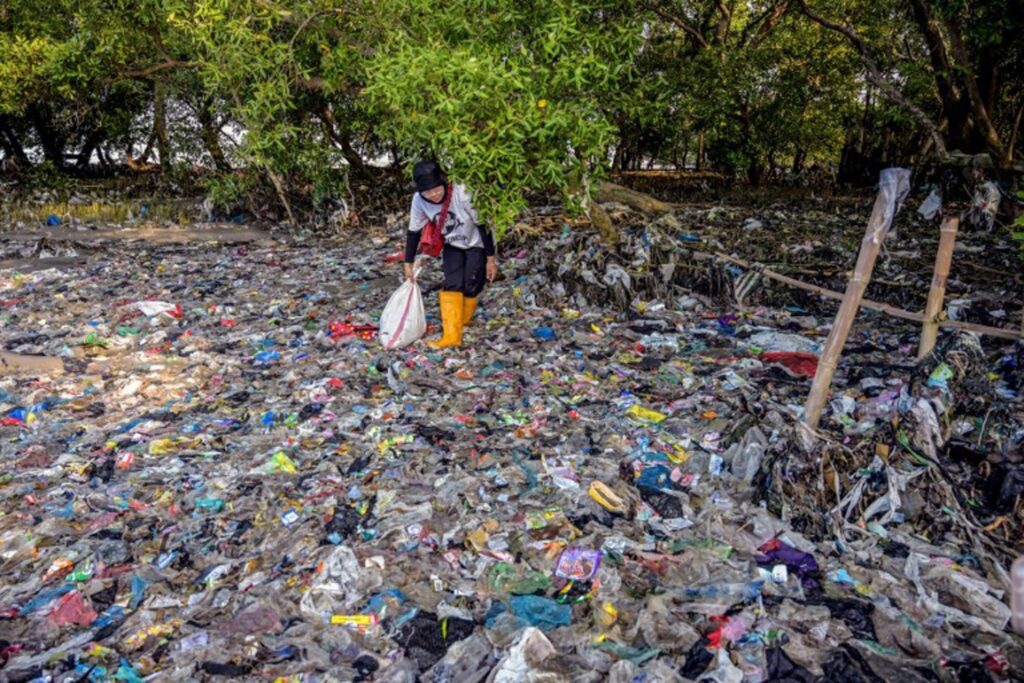
Plastic pollution represents a “serious, growing, and underestimated threat” to health, costing the world at least $1.5 trillion (€1.3 trillion) annually, according to a review published on Monday in the medical journal The Lancet.
Tiny plastic particles, known as microplastics, have been detected in various parts of the human body. Although the health effects are not yet fully understood, researchers are sounding the alarm about their potential impact.
Global plastic production has skyrocketed, from 2 million tonnes in 1950 to 475 million tonnes in 2022. If no changes are made, production is expected to triple again by 2060, according to the OECD. Only about 10% of all plastic currently being recycled.
Starting Tuesday, representatives from nearly 180 countries will gather in Geneva, Switzerland, for the final round of negotiations on a global plastic treaty. The aim is to impose limits on annual production, but some countries, including Saudi Arabia, are blocking progress.
The Belgian delegation remains “optimistic”, believing an agreement will emerge in Geneva. Vinciane Charlier from the Federal Public Service for Health & Environment notes that it’s likely to be a “minimal” treaty text, requiring further development through the Conference of Parties to the (COP) Convention.
Charlier explains: “Certain measures on production are currently unacceptable for some major producing countries. For Belgium, it’s crucial for the link between production and pollution to be recognised and for reporting obligations to be established.”
The Belgian delegation in Geneva includes representatives from the Federal Public Service for Health, the Federal Public Service for Foreign Affairs, and various regions.
