
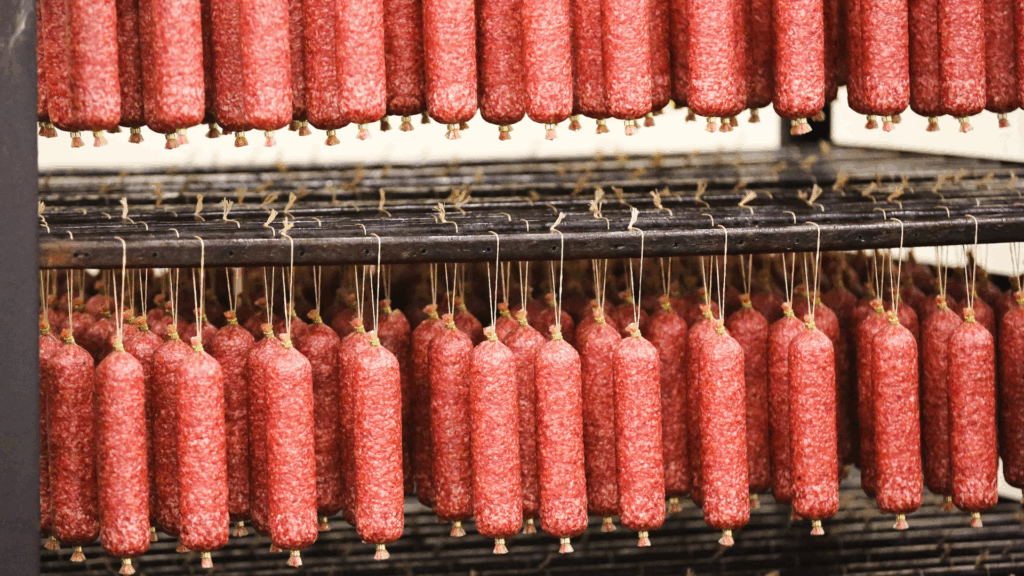
Holidaymakers have been warned to review which animal products they can bring back into Belgium amid reports of viral infections in animals in some parts of Europe.
Between countries in the European Union, bringing a nice cheese or a local dried ham as a souvenir is typically not an issue. However, not everything can be brought back free of risk.
"Caution is still warranted! After all, travellers can also unintentionally spread animal diseases...within the territory of the EU," reads a statement by the Federal Agency for the Safety of the Food Chain (FASFC).
Last month, the FASFC urged Belgians to refrain from bringing back pork products from Eastern Europe, Germany, Italy and Greece, following detected cases of the African swine fever (ASF).
'Threat to Belgium'
While not a health threat to humans, the ASF is a highly contagious disease that affects porcine species like pigs or wild boars. It can cause these animals to become severely ill, and in many cases, it is fatal.
In mid-June, the carcass of a wild boar infected with ASF was detected around 180km from the Belgian border. The spread of this virus was likely due to human activity, according to FASFC. The risk of reappearance of the disease poses a "real threat to Belgium", according to the agency.
In addition to not bringing back pork products from risk areas to Belgium, the FASFC urges travellers to throw away food waste into closed containers and to refrain from feeding meat and other kitchen scraps to pigs and wild boars.
In addition, the food safety agency emphasises that more rules are already in place when it comes to travelling with animal products.
On holidays outside the EU?
When returning to Belgium from outside the EU, no meat, meat products, milk, or other dairy products can be brought back for personal use.
However, exceptions are made for infant milk, infant food, and pet feed or special foods needed for medical reasons.
Nonetheless, these "exception products" must not weigh over 2 kilograms, must not require refrigeration before they're opened, must be packaged proprietary brand products, must be unbroken unless in current use, and must be intended for the travellers themselves or any a pet accompanying them.
Additionally, travellers are allowed to bring to Belgium up to 20kg of fishery products as long as they are intended for personal use. For other animal products, holidaymakers are allowed to bring up to 2kg.
Exceptions only with permits
As expected, there are often strict rules about travelling with endangered animals or plants or products derived from them. An example is sturgeon caviar, where a 125g maximum is in place.
However, in some cases, maximum amounts can be exceeded if a permit for this has been granted. More information on these permits can usually be obtained from the CITES authorities of the relevant countries.
The FASFC warns that when travellers arrive in the EU, they may undergo official controls by the authorities. If any undeclared meat or dairy is found, the authorities may confiscate and destroy the products, and in some cases, travellers may face fines or criminal prosecution.
"So you better think twice before putting a souvenir in your suitcase," the FASFC concluded in a statement.
