
Have you ever wanted to explore the Netherlands? Together with Belgium, the two countries offer a unique combination of features that make long-distance bike travel surprisingly easy, even for less experienced cyclists.
In recent years, bike touring has gained a lot of attention, especially after COVID. Whether it’s in the form of short bike tours or bikepacking (backpacking on a bike), more people are drawn to it as a sustainable, affordable and active way to travel.
While it has shifted from a niche hobby of hardcore cycling enthusiasts to something more mainstream and accessible, it still feels special. Before deciding to try it yourself, it is important to understand what such a trip really involves.
Is bike touring for you?
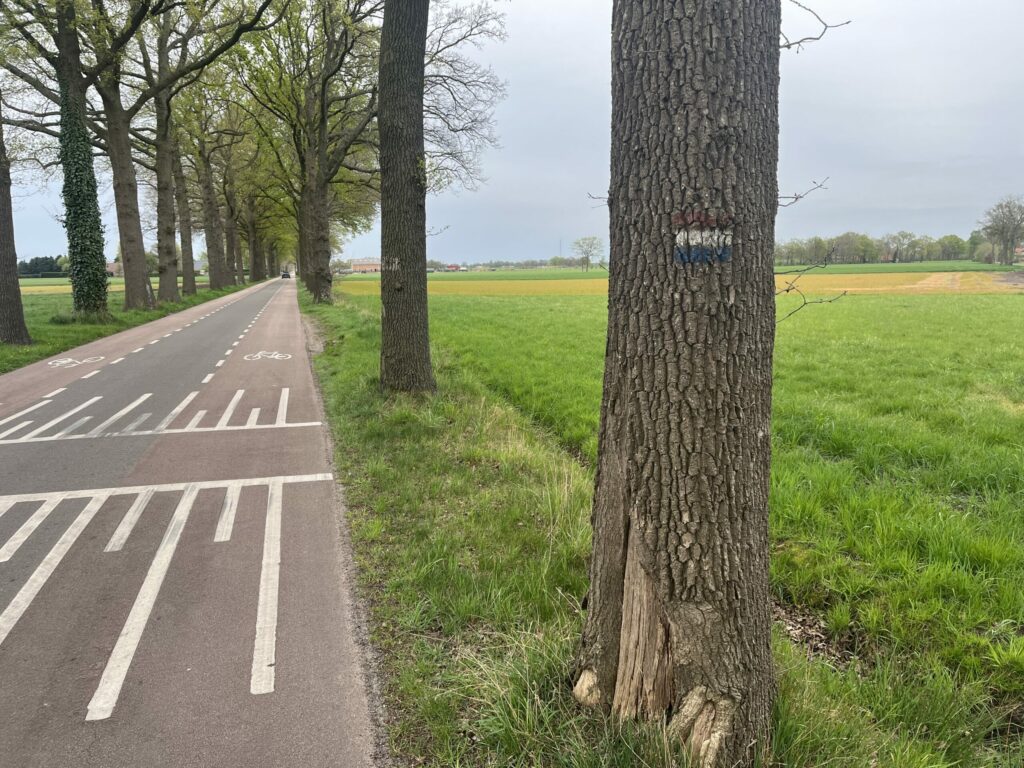
Unmarked Belgian-Dutch border. Credit: Kosmos Khoroshavin / The Brussels Times
Cycling to the Netherlands is not just a budget-friendly way to visit a neighbouring country. If your goal is to travel comfortably and cheaply, a bus might still be the better choice. Biking there is a true adventure — one that will make you sweat, push your limits, and test your endurance.
You’ll spend hours in the saddle, pedalling along endless red bike lanes, navigating your route, and dealing with the elements. But you’ll also experience fantastic scenery, the satisfaction of covering a long distance under your own power, and the feeling of complete freedom that comes with it.
This kind of trip suits people who already enjoy cycling and ride regularly, even if only for commuting. You’ll also need to have enough time as a single day can easily be spent just getting to your destination. The good news? You don’t need expensive gear or special clothing. A reliable bike and a bit of preparation are enough.
Choosing your route
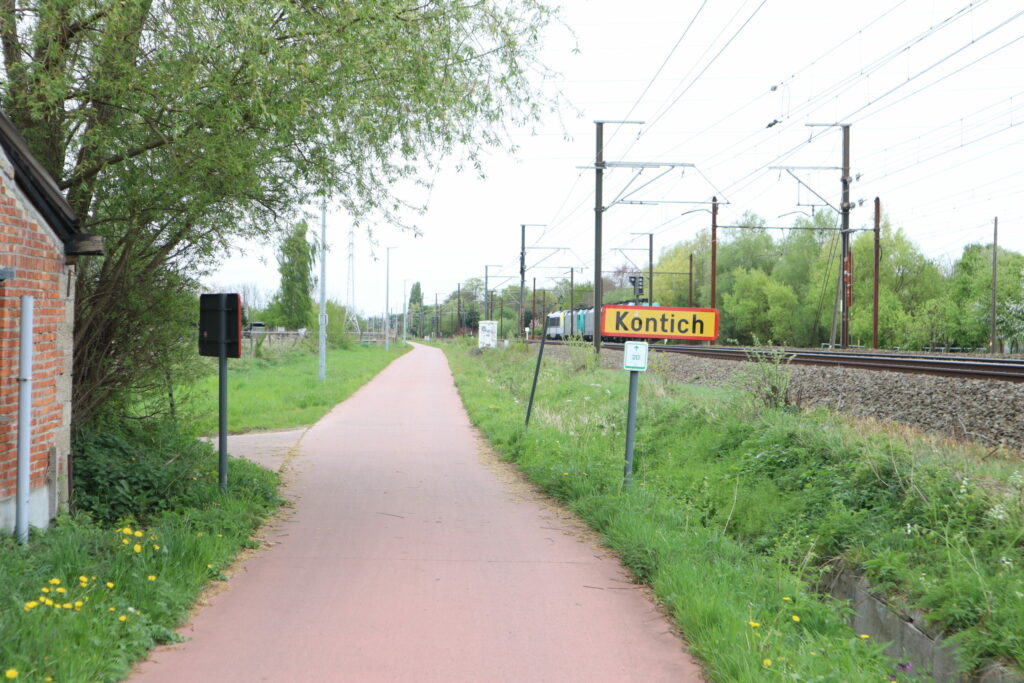
Kontich municipality on the 75 km Mechelen-Breda bike route. Credit: Kosmos Khoroshavin / The Brussels Times
Belgium and especially the Netherlands have excellent cycling infrastructures, with separated bike paths that keep you away from traffic, flat terrain, and towns close together. These features make long-distance rides far less intimidating.
I suggest starting your journey in Antwerp. A train ticket from Brussels, with a bike supplement, currently costs just €9.30 but saves you both time and energy at the start.
From there, you can choose your route based on your capabilities and which cities you want to visit. The most popular Dutch tourist cities are close together in the so-called Randstad region:
Antwerp - Rotterdam: 100 km (about 6.5 hours at 15 km/h). You can stop in Roosendaal (44 km) to break up the ride if needed. Rotterdam - The Hague: 25 km (around 1.5 hours). The Hague - Amsterdam: 70 km (about 4.5 hours).
Antwerp -Breda: 64 km (4 hours). Breda - Utrecht is another 75 km (5 hours) away.
If at any point you’ve had enough, both Dutch and Belgian railways allow bikes onboard for a small fee. You can hop between cities or head home if things go south.
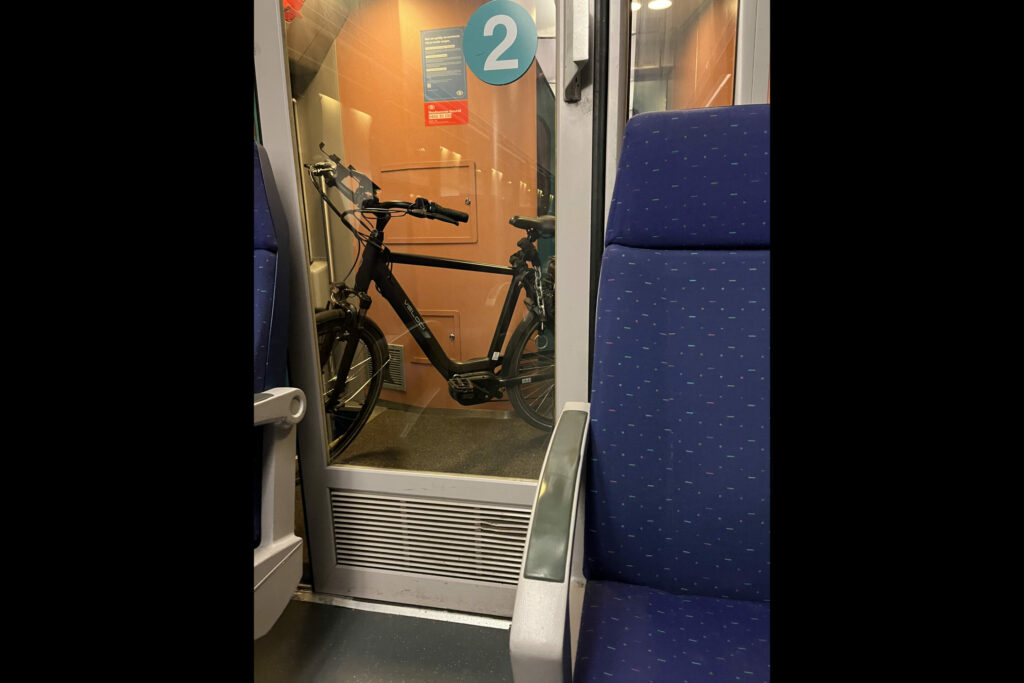
E-bike being carried on a Dutch train. Credit: Kosmos Khoroshavin / The Brussels Times
When planning, use a specialised app such as Komoot or the Dutch Fietsersbond Routeplanner. Google Maps may route you along busy roads, whereas proper cycling routes often follow canals, railways or scenic pathways.
Regular bike or e-bike?
Both work well for this trip, but they offer very different experiences.
With a regular bike, it’s essential to know your physical limits. A good test is the ride from Brussels to Antwerp, which is about 50 km (~3 hours). If you can do that comfortably, you’re likely ready for a cross-border journey. The sense of achievement is huge and you’ll worry less about theft compared with owning a high-value e-bike.
With an e-bike, the journey becomes far easier as you can cruise without pushing yourself to the edge. However, you’ll need to plan charging points in advance, as your battery will eventually run out. Cafés and bike shops are often willing to let you charge if you buy something.
When you arrive, parking can be tricky. In big Dutch cities, especially places like Rotterdam or Amsterdam, your safest options are secure underground facilities or indoor storage at a hotel or B&B. Street racks, even in busy areas, are risky for expensive e-bikes.
Practical advice
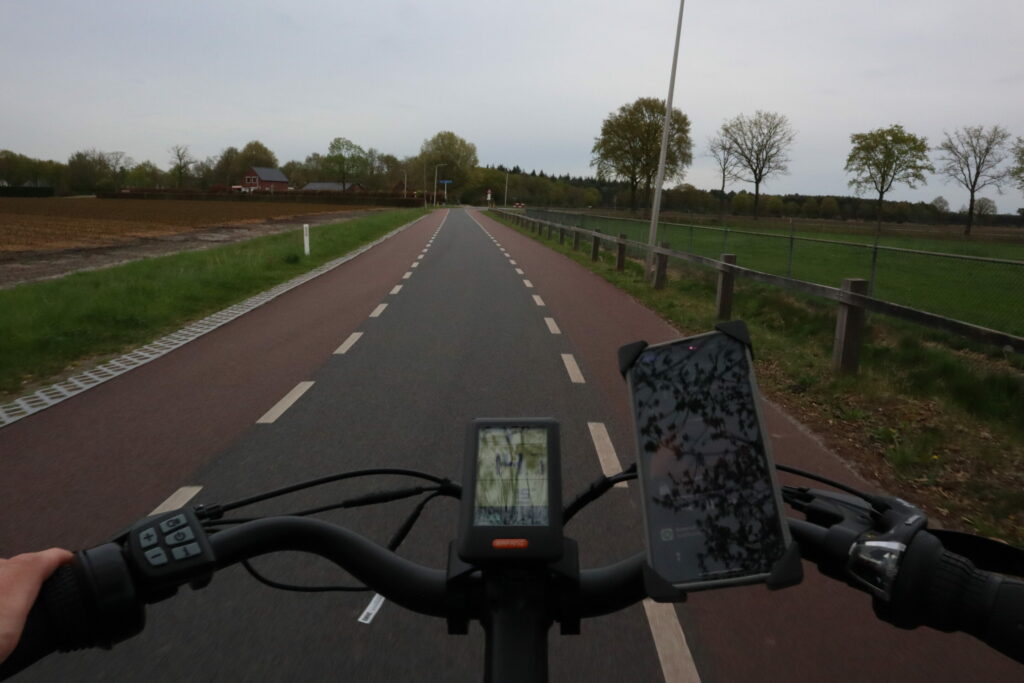
75km Mechelen-Breda bike route. Credit: Kosmos Khoroshavin / The Brussels Times
Pack lightly. Every extra kilogram makes a difference. Use bike bags so the weight is on your bike, not your back.
Bring friends. Good company changes everything — share the effort, the laughs, and the memories.
Eat and drink regularly. You’ll burn thousands of calories, so keep snacks handy: bananas, pastries, trail mix, whatever keeps you going. Sip water often instead of gulping it all at once.
Check the weather. The last thing you want is to get caught in a downpour or a cold headwind. Pick a good day, dress in layers, and always take a rain coat.
Charge your phone. For most of us, it’s our map, camera, emergency line. Bring a power bank and cable.
Check your bike. Make sure it’s tuned and ready. A basic repair kit and a spare inner tube can save the day.
Take it slowly. Blasting through the first hour will just wear you out. Keep a steady pace and enjoy the ride.
Rest when you need to. There’s no shame in stopping to stretch, take photos or grab a coffee.
Don’t be afraid to quit. If you feel like you are pushing yourself too hard there is no shame in going home to come back another day.
Enjoy the journey. The views, the small towns, the unexpected moments. They are what make the trip unforgettable.
