
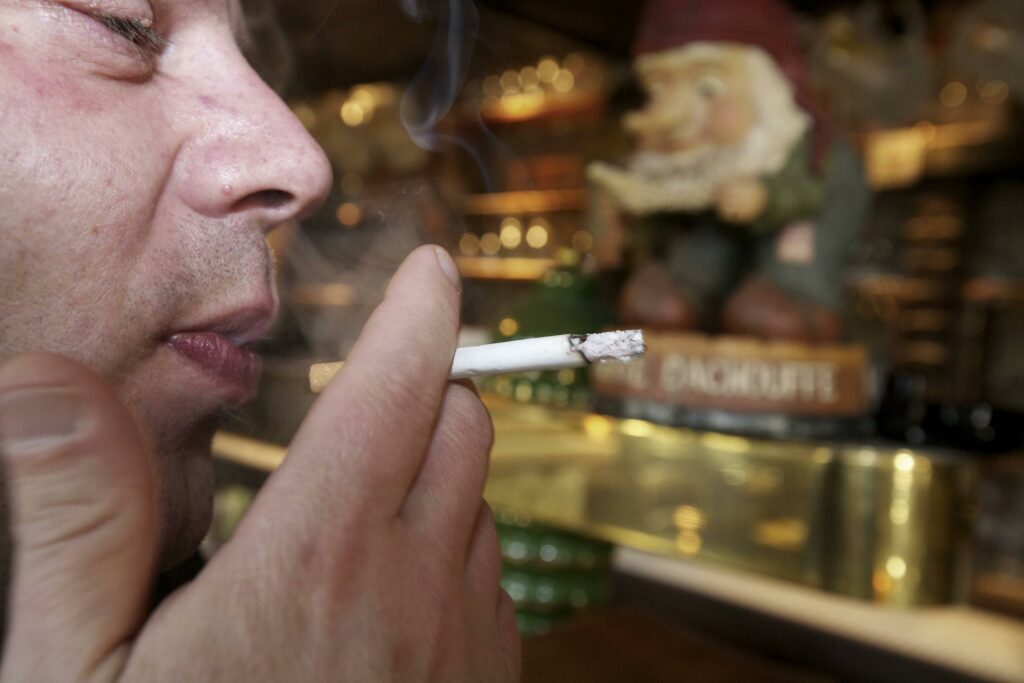
Almost one in four people in the European Union aged 15 and over smoked in 2023, according to the latest Eurostat figures. While overall smoking rates have decreased slightly since 2017, habits differ significantly between member states.
Eurostat’s newly released data show that 24% of EU citizens aged 15 and above smoked last year (down two percentage points from 2017, when the figure was 26%). Men remain more likely to smoke than women: 28% compared with 21%.
Belgium’s smoking rate stands at 21%, placing it below the EU average.
Lowest and highest rates in the EU
Sweden recorded the lowest proportion of smokers at just 8%, followed by the Netherlands (11%) and Denmark (14%). These three countries also reported the lowest rates for both men and women: in Sweden, 9% of men and 8% of women smoked; in the Netherlands, the rates were 13% and 10% (Tobacco); in Denmark, the rates were 16% and 12%.
At the other end of the scale, Bulgaria had the highest overall share of smokers (37%), followed by Greece (36%) and Croatia (35%). Male smoking rates were particularly high in Bulgaria (49%), Latvia (48%) and Lithuania (43%). Among women, Greece recorded the highest rate (32%), followed by Croatia (30%) and Romania (29%).
Tighter tobacco rules coming in Belgium
Belgium plans to expand its plain packaging rules to cover cigarillos, cigars, rolling papers, filters, and tubes used with both tobacco and herbal smoking products, effective from 1 June 2026.
The move, approved by the Council of Ministers on 18 July, aims to prevent manufacturers from using non-cigarette products to promote their brands.
Belgium has already taken steps to curb tobacco use. Since 2020, cigarettes, rolling tobacco and shisha tobacco must be sold in plain packaging. As of April this year, displaying tobacco products in shops or selling them in supermarkets has been prohibited.
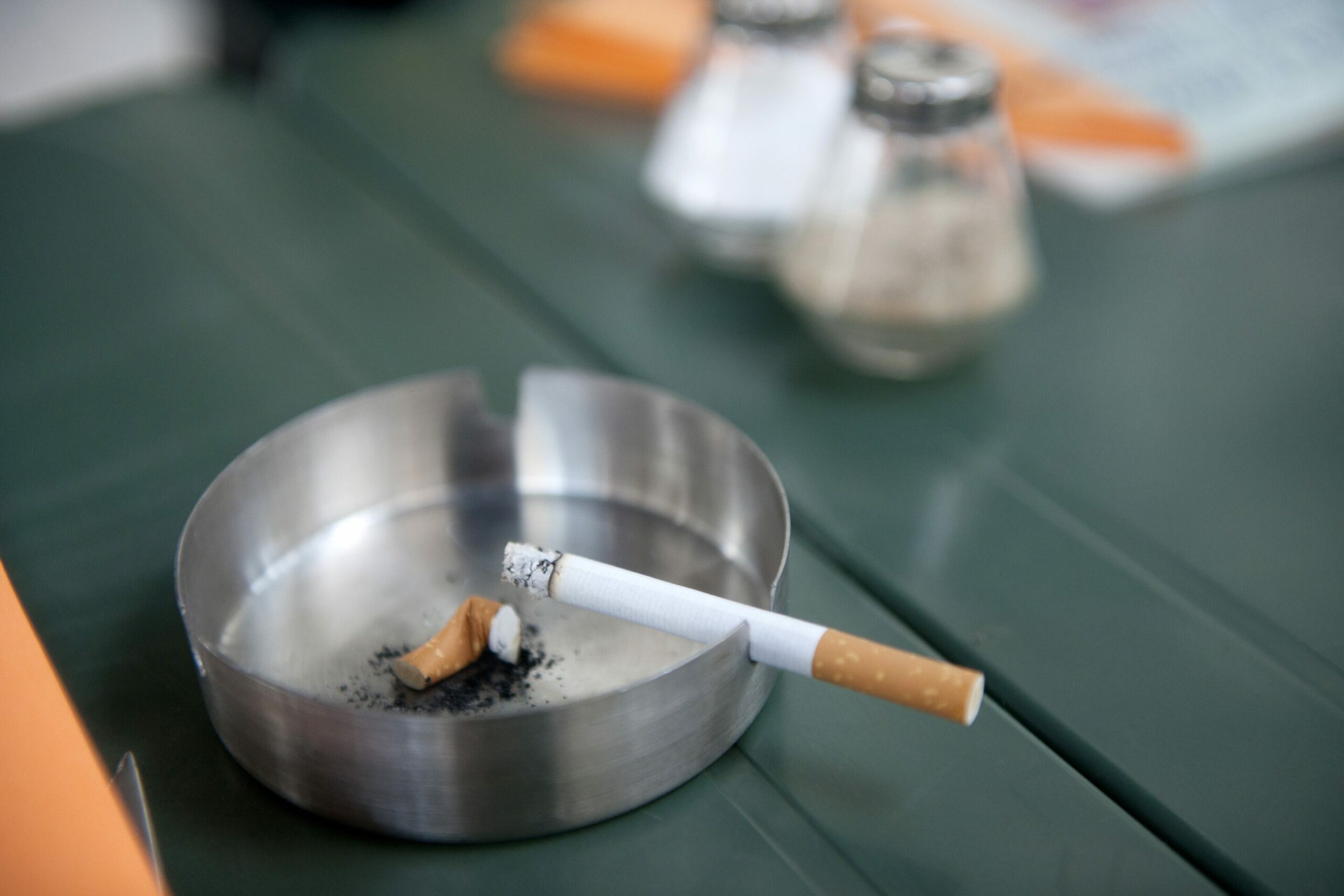
As of April this year, displaying tobacco inciting products in shops or selling them in supermarkets has been prohibited. Credit: Belga/Jonas Hamers (c) ImageGlobe.
However, Health Minister Frank Vandenbroucke argues that the current rules are not enough. In a note accompanying a recent royal decree, he said manufacturers had sought to bypass plain packaging by introducing products such as cigarillos packaged to resemble old-style cigarette packs.
The minister says the changes are intended to make smoking less attractive to young people. Research suggests standardised packaging can deter teenagers and young adults from starting to smoke. "The tobacco industry targets adolescents and young adults because attracting the next generation of smokers is essential to its survival," Vandenbroucke warned.
The new rules will come into force on June 1, 2026, with a grace period until June 1, 2027, for retail shops. The federal government is also considering a ban on smoking on outdoor terraces as of 1 January 2026, although no final decision has been made.
Why in some European countries people smoke more?
Tobacco is currently grown in 12 EU countries. The main producers are Italy, Spain, Poland, Greece, Croatia, France, Hungary and Bulgaria, accounting for 99% of the EU tobacco production.
There is a trend towards smaller growing areas, mainly due to falling consumption of tobacco products. In 2018, EU tobacco represented some 66,000 ha (half as much as in 2001) and 26,000 specialist producers.
Yields vary between one and three tonnes a hectare, depending on the variety. "Flue-cured" Virginia varieties account for 71% of output, "light-air-cured" Burley varieties 16%, "sun-cured" or oriental 7% and other varieties ("dark-air-cured" and "fire-cured") 6%.
The EU produces less than 2% of global yearly raw tobacco production. In 2018, the EU imported some 420,000 tonnes (indicating an increasing trend) and exported 120,000 tonnes (indicating a decreasing trend) of raw tobacco.
When a pack of cigarettes is cheaper, whether through tax freezes or illicit sales, consumption goes up. For many smokers, it is not the health warnings, the neutral packaging or even "the prohibited smoking" that determine whether they light up a cigarette, but the daily and weekly cost.
In countries like Bulgaria or Greece where cigarettes costs are lower than other European countries, the answer is simple: the cheaper the pack, the more likely it is to smoke.
