
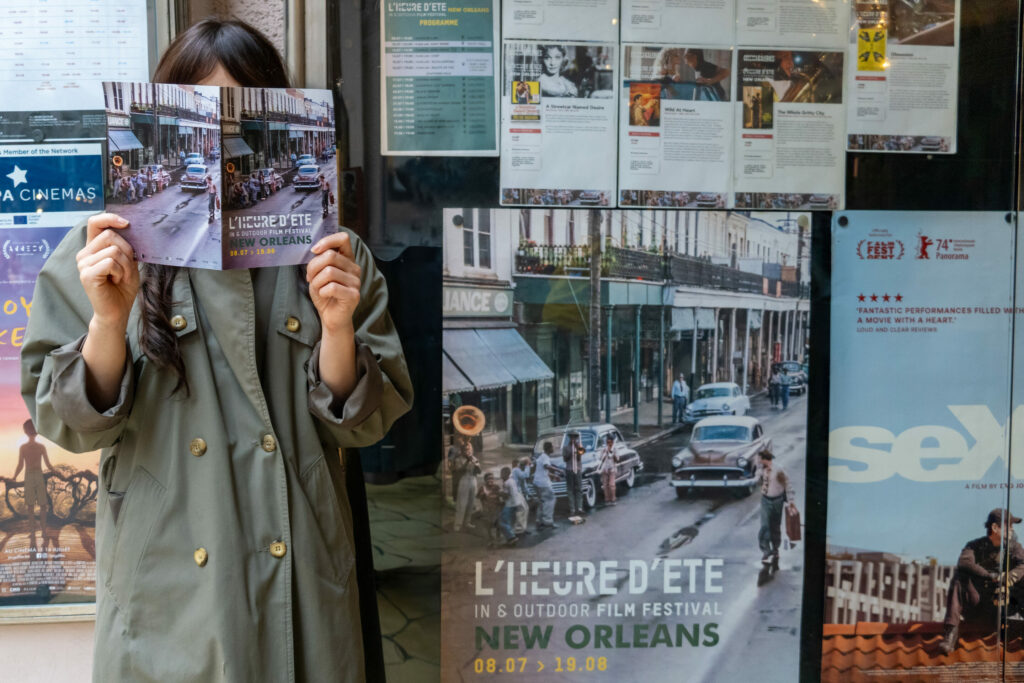
Voodoo and mysticism. The supernatural. The devil at the crossroads. Carnival and chaos. Duality, music, and soul. Resistance, resilience, and rebirth. Death and the afterlife. Magic, folklore, freedom, rhythm. Sensuality, decadence, and the collective experience: this is New Orleans.
For the 14th edition of the L’Heure d’Été festival, which runs until 19 August, Cinéma Galeries has taken us on a sacred and profound – at times even profane – journey across the Atlantic to the legendary city that has inspired some of cinema’s most iconic moments.
Whether you’re able to see the last film showing, or you are adding the festival's lineup to your summer watch-list, know that these stories will leave a mark.
An expansive line-up of films
The festival coincides with the 20th anniversary of Hurricane Katrina, the storm that devastated the southern delta city in 2005, threatening to destroy the rich and irreplaceable cultural fabric of New Orleans and its inhabitants.
Through this year’s festival, which pays tribute to the tragedy, we witness the lasting imprint the storm left on the city - a grief still alive in its atmosphere today. And yet, the impression we’re left with is one of unshakable resilience and living magic, from a place unlike any other, whose very essence feels like a crossroads between dream and reality, the known and the unknown.
The festival includes an expansive line-up of films boasting familiar names such as David Lynch, Marlon Brando, Katharine Hepburn, Marlene Dietrich, and Jim Jarmusch, and documentaries showcasing the racial dichotomies of the city and its diverse musical legacy.
Our favourite films so far
The journey began in early July with an outdoor screening at Vaux Hall. We started strong with Easy Rider, where Dennis Hopper and Peter Fonda tore down the conventions of storytelling. A road movie with no traditional narrative arc, just two flawed men drifting across the American landscape, taking what they could, living outside the rules, and embodying the restless desires of a youth in revolt. It became the definitive expression of a 1960s counterculture disillusioned with mainstream society, propelled by a soundtrack that blends rock, blues, and rebellion into every frame.
In the same week came Down by Law, screened at Cinéma Galeries, showcasing one of Jim Jarmusch’s earliest works – a film that would crystallise his signature style: a slow, deadpan minimalism that turns the mundane into the poetic. Here, New Orleans doesn’t just serve as a backdrop, it becomes a living character, its humid streets and languid rhythm shaping the men caught in its orbit.
By the second week we reached a new kind of revelation. Beasts of the Southern Wild cuts deep, gaining new urgency as a climate change allegory. At its heart is Hushpuppy, our androgynous anti-hero, guided by her father and a complicated relationship that takes her from wanderer to healer. Her story forces us to confront the possibility of extinction and the resilience required to survive it.
That week we also experienced Chef, a film showcasing the unique food culture that sustains life in the city, and Blackjumping, which reveals the still-beating heart of Native American communities who were pushed from their ancestral lands and now live alongside the descendants of enslaved peoples brought here against their will — two diasporas whose histories intertwine in the city’s movement, ritual, and enduring traditions.
We see this come to a head with the documentary Katrina Babies, where today’s children embody the manifestation of this new order. Here, Mardi Gras beads are not only symbols of celebration but are reminders of all that has been lost and is yet to be forged.
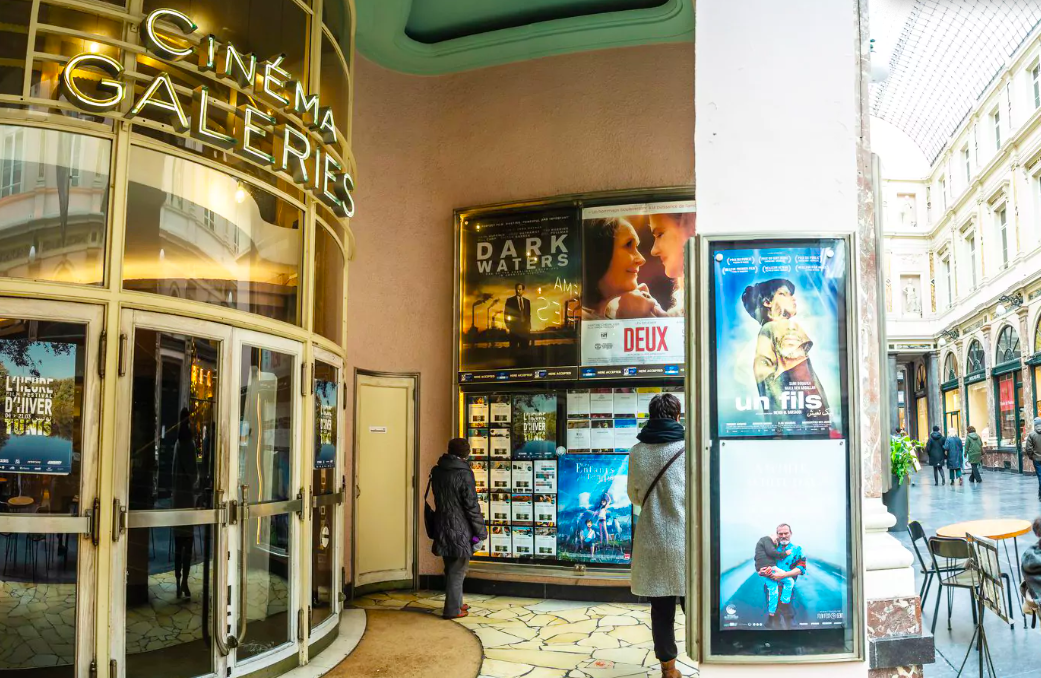
The Cinéma Galeries in Galerie de la Reine, Brussels. Credit: Cinéma Galeries.
The following week, Black Indians explored the Native American experience in New Orleans, while Angel Heart, starring Mickey Rourke and Robert De Niro, showed just how many shapes the devil can take.
And just when we can’t take anymore – enter Marlon Brando in one of the city's most celebrated cinematic turns.
In 1951's A Streetcar Named Desire, he embodies raw masculinity, exemplifies class struggle, and the destructive nature of desire, all the while shining a light on how women’s narratives can be stolen from them. Vivien Leigh’s Blanche is stripped of her story, her illusions, and with them her truth, crushed under the louder, dominating force of male power. Brando’s Stanley dominates every scene, creating a tension so sharp you could hear a pin drop within it.
It becomes a metaphor for New Orleans itself: a city that clings to what exists outside conventional morality where things are rarely what they seem.
Next, we come to Lynch. In Wild at Heart Nicolas Cage and Laura Dern give us a modern-age Bonnie and Clyde. Cage’s “Sailor” embodies James Joyce’s words –“He was alone. He was unheeded, happy, and near to the wild heart of life.” Dern’s Lula wants a piece of him all the same. She defies her family, survives Bobby Peru, played by the ever charismatic yet feral Willem Dafoe, and against all odds, wins over Sailor after his time in jail, snakeskin jacket in hand.
Closing numbers
The festival closes with three final visions of New Orleans: The Flame of New Orleans shimmers with Marlene Dietrich’s wit and mystery, a playful acknowledgement that desire is often as much performance as passion. The Whole Gritty City, a documentary pulling back the curtain on young marching bands, showing the music and joy that keep the city alive.
Obsession, Brian De Palma’s dreamlike vision of love, loss, and illusion, circles us back to the city’s shadowed beauty. The film will close the festival, showing at Cinéma Galeries on Tuesday, 19 August.
Together, these films leave us with the imprint of the same pulse running through the whole festival: the fight to hold onto love, music, dichotomies, and meaning in a world always threatening to take them away.
Seeing these films in Brussels feels resonant this summer. Ours too is a city of crossings: languages, histories, identities, are all layered and colliding. A place built on exchange, where nothing survives unless it’s told. Watching New Orleans on screen here feels like recognition – culture is fragile, and only stories keep it alive.
