
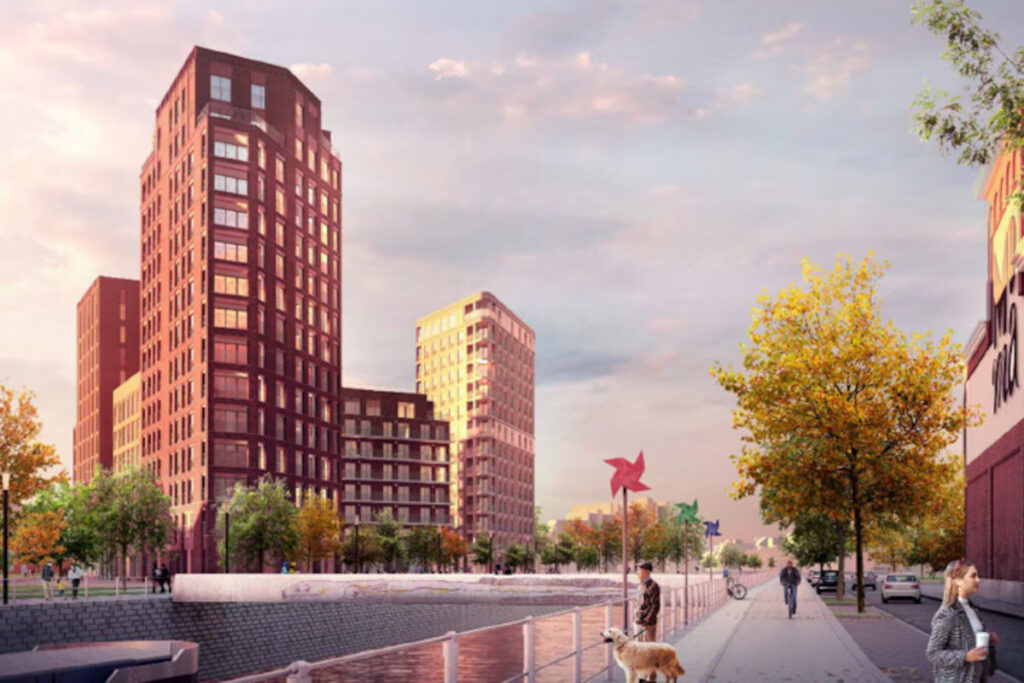
A long-abandoned site on the border between Molenbeek and central Brussels may finally be given a new lease of life.
On Monday, a public inquiry was launched into plans to redevelop the area around the Ninove Gate (Ninoofsepoort/Porte de Ninove), a plot of land that has stood empty for decades.
The project, led by developers Alides and Ion, envisions the construction of five new buildings, including a residential tower that will reach 49 metres in height. In total, the development would provide 105 homes and 133 student rooms, along with 2,000 square metres of communal infrastructure. The latter includes a community health centre, a library, and a cultural facility, while a further 500 square metres would be allocated to retail space.
The triangular site, located between Square Auguste Smets, Chaussée de Ninove and Quai de l’Industrie, has been the subject of multiple failed redevelopment attempts in recent decades. Earlier plans, including the Watan offices and three residential towers once proposed by construction group Besix, never materialised, with a particularly controversial 90-metre tower project meeting strong resistance from residents and authorities.
As a result, the land gradually turned into a derelict patch, sometimes described as an "urban swamp". The latest proposal, unveiled last year, now aims to integrate housing with services and community infrastructure in order to anchor the project more firmly in the neighbourhood’s needs.
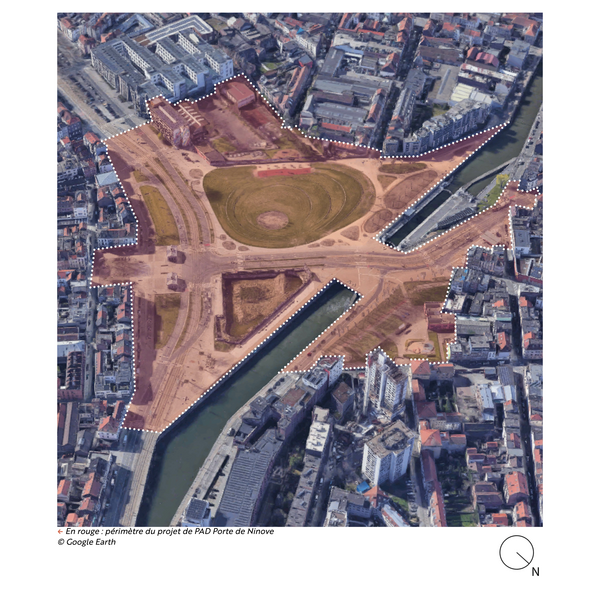
Perimeter of the project. Credit : Perspectives-Brussels
Heritage-rich surroundings
Any redevelopment of the Ninove Gate will take place in an area with remarkable historical and architectural heritage. The most emblematic features are the two former octroi pavilions, listed since 1998. Built in 1833–34 by architect Payen, they once housed the municipal tax service that collected duties on goods entering the city. While most such pavilions were demolished after the tax was abolished in 1860, the ones at Ninove Gate are unique in Brussels for having never been moved or altered.
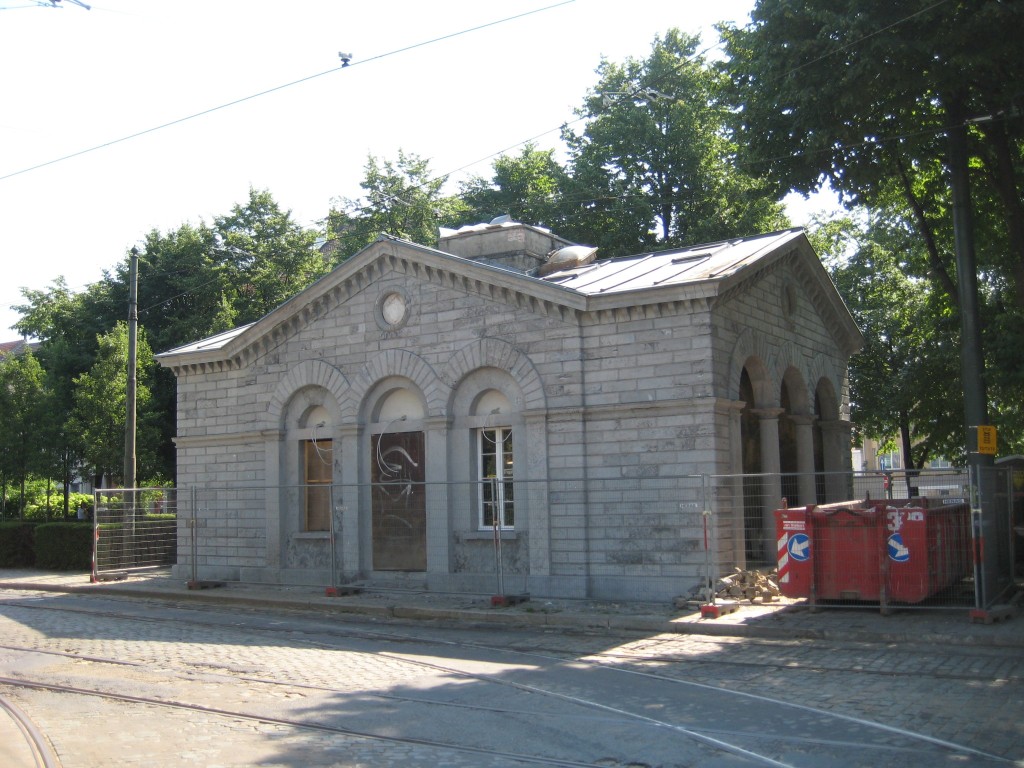
While most such pavilions were demolished after the tax was abolished in 1860, the ones at Ninove Gate are unique in Brussels for having never been moved or altered. Credit : Porteninovepoort.be
Another striking feature nearby is the 36-metre lead shot tower, built in 1898 for the production of lead pellets used in ammunition. Molten lead was poured from the top, passing through a grid before solidifying into shot by the time it reached the bottom. It is the last tower of its kind in Belgium and among the few still standing worldwide; it has been protected since 1984.
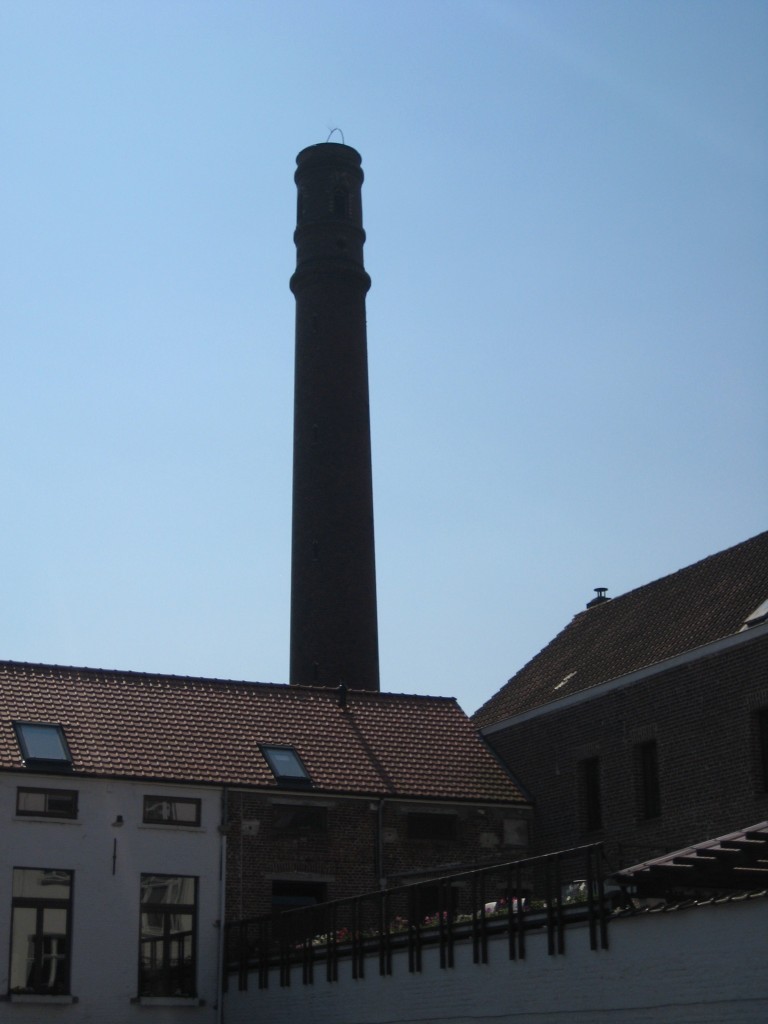
The lead shot tower is the last tower of its kind in Belgium and among the few still standing worldwide; it has been protected since 1984. Credit : Porteninovepoort.be
Equally significant is the former substation of the Abattoir power plant, designed in 1930 by architect Malfait and now part of the Institut des Arts et Métiers. The building, located on the site of the former Petite Écluse (small lock), was listed in 1998 and officially classified as heritage in 2016.
Other elements of heritage remain unprotected. These include an old lock from around 1830, rediscovered in 2016 beneath a former Brussels-Propreté warehouse, and the wall of the former abattoir dating from 1841, still visible along Quai de l’Industrie. The area is also home to neo-Gothic social housing on Rue de la Poudrière, protected since 1988, though little known to the general public.
The public inquiry officially opened on 18 August. An information session will take place on 25 August at 18:00 in the WAQ offices on Rue de Liverpool.
