
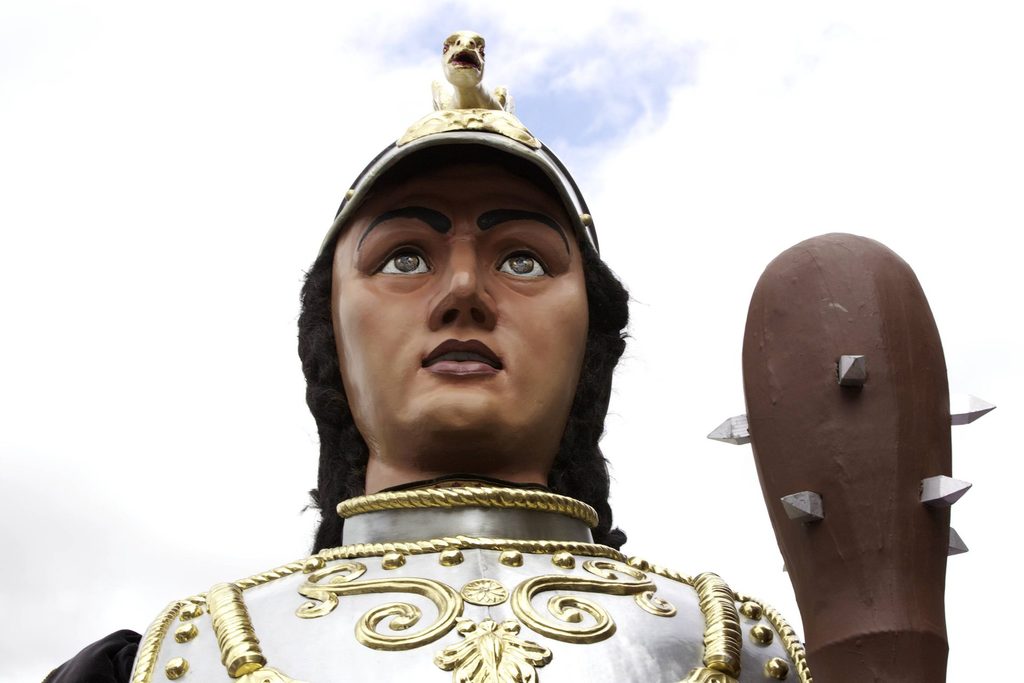
Every summer, in the otherwise tranquil Walloon town of Ath, giants walk through the streets. The controversial Belgian folk festival returns again, this time with updated traditions.
Large figures, some over four metres tall, sway and dance to brass bands as thousands of spectators line the pavements. The Ducasse d'Ath is one of Belgium’s most captivating folk festivals, a blend of history, pageantry, and community spirit.
The festival dates back to the 15th century, when Ath’s Church of St Julian organised a religious procession. Over time, that ritual evolved into folklore, with biblical and mythical figures added to the parade. Chief among them is Goliath, who appears alongside his bride on the Saturday before the grand Sunday procession. His adversary, David, soon follows, sling in hand, as the giants dance their way through the town.
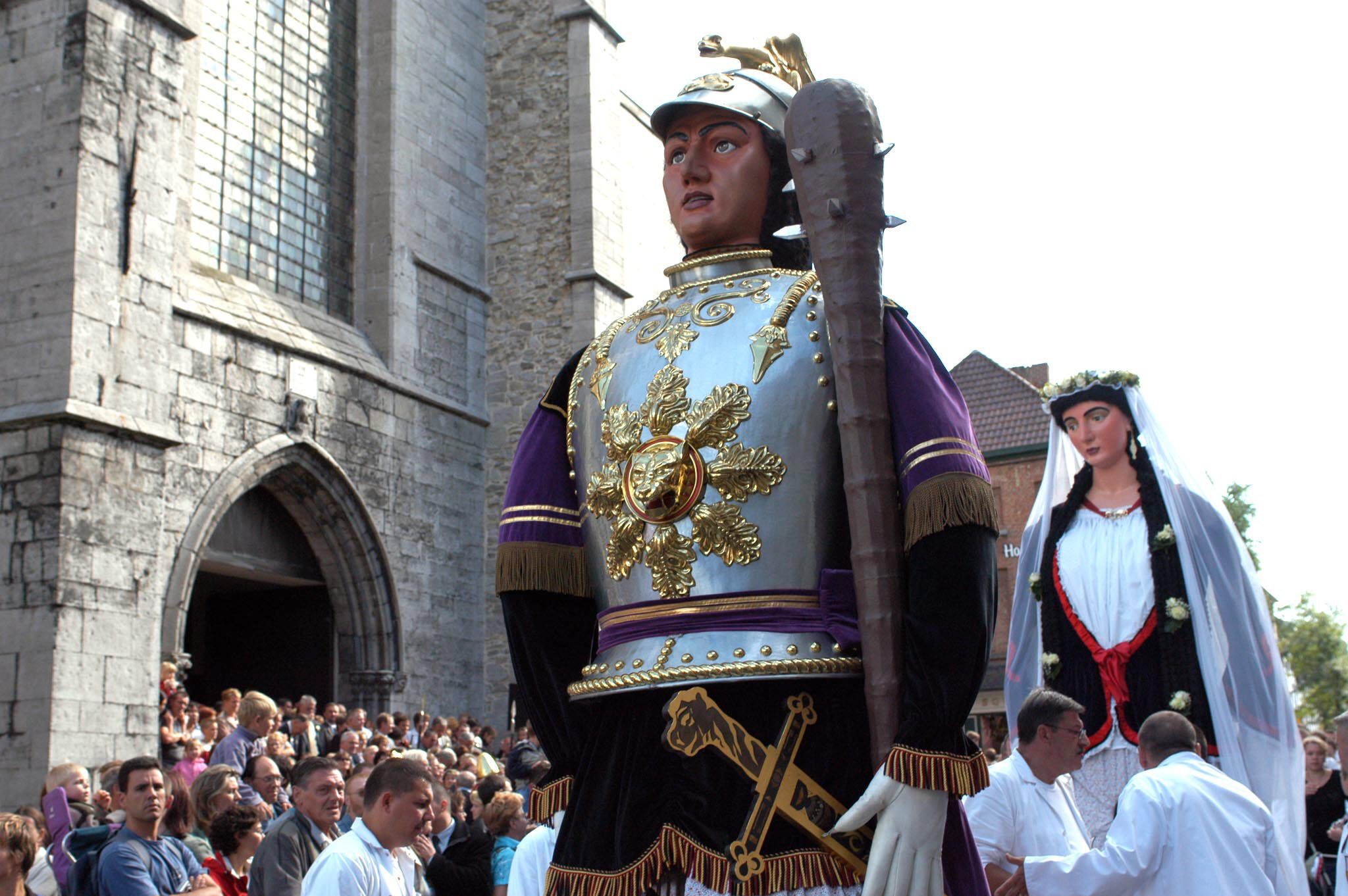
The wedding of Goliath and the fight between David and Goliath were represented during the Ducasse d'Ath, Saturday 21 August 2004 in Ath.
Credit : Belga
Another star is Bayard, the legendary horse that carries four knights on its back, a creature of extraordinary scale brought to life by local teams. The craftsmanship is staggering: each giant can weigh over 100 kilos, requiring skill, rhythm, and stamina to manoeuvre.
The Ducasse is not a single event but a continuous celebration. It begins today at 15:00. with the appearance of Tirant the giant and a carillon concert. It will end later this evening with the burning of Goliath's trousers, a local tradition dating back to 1986, where straw-filled giant trousers are set ablaze on the Esplanade to mark the eve of Goliath's wedding.
The controversy
For years, the Ducasse d’Ath has enjoyed international acclaim, earning UNESCO recognition as part of humanity’s intangible cultural heritage. But in 2022, that honour was stripped away. The reason - a controversial character known as "the Savage", who had long performed in blackface. Critics had called it racist for years, and eventually, UNESCO agreed.
The debate on the decolonisation of public space, questioning monuments, names, and traditions linked to colonialism or racial stereotypes, had also reached Belgium at that time. The figure of Zwarte Piet, who accompanies Saint Nicholas in December celebrations, had also drawn criticism for its use of blackface and colonial stereotypes.
Much like the controversy around Ath’s "the Savage", Zwarte Piet has become a focal point in the broader movement to decolonise public space. Organisers subsequently removed the figure and introduced a new character, "the Devil", depicted as a red figure with horns.
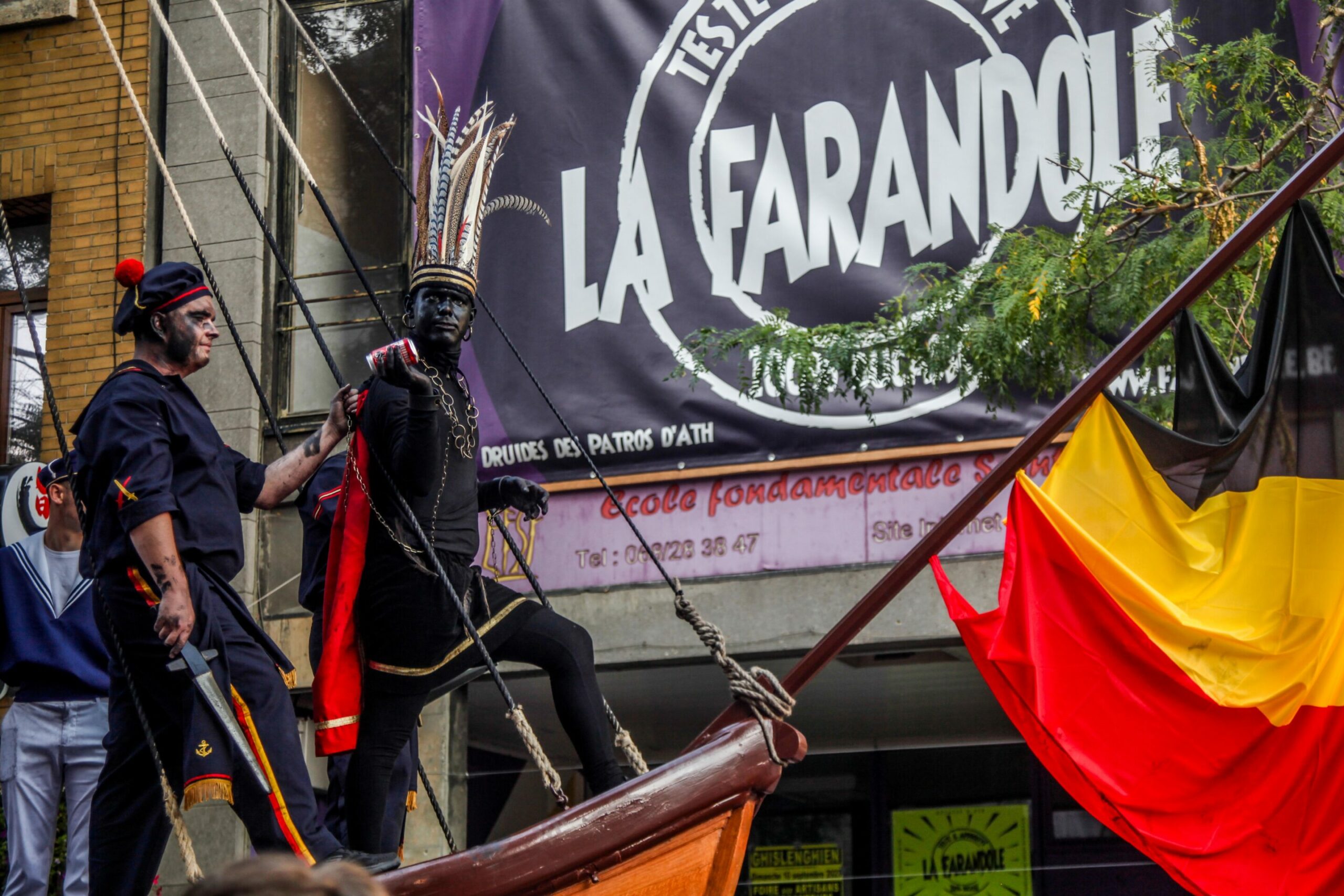
The 'Sauvage' pictured during the Ducasse festivities with the marriage of the two giants. Credit : Belga
The decision illustrated how historic traditions are being reshaped in response to contemporary concerns. Like the removals of statues of colonial figures in the United Kingdom, the United States and New Zealand, Ath’s festival has had to adjust its imagery to remain part of modern public life.
The transformation was tough for folklore enthusiasts and locals; it even reappeared in 2023 despite complaints. However, the change was unavoidable and essential, demonstrating how centuries-old traditions must evolve with modern values.
On the other hand, no folk festival in Belgium is complete without its delicacies. In Ath, that means the tarte à masteilles, a sweet almond tart enjoyed since the 16th century, often paired with a glass of Burgundy wine. Between processions, cafés overflow with locals and visitors alike, raising glasses to the giants marching outside.
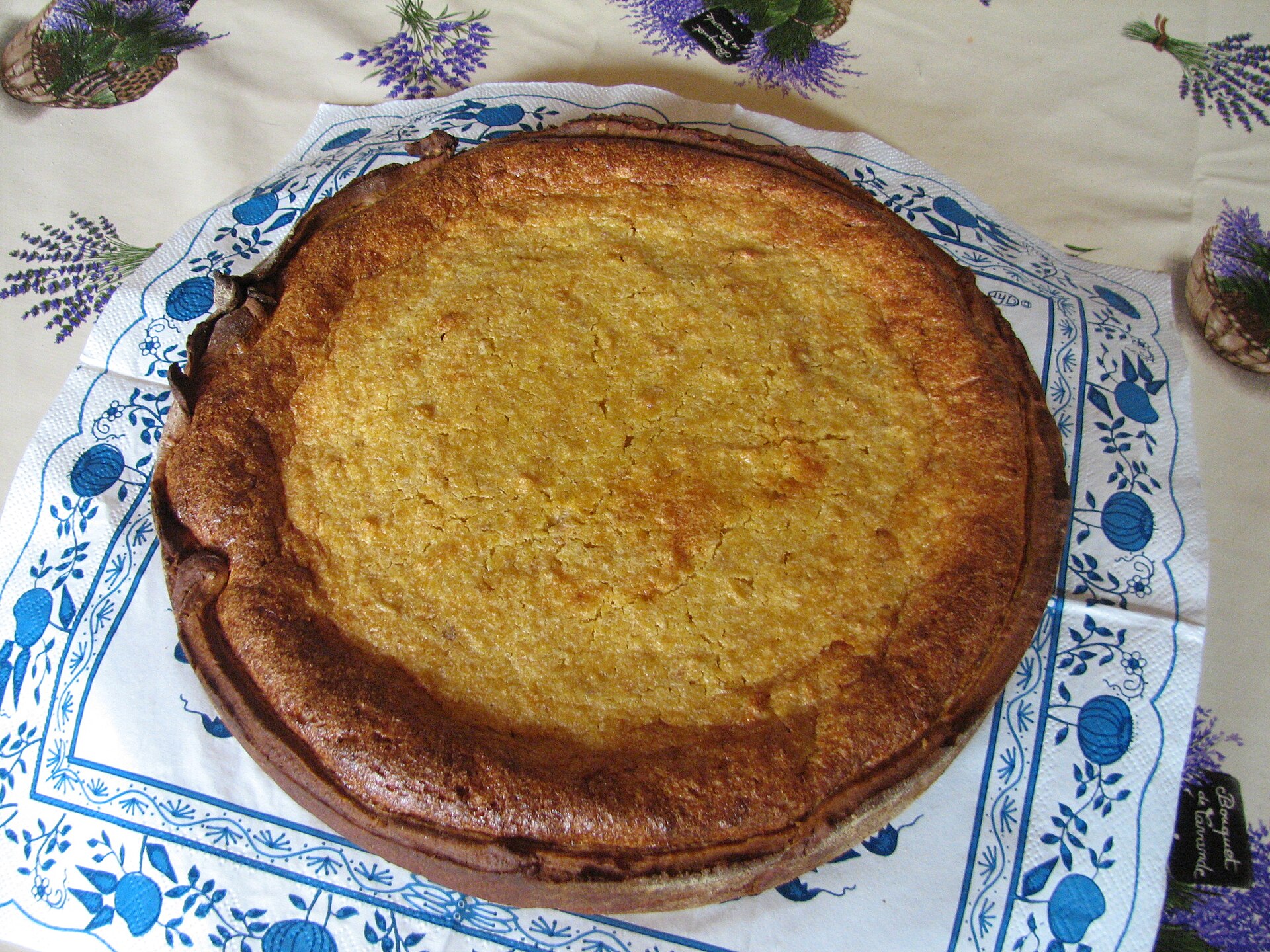
Tarte à masteilles, a sweet almond typical Ath tart enjoyed since the 16th century, often paired with a glass of Burgundy wine. Credit : Daniel Leclerq
Those keen to explore further can visit the Maison des Géants, a museum dedicated to the festival’s colossal figures. Costumes, construction techniques and stories from past generations ensure the giants live on long after the crowds disperse.
What makes the Ducasse d’Ath exceptional is not just its spectacle but also its spirit.
For outsiders, it is excellent theatre. Even as the festival grapples with its past, it remains a vivid reminder of the power of tradition to unite people.
The programme
Friday
15:00 : Procession of the giant Tirant and a carillon concert.
16:00 : The Mayor’s Grand Archery Prize.
22:00 : The burning of Goliath’s trousers, a local tradition dating back to 1986, where straw-stuffed giant trousers are set alight on the Esplanade to mark the eve of Goliath’s wedding.
Saturday
- Noon: Tolling of "Julienne", the great bell of St Julian’s church, followed by a carillon concert.
15:00 : Goliath and his bride, escorted by Ath’s famous "Blues", dance from City Hall to St Julian’s Church for the Vespers of Gouyasse and their mock marriage.
17:00 : Outside City Hall, young David challenges Goliath in the traditional dialogue, the Bonimée, before the giants break into their famous dance.
Evening: Carillon concerts, a fanfare by the Union Saint-Martin, and torchlit processions recalling the Belgian Revolution of 1830.
Sunday : the Grand Procession
08:00.: Morning carillon concert.
09:45 .: Departure of the Grand Procession: seven giants, eight allegorical floats, musicians, and historical groups traverse the town. A single man carries each giant; Bayard the horse requires sixteen. Their traditional dances are performed at specific bridges along the route.
15:00 : Return procession, concluding on the Grand Place with music and the giants' final dances.
Monday
Giants parade once more through the streets to thank the townspeople.
16:30 : Marching bands, majorettes and "mini-giants" take the stage.
18:00 : A hot-air balloon ascends from the Esplanade, with rides available for the daring, accompanied by more carillon music.
Related News
- Ducasse d'Ath: 'Savage' character will be replaced after long-standing racism accusations
- Blackface 'Savage' features in Walloon parade again despite racism accusations
- Belgian parade removed from UNESCO heritage list over racism complaints
- Anti-racism activist removed from Walloon parade over blackface protest
- UNESCO-ranked parade under fire for 'racist' depictions
- Brussels and Wallonia strengthen protection of intangible cultural heritage
