
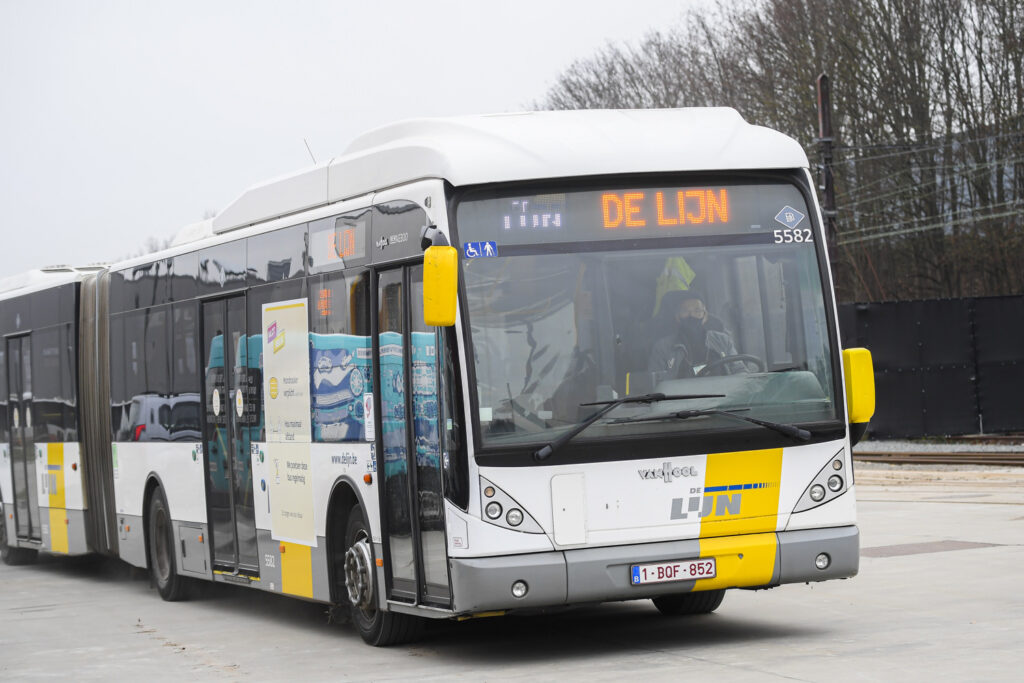
Over 45,000 pupils attending special education schools are expected to take the bus from Monday, 1 September, according to the Federation of Belgian Bus and Coach Companies (FBAA).
However, De Lijn, the public transport operator responsible for contracting bus companies for school service, disputes this figure. Focussing instead on the number of stops buses make, it estimates the number of special education children using buses to go to school at around 44,000 for the upcoming academic year.
A total of 2,148 bus drivers will transport the children to and from school daily.
“Year after year, more pupils in special education rely on school buses,” says FBAA CEO Pieter Van Bastelaere. “To ensure the quality and continuity of these routes, adequate funding is essential.”
Each year, school buses collectively travel about 25 million kilometres.
The FBAA has called for increased funding for transport services. “We are constantly playing catch-up,” says FBAA spokesperson Kim Taylor. “Changes to special education policies by the Ministry of Education often take time to filter through to us. School transport companies can continue to fulfil their role only if financial support keeps pace.”
De Lijn emphasises the significance of the number of bus stops and average travel times for optimising school transport. “The number of stops has risen from 42,000 in the 2022–2023 school year to 44,000 this year,” says De Lijn spokesperson Jens Van Herp. “We have coordinated with schools to ensure that every enrolled pupil has a designated bus stop. Every seat on the bus will certainly be occupied.”
The FBAA also provides specialised training for bus drivers who transport pupils to and from special education schools.
Both the FBAA and De Lijn are collaborating with the Flemish government on a strategy paper aimed at reforming transport services by 2040.
“Pilot projects, such as introducing centralised bus stops to reduce travel time, are underway,” Van Herp says. “So far, these initiatives seem to be successful.”
