
The Brussels Public Prosecutor's Office is reopening a money laundering case involving Russian oligarch Oleg Deripaska. Former Belgian Minister and European Commissioner Didier Reynders (MR) has reportedly been implicated in this, according to research by HUMO and Apache.
Two months ago, it became clear that the Public Prosecutor's Office was looking into money laundering via antiques in the judicial investigation into Reynders. A search was conducted, among other things, at the home of well-known Brussels antique dealer Olivier Theunissen.
Reynders' right-hand man, Jean-Claude Fontinoy, is said to have purchased several thousand euros' worth of art and antiques in cash from Theunissen almost daily, according to the French-language investigative website National 4. A search was also conducted at Fontinoy's home.
An investigation by the Financial Intelligence Unit (CFI), better known as the anti-money laundering unit, also revealed that antiques and real estate are significant channels for money laundering. In 2014, the anti-money laundering unit exposed the money laundering scheme surrounding an art foundation in Uccle, the non-profit organisation Association Bruno Lussato et Marina Fédier, in meticulous detail to the Brussels Public Prosecutor's Office.

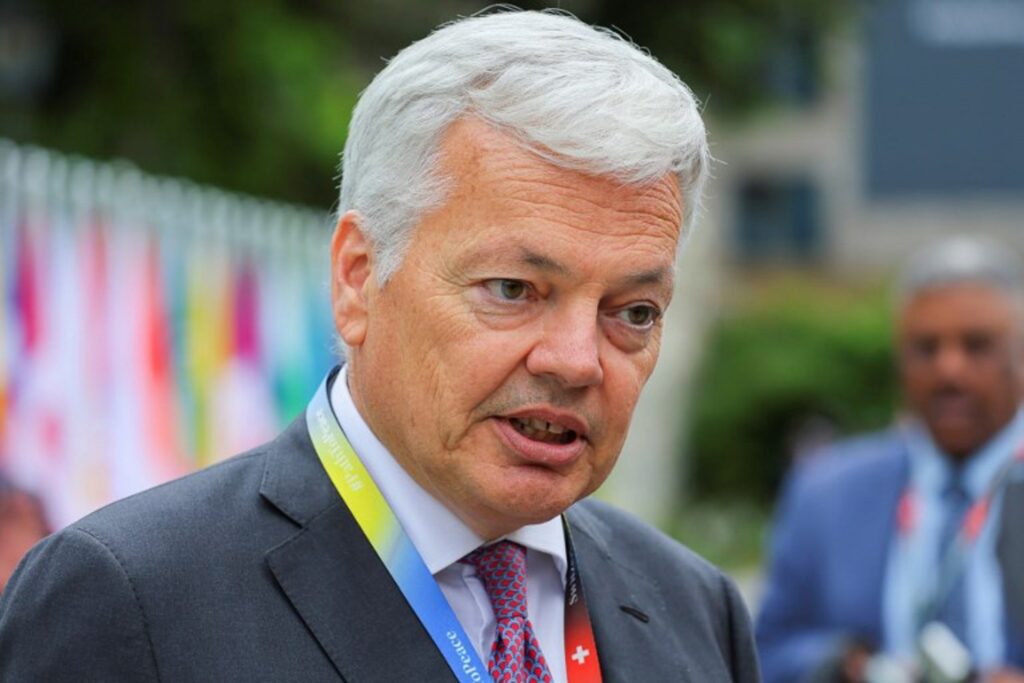
Didier Reynders. Credit: Belga
The Russian oligarch Oleg Deripaska, a close associate of Russian President Vladimir Putin, had founded the foundation. Reynders was said to be a close friend.
His former advisor, Constantin Chariot, was the director of the foundation's museum. He held power of attorney for the non-profit organisation's account. In its 2014 annual report, the anti-money laundering unit cited "close ties between those involved and politically exposed persons in Russia and Belgium."
There were subtle threats from Deripaska's entourage directed at the anti-money laundering unit, and the case was quickly dropped. At the time, Reynders was the minister responsible for Foreign Affairs, Foreign Trade, and European Affairs.
After that, the case went quiet. Now, Apache and HUMO established that in recent years, €878,000 was transferred from the central non-profit organisation to another Brussels non-profit organisation. The latter one was founded and managed by individuals closely linked to Russian disinformation campaigns or large-scale financial operations clearly bearing the Kremlin's seal of approval.
The real estate in Uccle is also still registered in the names of Deripaska's Liechtenstein foundations.
Sanctions regulation
The proper freezing of assets belonging to oligarchs on the Russian sanctions list has previously been problematic elsewhere in Europe, as fiscal technology allows them to avoid sanctions.
The responsible Minister of Finance, Jan Jambon (N-VA), declined to answer the question of whether Deripaska's real estate in Belgium was effectively frozen, as required by the European sanctions regulation.
Reynders himself also declined to comment. His former associate, Constantin Chariot, says he was never aware of a possible money laundering operation. He stated that he was only questioned by the Public Prosecutor's Office as a witness, never as a suspect.
