
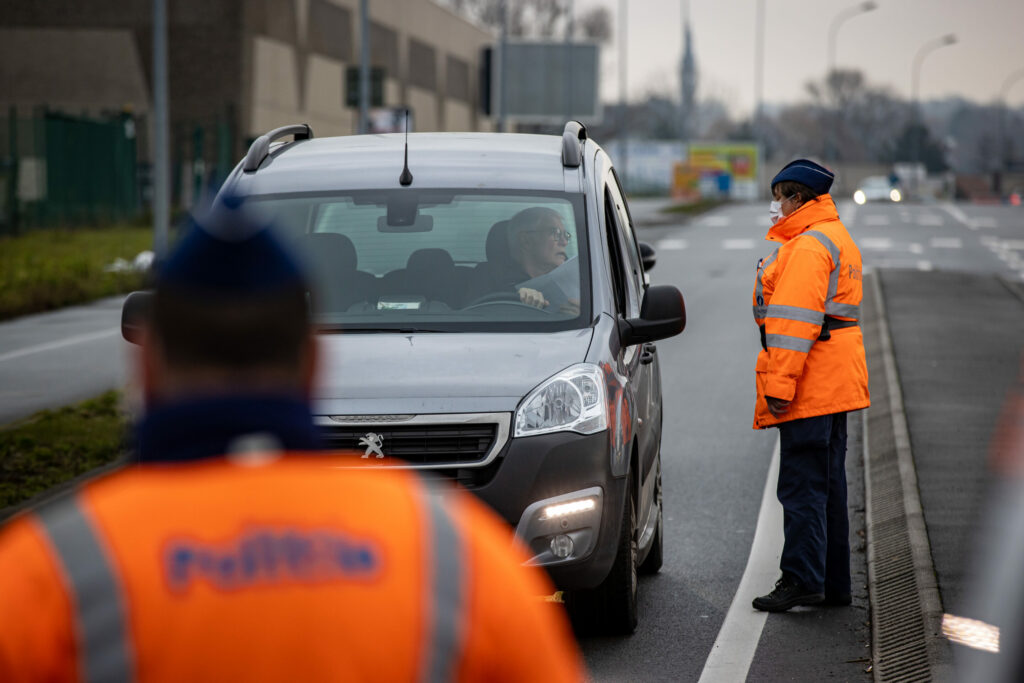
With different speed limits in different regions and unpredictable Belgian motorists, driving in Belgium can be stressful. On top of different rules, it is also compulsory to have several items in your vehicle at all times.
The Brussels Times, alongside the VIAS Road Safety Institute, has compiled this guide for non-Belgian drivers planning a road trip across Belgium.
First and foremost, speed limits in Belgium are not as straightforward as in many other countries. They are as follows:
- 120 km/h (75 mph) on motorways
- 90 km/h (56 mph) outside built-up areas in Wallonia
- 70 km/h (43 mph) outside built-up areas in Flanders and the Brussels-Capital Region
- 50 km/h (31 mph) in built-up areas
- 30 km/h (19 mph) in school zones across the country, as well as most roads in the Brussels-Capital Region (with the exception of certain main roads with dedicated higher speed sections)
Driver's licence
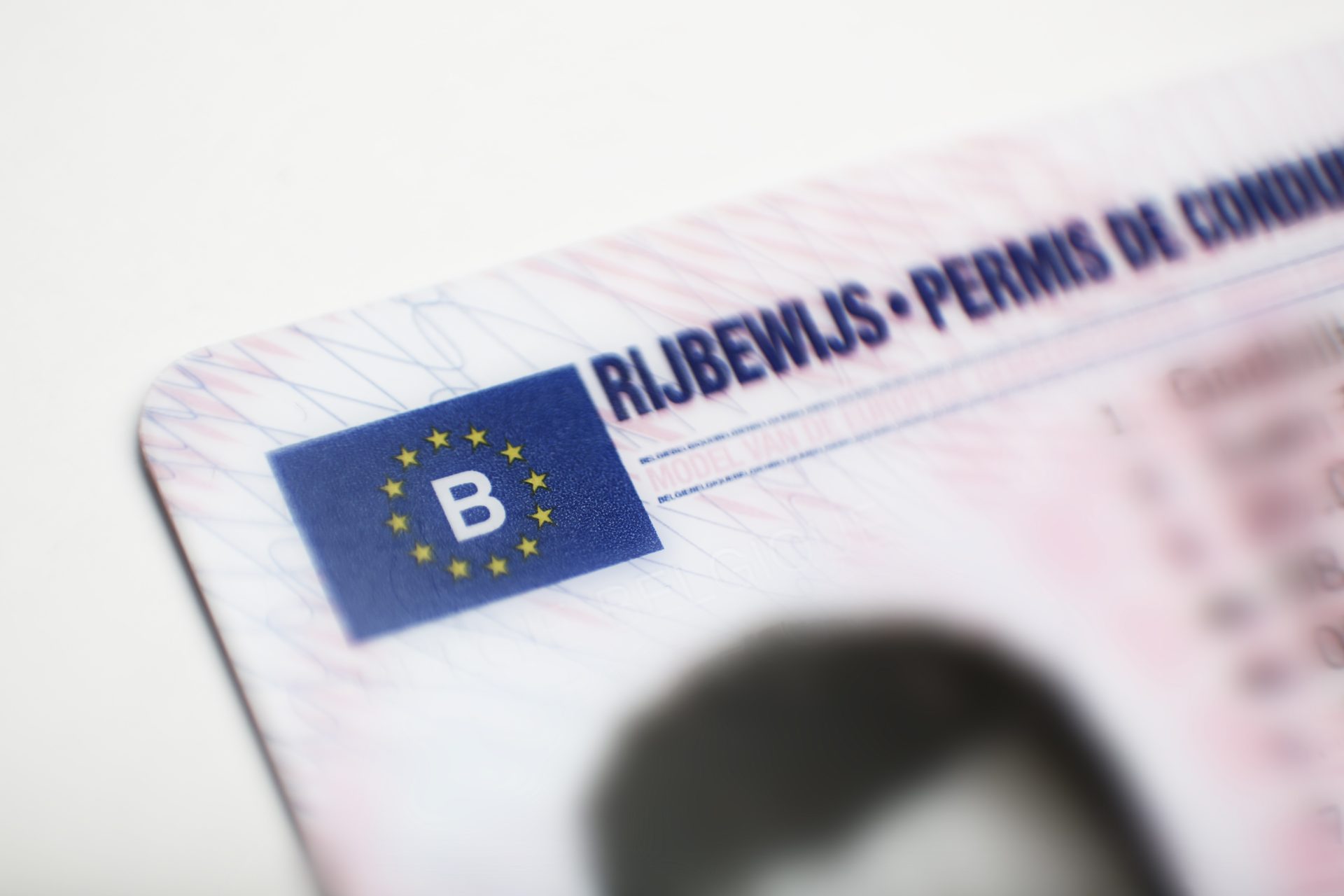
It goes without saying that drivers should carry a driver's licence with them at all times on Belgian roads. But those with a foreign driver's licence should keep in mind that not all licences are recognised equally.
Expats living in Belgium and using a foreign driver's licence should ensure that they exchange their foreign licence if required. As a general rule, plastic bank card-style licences can be used by expats up until three months before their expiry date, after which time they should be exchanged for a Belgian one.
Likewise, European drivers with a paper licence, those without an expiry date, or licences valid for over 15 years, should be exchanged at the expat's local commune after two years of use since registering at the commune.
Credit: Belga/Siska Gremmelprez
Those driving in Belgium – even in transit – on a non-EU driver's licence and whose country does not have an agreement with the EU, should carry an international driver's licence in addition to their national licence. Motorists from the UK may travel on just their national licence.
While some countries (such as Norway, South Korea, Denmark, and Kosovo, among others) issue digital driver's licences, these are not accepted in Belgium. Only physical licences are currently considered valid.
Non-EU citizens residing in Belgium must exchange their foreign driving licence for a Belgian one within 185 days of registering at their local commune.
Foreign drivers, as well as their passengers, must also carry a valid passport in case they are stopped by the police. EU citizens may also present a valid national ID card.
Insurance documents
In Belgium, all drivers must carry insurance documents in their vehicles. "In theory, you should always have the originals of these documents with you," the VIAS Institute told The Brussels Times.
The driver must have in their vehicle a car insurance policy document, a vehicle registration certificate, a document proving that the vehicle has passed its 'MOT' (contrôle technique in French, keuring in Dutch), as well as a certificate of conformity. If the vehicle does not belong to you, you should also have a document with written permission allowing you to drive the vehicle.

Credit: Skoops/Wikimedia Commons
In practice, these should all be originals in their paper format. However, Belgian car insurance companies are increasingly issuing digital car insurance certificates, which are valid in Belgium. Non-Belgians may also present their car insurance certificate (green card) digitally, but it is still advisable to bring a paper original.
Safety tools
While many drivers usually remember all their vehicle documents, other compulsory items are commonly forgotten. Yet, they can be fined up to €55 on the spot for not having them to hand during police checks.
A fluorescent jacket is compulsory for all vehicles on the road in Belgium (even those passing through from abroad), according to the Drivers' Code. The law requires motorists to have at least one jacket per vehicle, but it is advisable for all passengers to have their own jacket in the event of a breakdown.
These fluorescent jackets should be put on when you get out of the vehicle in a place where you cannot typically stop or park. This is not exclusive to motorways. Motorcyclists are not required to have a fluorescent jacket, but are strongly advised to do so.

Credit: Roulex 45/Wikimedia Commons
Drivers are also required to have a warning triangle. In the case of a breakdown in a location where stopping is not typically allowed, this item should ideally be placed 100 metres – or at a minimum 30 metres – from the vehicle. Motorcyclists do not have to carry this item.
VIAS notes that drivers must also carry a first aid kit and a fire extinguisher. These items are required by law, and the fire extinguisher must be easily accessible to the driver.
For vehicles weighing less than 3,500 kg, the extinguisher must have 1 kg of flame-retardant powder. For 3,500-7,500 kg, it should have 2 kg of powder. For large vehicles over 7,500 kg, it should contain 3 kg. The extinguisher must be in date, with an intact seal, and compliant with Belgian standards. It should also be replaced every five years.
A first aid kit is also a legal obligation and must contain different types of dressings, bandages, safety pins, and first aid guidelines. Other items, such as a torch or sunglasses, are not legally required but may still prove useful, VIAS said.
Don't forget
Motorists from the United Kingdom should remember that they are now obliged to have a sticker on the back of their car with a country code, so that they may be identified on the roads. Following Brexit, this sticker must now say 'UK' instead of 'GB'.
Drivers of vehicles designed for left-hand traffic must also have anti-dazzle headlight converter stickers to ensure that the beam is pointed at the right side of the road. In many modern vehicles, this can now be adjusted in the car settings.
