
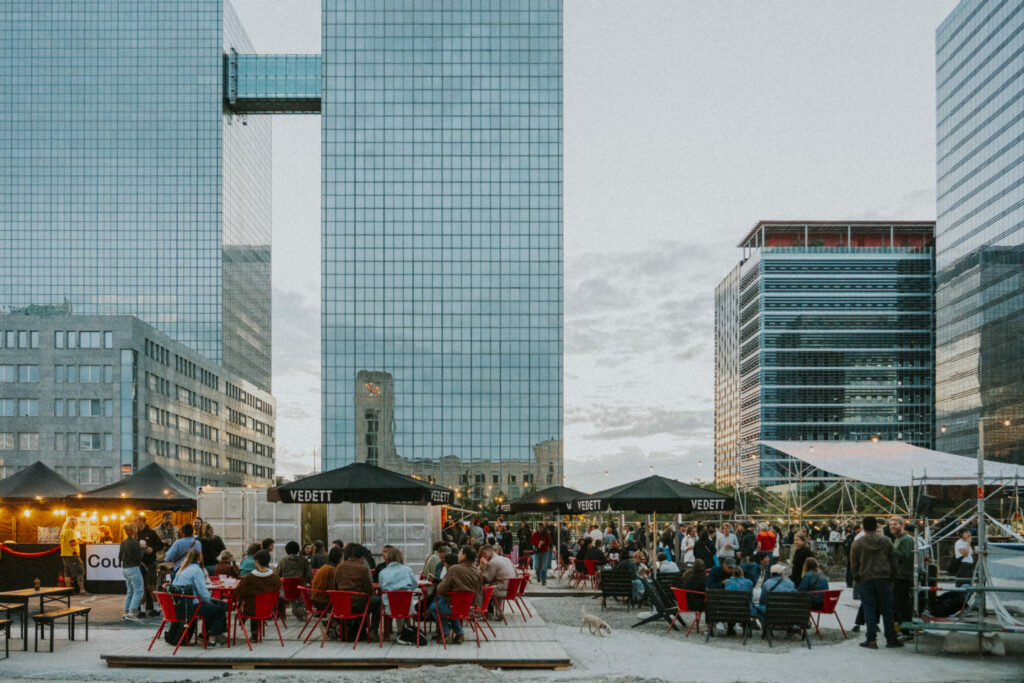
A new project called 'Place Noord' wants to bring community life back to the largely derelict area around Brussels-North station, which is still dealing with the negative effects of 'Brusselization' in 2025.
The pejorative term 'Brusselization' was given to the architectural movement from the second half of the 20th century, defined as a "haphazard urban development" associated with "careless introduction of modern high-rise buildings into gentrified neighbourhoods".
Place Noord is tackling the legacy of Brusselization head on with a new rooftop space for cultural and social events, installed on top of the former CCN building.
Equipped with a guinguette and seating area, the opening night in August hosted DJ sets and a breakdancing performance by Schaerbeek's school of hip-hop. But the project aims to achieve more than simply being a bar and party location.
The non-profit group behind the project, Up4North, wants use the space to guide the regeneration of the area around Brussels-North, under the new name of BXN. Up4North is backed by eight real estate companies (AG Real Estate, Allianz, AXA, Banimmo, Befimmo, Belfius Insurance, Immobel and Triuva), using "tailor-made solutions" rather than large-scale plans.
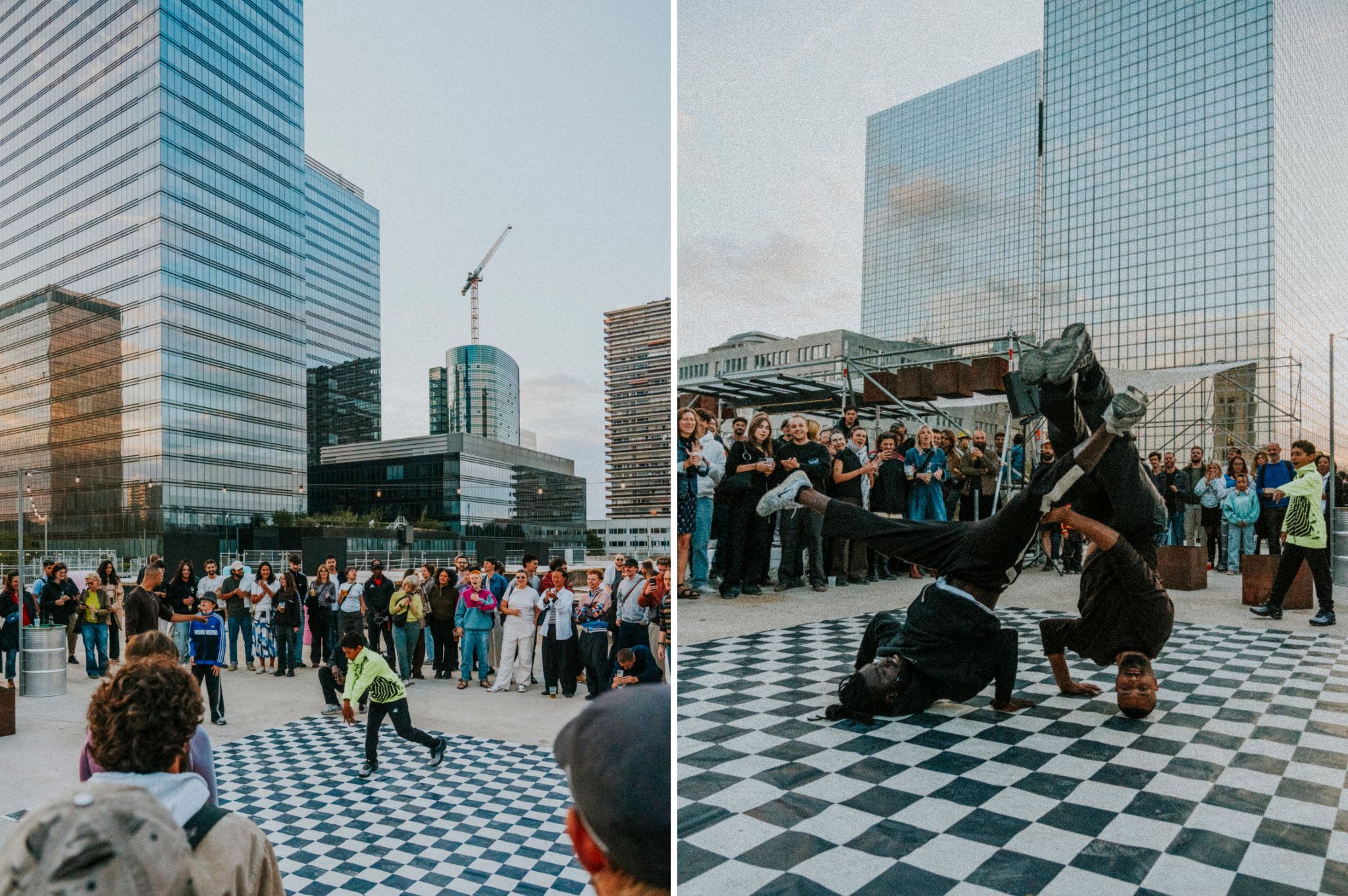
Credit: Diego Crutzen
Place Noord is seen as one of the first steps in the fight to bring life back to the area. The rooftop space uses containers and temporary structures to reference "the unfinished, disrupted nature of this neighbourhood’s story".
Somewhat ironically, the Place Noord rooftop makes Brussels look more like Manhattan - an unintentional nod to the term which inspired Brusselization: Manhattanization. The latter was coined to refer to the construction of tall buildings in densely populated city areas.
Uptown
"It’s true — when you stand at Place Noord, surrounded by glass towers, the scene can resemble a Manhattan rooftop. That image is unavoidable," Xavier Houben, Director of Up4North and owner at Naïf, tells The Brussels Times.
"The towers are here, and they dominate the landscape. But Place Noord is not a celebration of Brusselization — it’s a response to it," he adds.
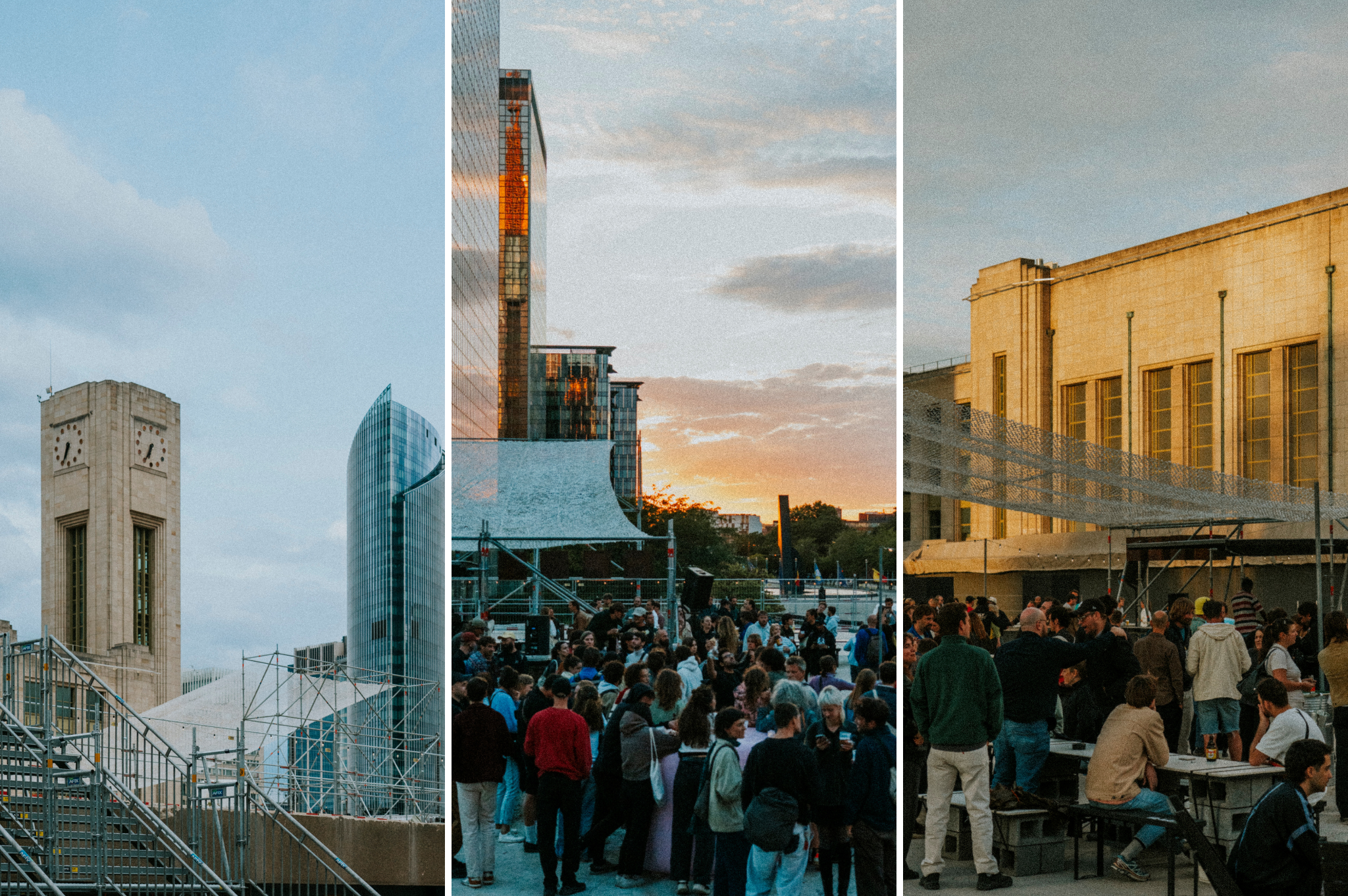
Credit: Diego Crutzen
Nowhere is this more evident than in the Northern Quarter, which was once imagined in the 1960s and 70s as an affluent financial hub and business district, inspired by Manhattan's emblematic skyline.
However, the area struggled to fulfil these lofty ambitions. It was already rundown before the Covid-19 pandemic, but the ensuing lockdowns forced more companies to quit the financial district in favour of teleworking.
Since then, the city has been striving to redevelop and transform it, by converting derelict offices into housing and bringing a variety of social, economic and cultural activity back into this desolate futuristic landscape.
From BXN's offices inside Brussels-North station, Houben explains the project is fully aware of what Brusselization or "Manhattanization" did for this district: "It was a top-down urban development model that displaced communities, erased heritage, and created a neighbourhood designed more for transit and speculation than for people."
"Place Noord does not ignore that history - it recognises it. We do not want to erase the past, but learn from it, and build differently," Houben stresses.
As part of this, Brussels-North is being rebranded as BXN (short for Bruxelles-Nord). The renamed district comprises a larger area extending well beyond the Norther Quarter, the area’s heart, to Place Rogier and Rue de Brabant to Masui, Tour & Taxis, and Kanal.
High-rise flats
Reflecting on architectural crimes of the past, Houben describes the effects of Brusselization as turning the Northern Quarter into "an inhuman, corporate urban landscape, disconnected from local needs".
He says its bulldozers led to the loss of the area’s architectural heritage, while displacing and uprooting entire Brussels North communities, especially in working-class areas.
"We now have a neighbourhood dominated by multifunctional high-rise buildings, with empty streets and a park that, instead of inviting life, functions like a Parisian boulevard designed to lend 'prestige' to the towers," he adds.
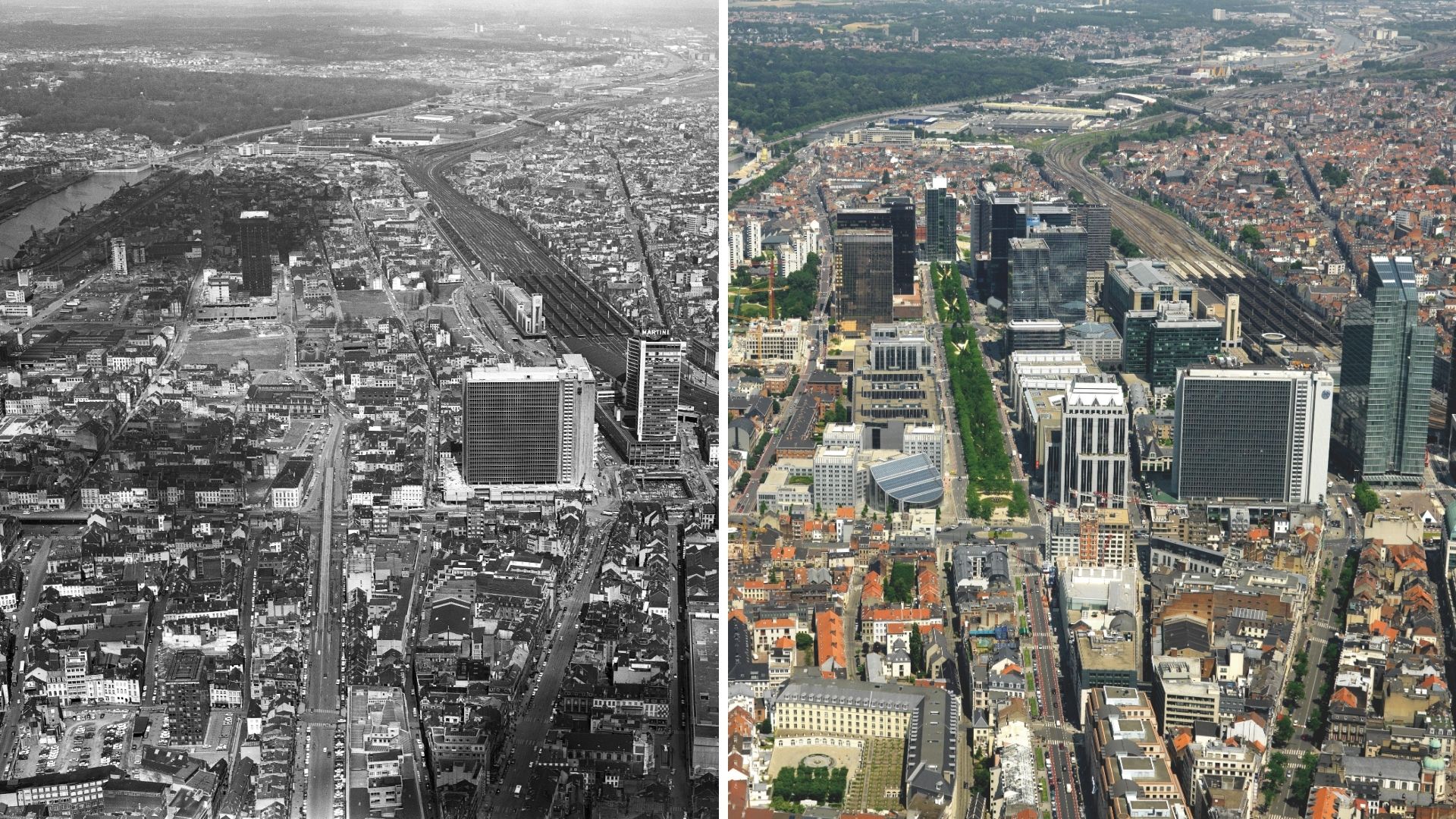
The Northern Quarter area in 1970 (left) and 2010 (right). Courtesy of Alexandre Laurent
Yet, according to Houben, around these towers, the streets are vibrant with life and grassroots initiatives.
For example, the Brussels Region will need to transform the many empty office towers into nearly 2,000 high-rise flats over the next ten years, meaning the neighbourhood is likely to undergo a rapid change.
"Within this transformation lies the possibility to address and repair, on a large scale, the damage once caused by canal-side development," Houben says. "Having learned from past mistakes, we now have a chance - as a society - to prevent repeating them."
Creative powerhouse
The heart of the project lies in changing the Brusselized neighbourhood’s image from an administrative and business hub into a creative hub – with projects such as Place Noord as a vital part of its new identity.
"With actors such as KANAL-Centre Pompidou, Dexia Art, and many independent artists based in the area, BXN has long been a hidden cultural powerhouse," Houben explains.
Place Noord has teamed up with various cultural actors, including event organisers Play Label Records and Bruxelair, with the cultural programming being a "central vision" for BXN's future.
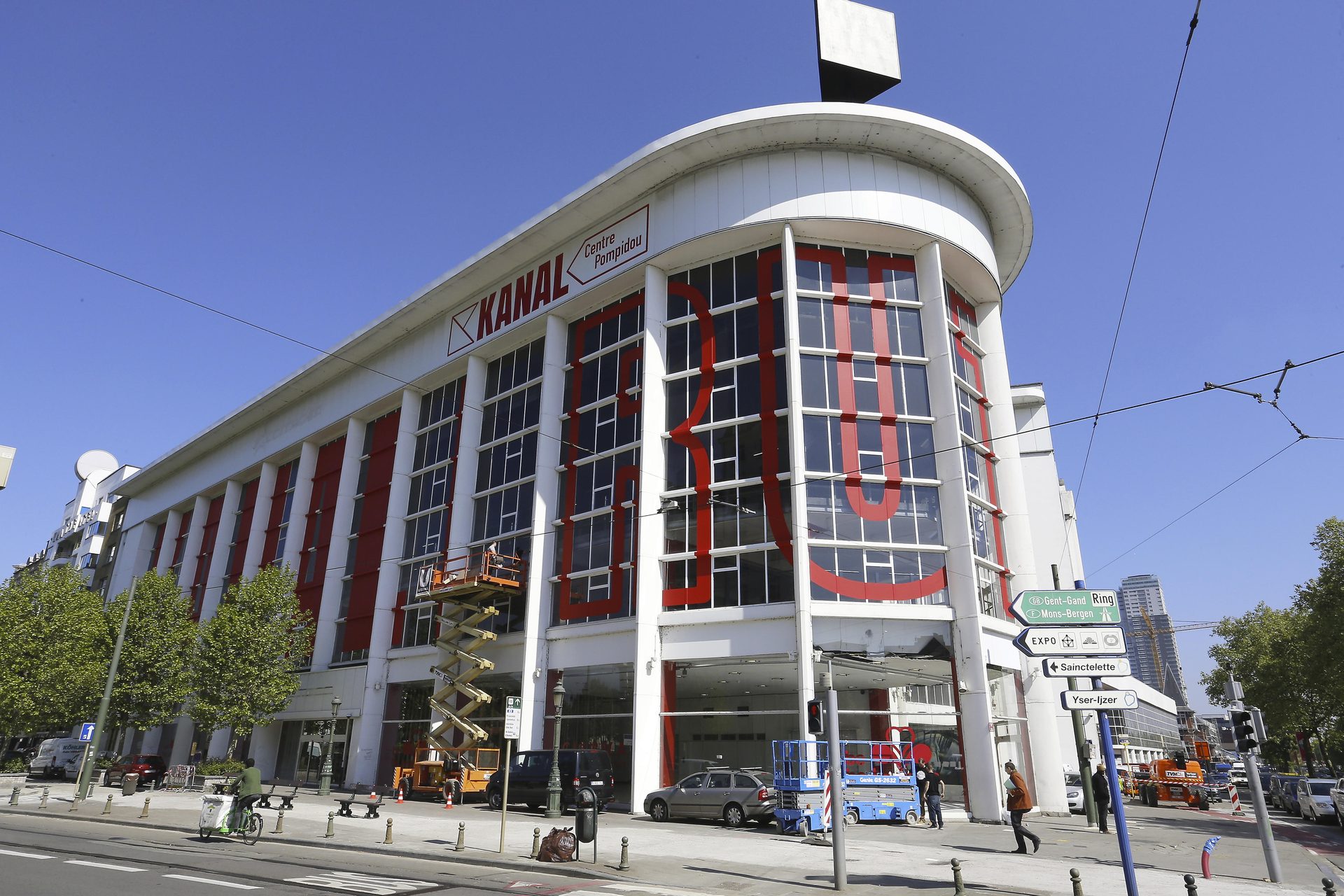
The Kanal Centre Pompidou building is currently being reconstructed. Credit: Belga / Nicolas Maeterlinck
Art, music, and creativity will drive the project's programming, with open-air sets, soundscapes, and inclusive events, which are designed to bring the "sound of the city" back into its public space.
"Place Noord is not a finished product — it is deliberately a work in progress." Houben continues. "But this time, the process is being approached from the ground up - with input from residents, workers, artists, associations, and the local community."
Future of the North
To do this, a lead community engagement office, Pauline Omnes, has been appointed to "build bridges between all the people who live, work and engage in the neighbourhood."
According to Houben, Omnes will be connecting residents, workers, local associations and grassroots organisations to shape and maintain an inclusive and vibrant neighbourhood.
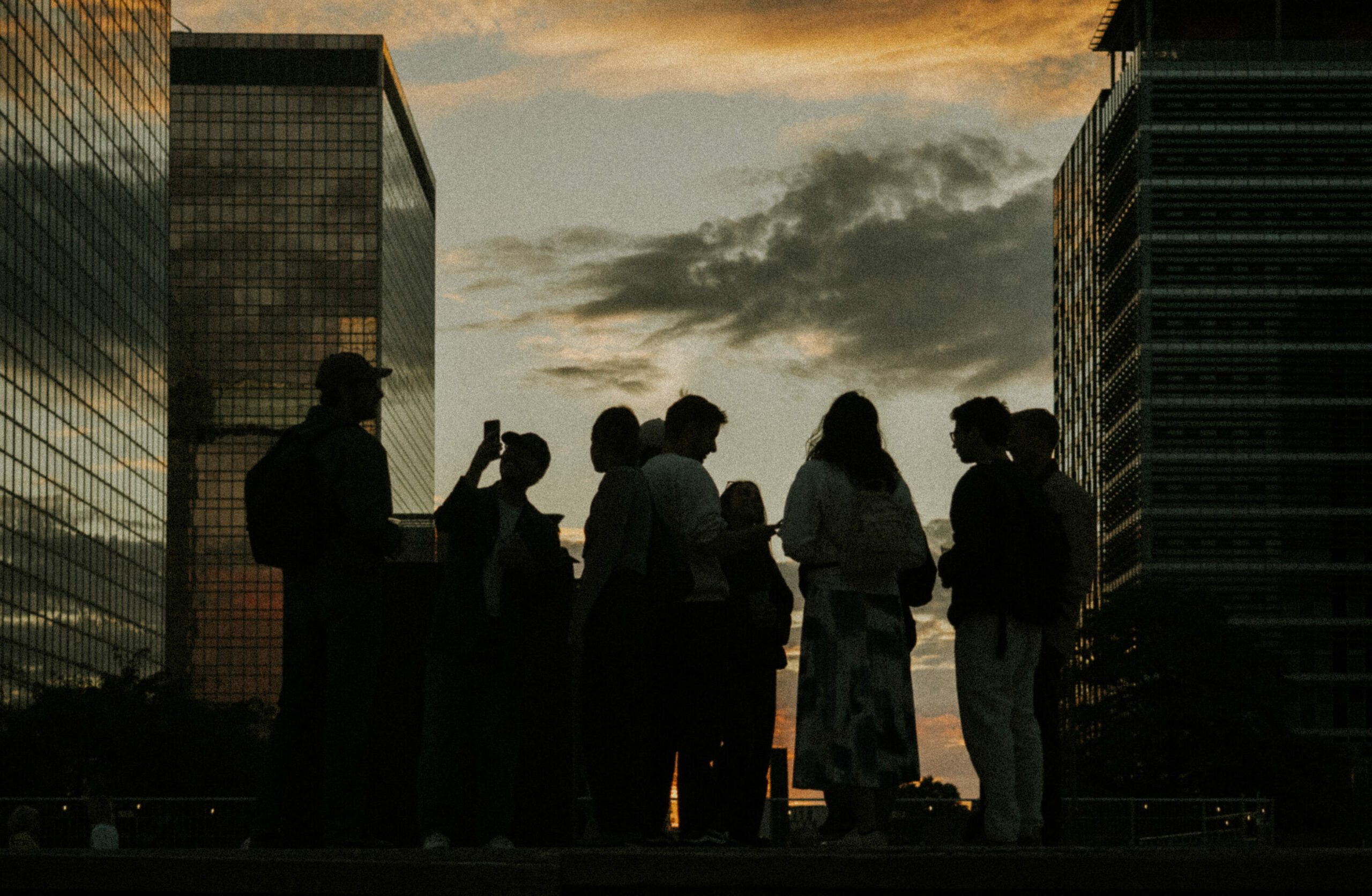
Place Noord. Credit: Diego Crutzen
Moreover, anyone can participate in the BXN project, with an open call for people with ideas, "however small", to contact the organisation via their website.
Up4North’s ambitious vision for Place Noord and BXN is rooted in "different way" of seeing the Northern Quarter, making the case that high-rise architecture does not always have to equate to a sterile, disconnected space.
"Our mission is to reclaim this space from anonymity - to bring life, culture, and connection back into the district. We believe that even in the shadow of these towers, it’s possible to build a human, inclusive, and lived-in neighbourhood."
