
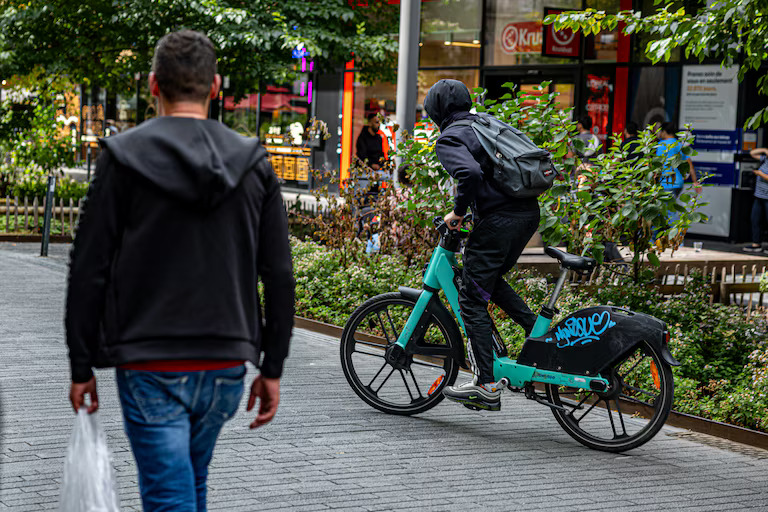
Inspired by the so-called 'STOP' Dutch model for road users, Brussels' transport councillor Anaïs Maes (Vooruit) decided to give the Boulevard Anspach pedestrian zone back solely to pedestrians.
The principle is simple: choose how you move in Brussels. Given that the pedestrian is 'king', the ranking of transport modes is in a clear order: pedestrians first, then cyclists, followed by public shared transport, and finally private cars.
Brussels' mobility week started yesterday and is set to last until 26 September. For that occasion, Maes rolled out her plan to ban bicycles and e-scooters from the central pedestrian zones by early 2026.
The decision comes amid a broader trend towards more onerous regulations on e-scooters in Brussels. Yesterday, Federal Transport Minister Jean-Luc Cruke (Les Engagés) called for mandatory helmets for e-scooter users and visible number plates.
Years of complaints from residents annoyed by the increasing hazardousness of the Boulevard pushed the majority elected in Brussels to set up new rules for the 2024-2030 term.
"We had hoped that coexistence would work," Maes told the Brussels Times. "But in practice, very few cyclists or e-scooter riders respect the 6 km/h limit. At some point, when there are too many conflicts, you must make decisions, and we put pedestrians first."
This hierarchy of priorities is not meant to pit road users against each other. "But when choices have to be made, we follow that order", Maes insisted.
The ban will apply along the north-south Anspach boulevard, from Place Fontainas to Rue de l’Évêque.
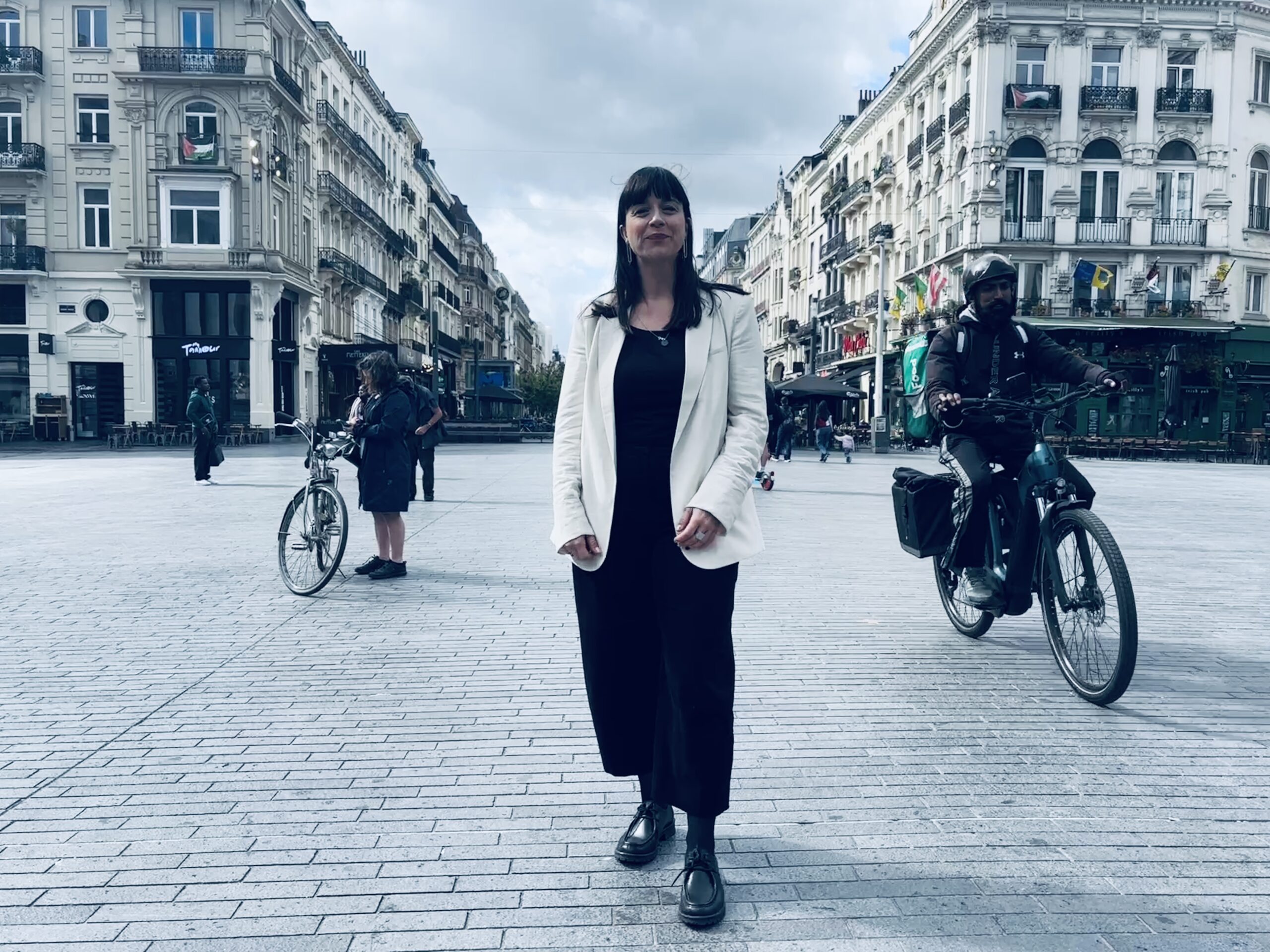
Brussels Transport Councillor Anaïs Maes rolled out her plan to ban bicycles and e-scooters from the Anspach pedestrian zones by early 2026.Credit : The Brussels Times / Anas El Baye.
Two-wheelers will still be able to freewheel across the pedestrian area via perpendicular streets, and morning lorry deliveries will remain permitted between 4 a.m. and 11 a.m., as is already the case for motor vehicles.
Riders may also walk their bikes or scooters through the zone.
"Some people are really in a rush, which makes it difficult to share the road," explained a bicycle user. "I mainly use my bicycle for transportation, but I have almost been hit multiple times as a pedestrian on this boulevard," she added.
Although not targeted at delivery riders, who often bear the brunt of criticism for careless speeding, the decision is not met with enthusiasm.
The often fully packed fried chicken restaurant, BFC, handles a large number of delivery orders daily. It also relies on them to keep its business going.
Located a bit further down the perpendicular street of the pedestrian zone, which makes delivery riders walk for a 'jiffy', the fast food restaurant is bound to be affected.
"I need the riders; all restaurants here need them for work. We want to be sure that they can come in front," the owner told The Brussels Times.
The bigger concern here is that the new restrictions could make deliveries more complicated. Restaurants must ensure they're giving the right order to the right rider.
"We want to see the rider come in directly here, not walking. Sometimes the food is hot and heavy, sometimes it's raining, sometimes they might be tired, and sometimes we might come across someone who is just pretending to be a rider," he warned.
Maes herself is a multi-modal traveller; to her, travelling through the city should also be a conscious choice. Transport should be calm, and the means of it ought to coexist. Where that’s not possible, Maes explains again her decision to separate the modes to keep everyone safe.
For that matter, a parallel cycle axis with Rue de Laeken, Rue de la Vierge Noire and Rue Van Artevelde will be created for bike users.
For 2025, the city has earmarked €332,000 in subsidies for associations supporting pedestrians and cyclists, even as the regional government remains stalled.
An identity for Brussels
For expatriates living in Brussels, many of whom arrive with expectations shaped by cities in their native country. Transport policy might have been frustrating. Maes hopes her vision will help change those perceptions.
"I want people to appreciate Brussels in all its aspects, including its calmer, safer transport," she said.
"Honestly, if you live and work here, you don’t often need a car. Of course, cars are welcome for those who truly need them, but under the rules, at 30 km/h, and with respect for others. The goal is a city where everyone can move around peacefully."
