
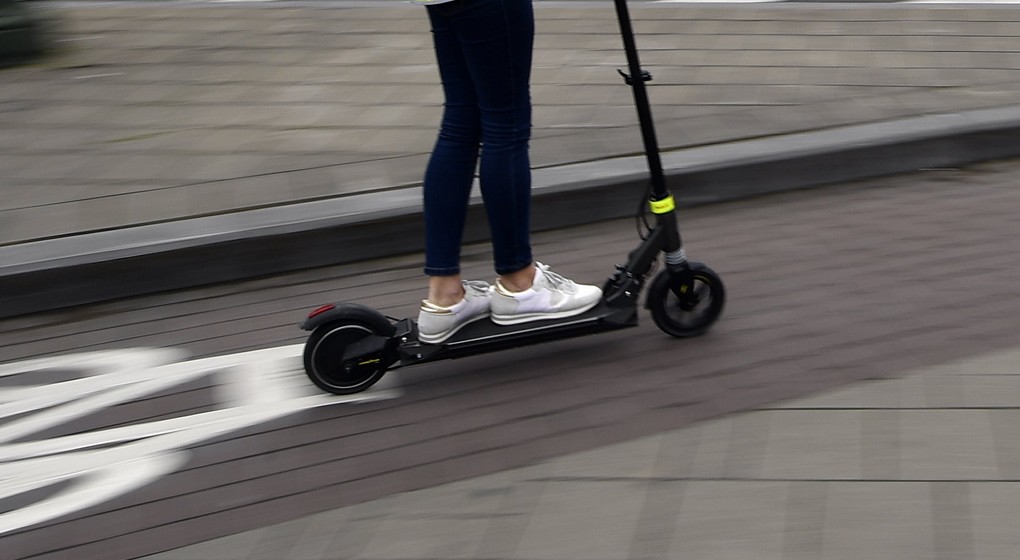
Following another fatal accident with an electric scooter in Brussels, there are growing calls to reduce the maximum speed of the vehicles from 25 km/h to 20 km/h.
At half past midnight on Saturday night in Brussels, a 29-year-old man became the latest tragic victim. He was riding an e-scooter when he was hit by a car on the Avenue de l'Hippodrome in Ixelles. He did not survive the impact, and died at the scene.
The number of accidents involving e-scooters in Belgium has been rising since last year, but has noticeably accelerated since the start of 2025, according to figures from Vias, the Federal Institute for Traffic Safety.
During the first three months of 2025, the number of e-scooter accidents resulting in death and/or injuries rose from 291 in the first three months of 2024 to 470 – an average of five per day.
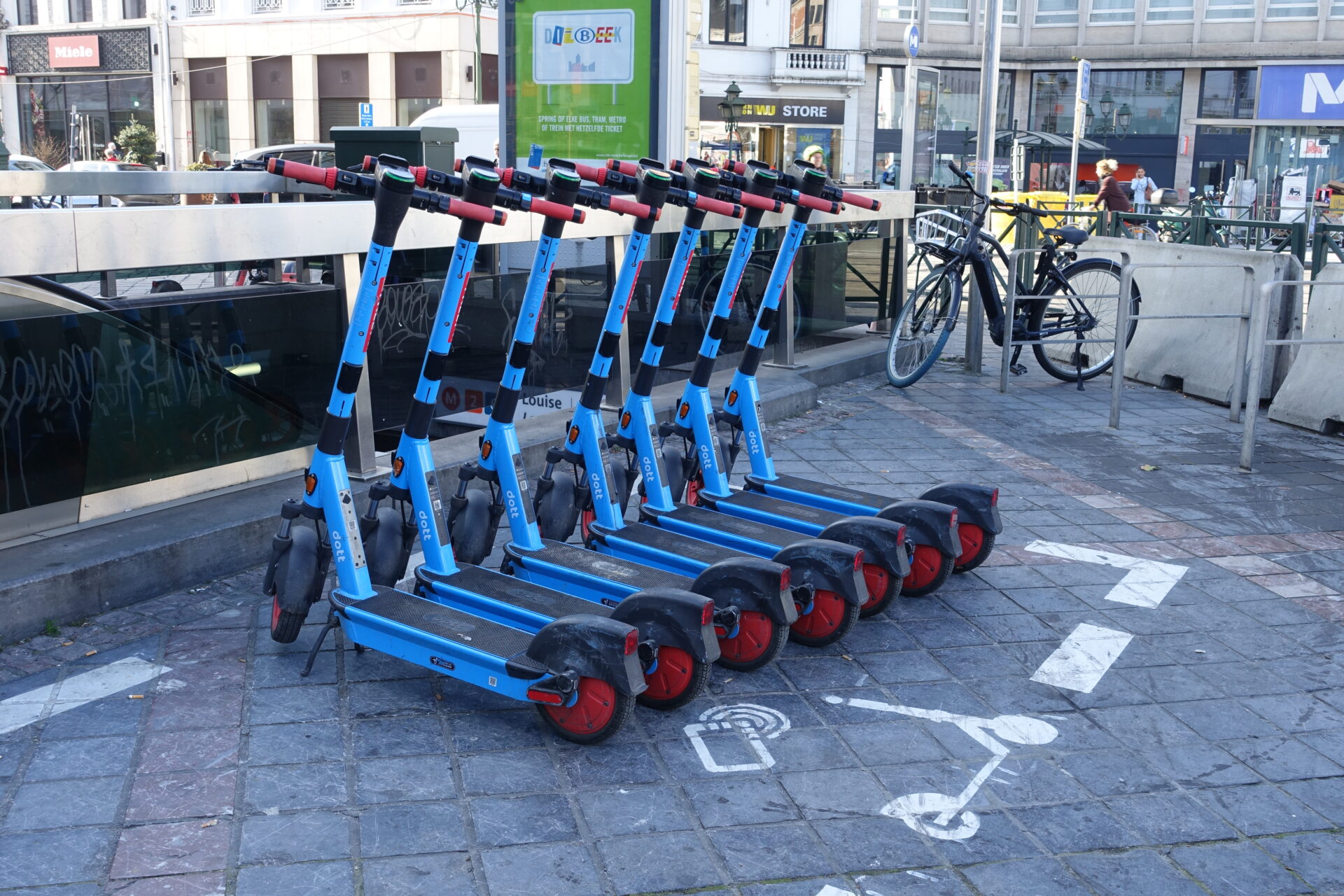
Credit: The Brussels Times / Lauren Walker
Across Belgium, the institute noted a 62% increase in e-scooter accidents in all three regions. Importantly, this only concerns accidents recorded by the police. This means that the real number is likely to be much higher, as many incidents are not reported.
Following a series of incidents and injuries, two MPs for the Flemish socialist party Vooruit had proposed to make helmets mandatory and reduce the legal speed limit for e-scooters from the current 25 km/h to a slightly lower 20 km/h.
But will a lower speed limit prevent more (fatal) accidents in the future?
In Brussels, the speed limit for shared e-scooters is already capped at 20 km/h across the entire Capital Region, and even at 8 km/h in specific areas such as parks and pedestrian zones – a measure automatically demarcated via geo-fencing.
"Capping the maximum speed like that is not possible for private scooters. For those, the legal speed limit is 25 km/h," the cabinet of outgoing Brussels Mobility Minister Elke Van den Brandt (Groen) told The Brussels Times.
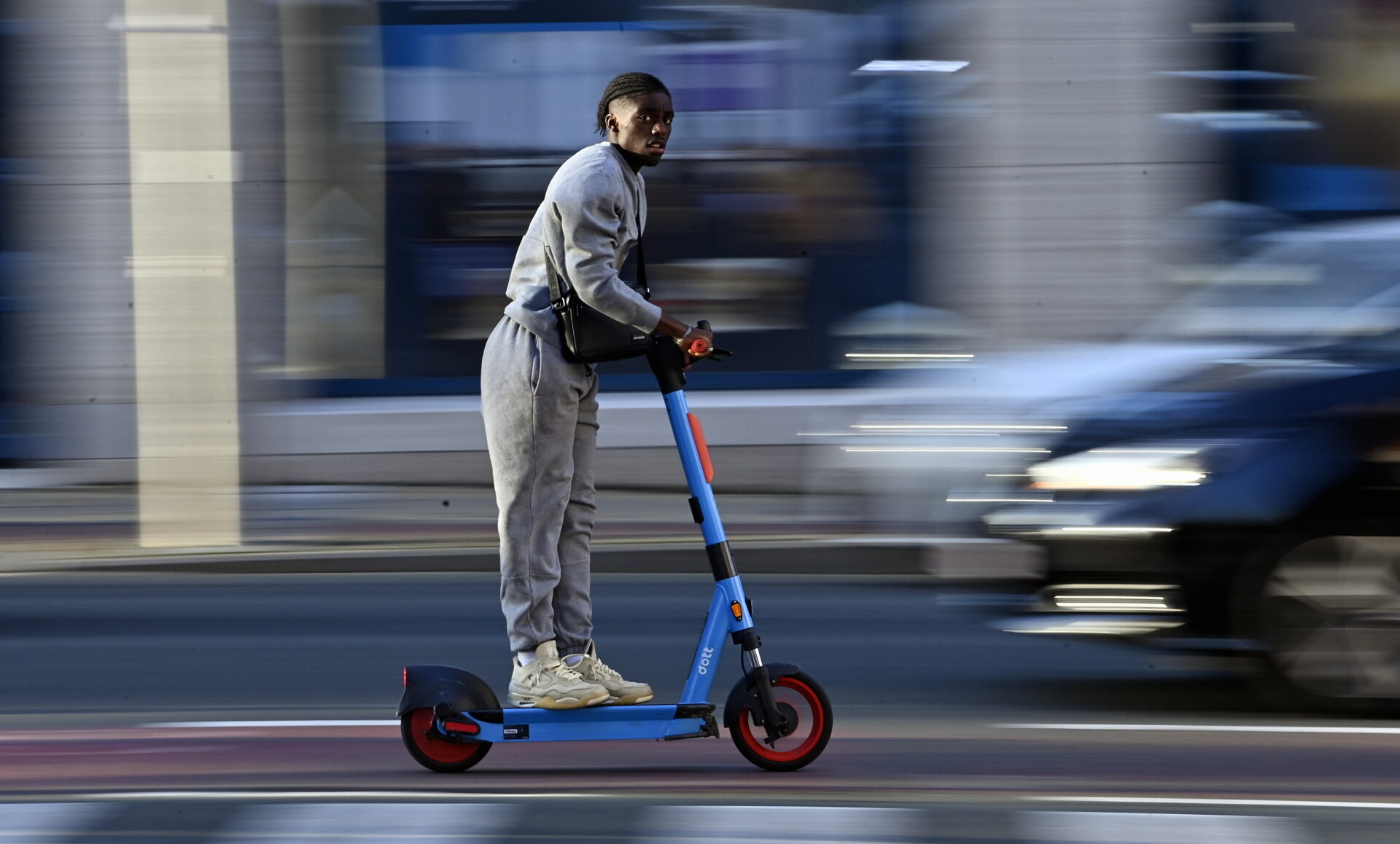
An electric scooter on Rue de la Loi. Credit: Belga / Eric Lalmand
For Federal MP Niels Tas (Vooruit), lowering the maximum speed could be a good measure. He stressed that the scooters' power output should also be lower, like in the Netherlands. "This way, scooters cannot accelerate as quickly. As a result, we protect both scooters and other road users."
Especially in the city, e-scooters are a good alternative for many people, Flemish MP Stephanie Vanden Eede (Vooruit). "They take up little space in the house, and you can get going quickly. But it must be safer than it is today. Government can really make a difference with a few targeted measures."
According to Van den Brandt, however, the problem does not seem to be whether the speed limit is set at 20 km/h or at 25 km/h. "It lies with the private scooters that reach multiples of that," said Van den Brandt.
Traffic safety institute Vias agrees. "Since mid-2024, we have seen a large increase in accidents involving e-scooters. There is a huge problem, and more action is definitely needed," spokesperson Stef Willems told The Brussels Times.
Rather than lowering the current maximum speed, however, these efforts should first focus on the scooters that are already exceeding the legal limit. "And believe me, there are a lot of those," he said.
Over 100 km/h
While the official speed limit for e-scooters is 25 km/h, a wide variety of vehicles on the market travel much faster than that. Certain models, especially Chinese ones, are extremely popular because of their affordable price and the fact that they reach excessive speeds.
Willems speaks of once witnessing a speed check in Brussels where the police stopped a young man on an e-scooter zipping past at 106 km/h. "No protective gear, no helmet. Nothing."
Getting these types out of circulation should be the first order of business, as should be making sure that scooters that go faster than 25 km/h cannot be sold. "If we start doing that, we can start reducing unsafe behaviour in traffic at the root."
Secondly, Vias is advocating for mandatory helmet use. "Even when you have a perfectly legal scooter and are driving at 25 km/h, an accident can always happen, whether it is your own fault, or someone else's or because of the infrastructure," Willems said.
In many cases, people fall on their heads. But few people on electric scooters wear head protection. "A bicycle helmet should be the minimum; a motorcycle helmet is even better. But any helmet is better than no helmet."
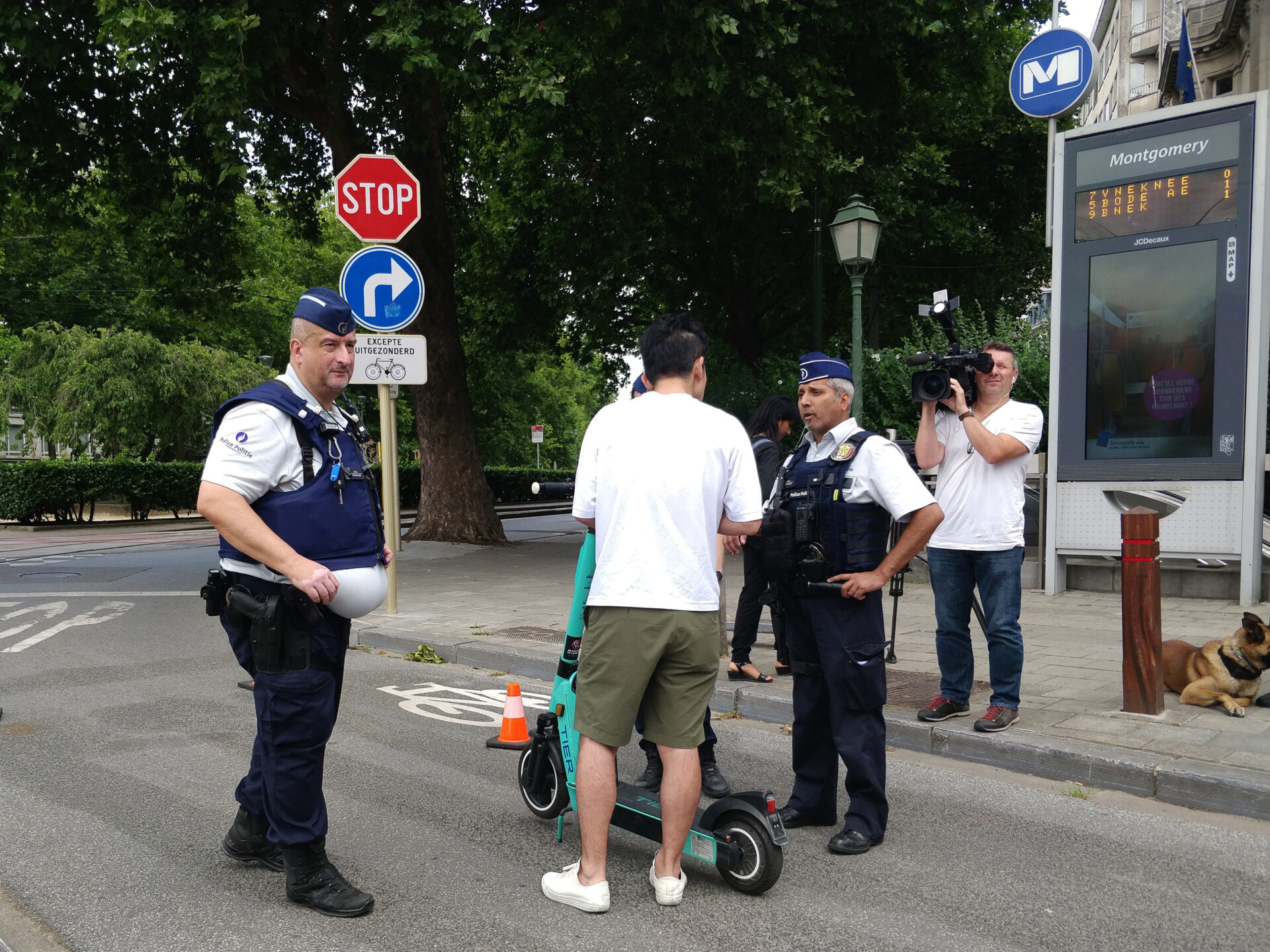
Credit: Belga / Antony Gevaert
However, there is little objective evidence demonstrating a significant difference between scooters operating at 20 km/h and 25 km/h. "Of course, the higher the speed, the greater the potential impact – which is the case for any vehicle, including scooters."
Additionally, the technical margin of approximately 6 km/h for speed checks means that scooters limited to 20 km/h would still be allowed to travel at 25 km/h before they would get caught. This means that all scooters currently driving the correct speed would still be allowed to continue operating.
"Reducing the speed from 25 km/h to 20 km/h is currently not a top priority for us. But let's ensure that we can go from 45-50 km/h to 25 km/h," Willems said. "That is where the greatest need to improve road safety currently lies."
