
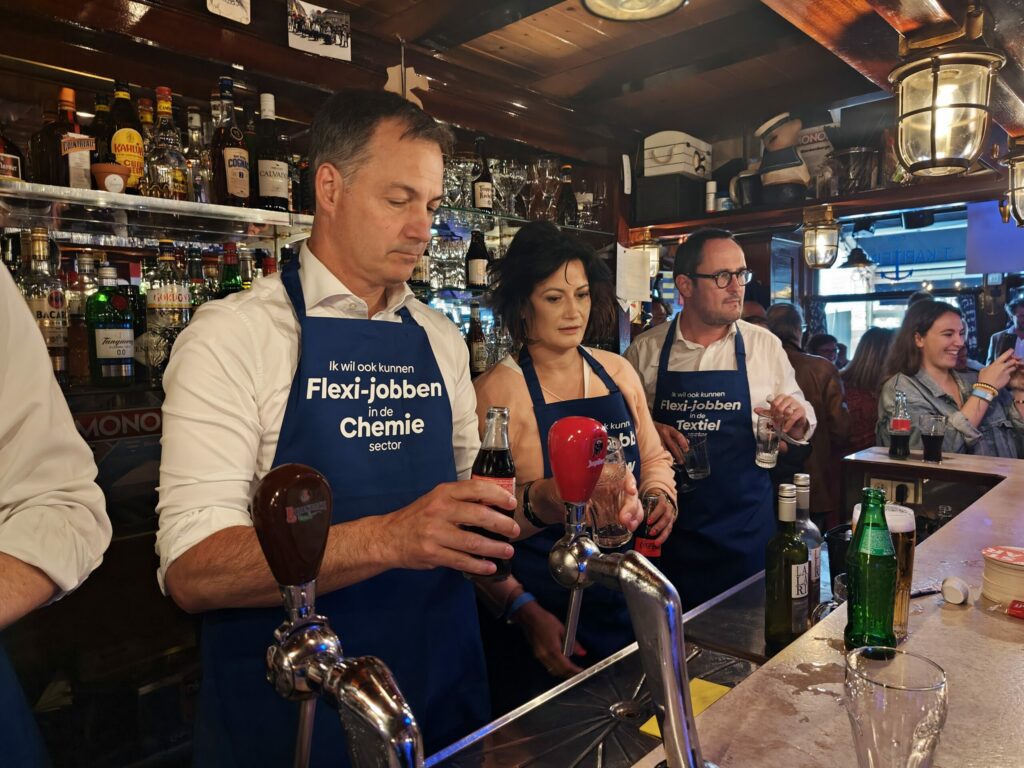
Flexi-jobs continued to grow in the first quarter of 2025, with all evaluated sectors, including maritime fishing for the first time, contributing to the increase.
This is according to data from Belgium’s National Social Security Office (ONSS) published on Thursday.
The number of flexi-jobs rose to 182,229, up from 152,840 in the same period in 2024. Similarly, the number of flexi-workers increased to 157,681, compared to 131,349 a year earlier. This led to a 24% rise in full-time equivalent (FTE) work volume.
The hospitality sector remains the largest contributor, with 72,311 flexi-jobs and a 5.9% increase in FTE work volume compared to the first quarter of 2024.
Temporary employment follows, with 55,828 flexi-jobs and a notable 33.2% growth in FTEs. A significant portion of the work in this category was split between hospitality (36%) and wholesale and retail trade (36%).
Wholesale and retail trade ranked third, with 30,980 flexi-jobs and an 18.9% increase in FTE work volume.
Sectors such as childcare and education, which introduced flexi-jobs in the second quarter of 2024, reported 251 and 100 positions respectively, while the newly added maritime fishing sector recorded six flexi-jobs.
Initially launched in late 2015 for the hospitality industry, the flexi-job system has gradually expanded.
In 2024, additional sectors such as garages, driving schools, transport and logistics, events, funeral services, agriculture, horticulture, property management, and the food industry (excluding bakers) were also included.
