
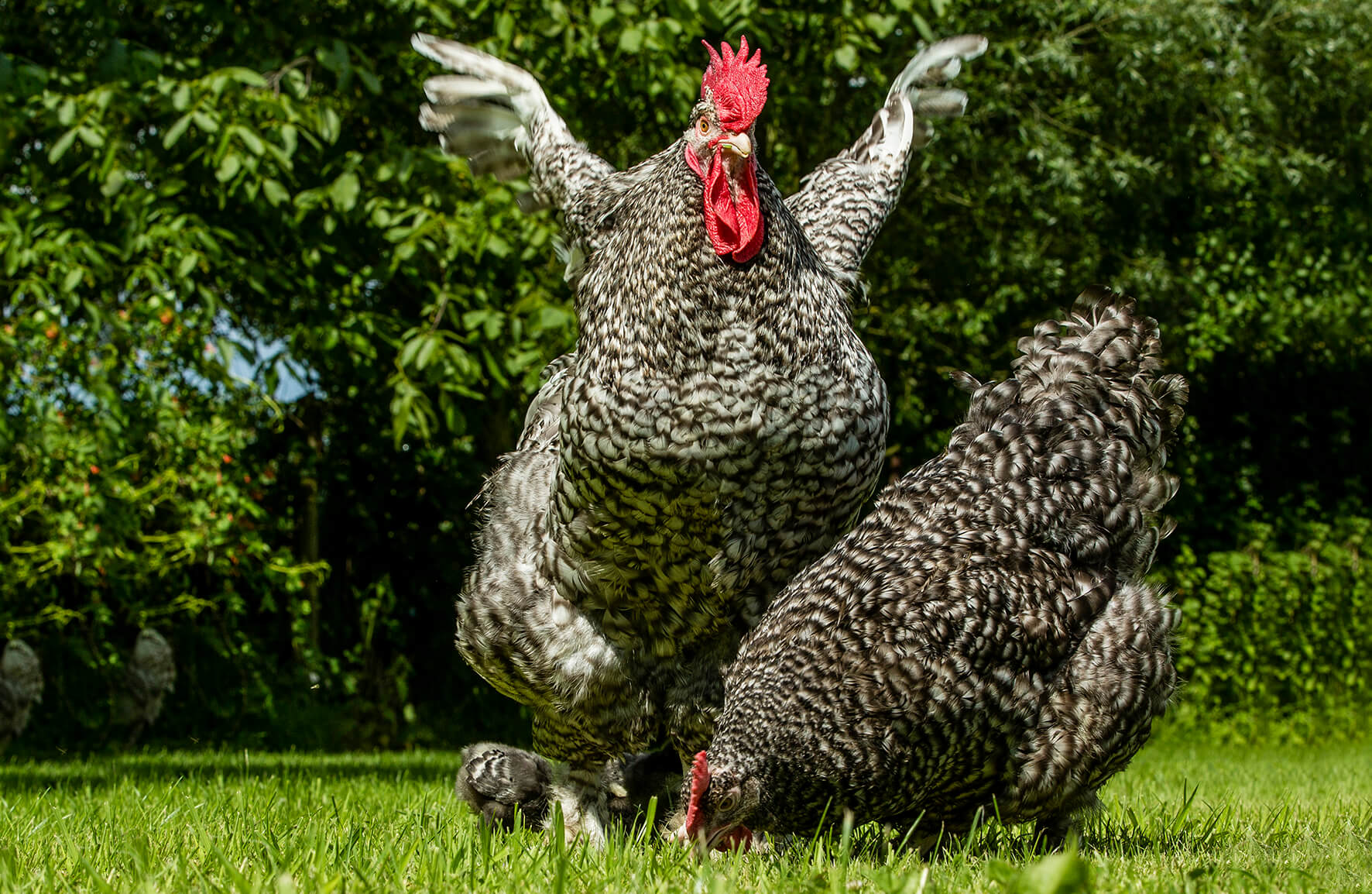
Descriptions can be deceptive. The Mechelse koekoek or coucou de Malines is not a cuckoo, as its name suggests, but rather a large chicken. It does, however, have strong links with the affluent Flemish town of Mechelen, known by French speakers as Malines.
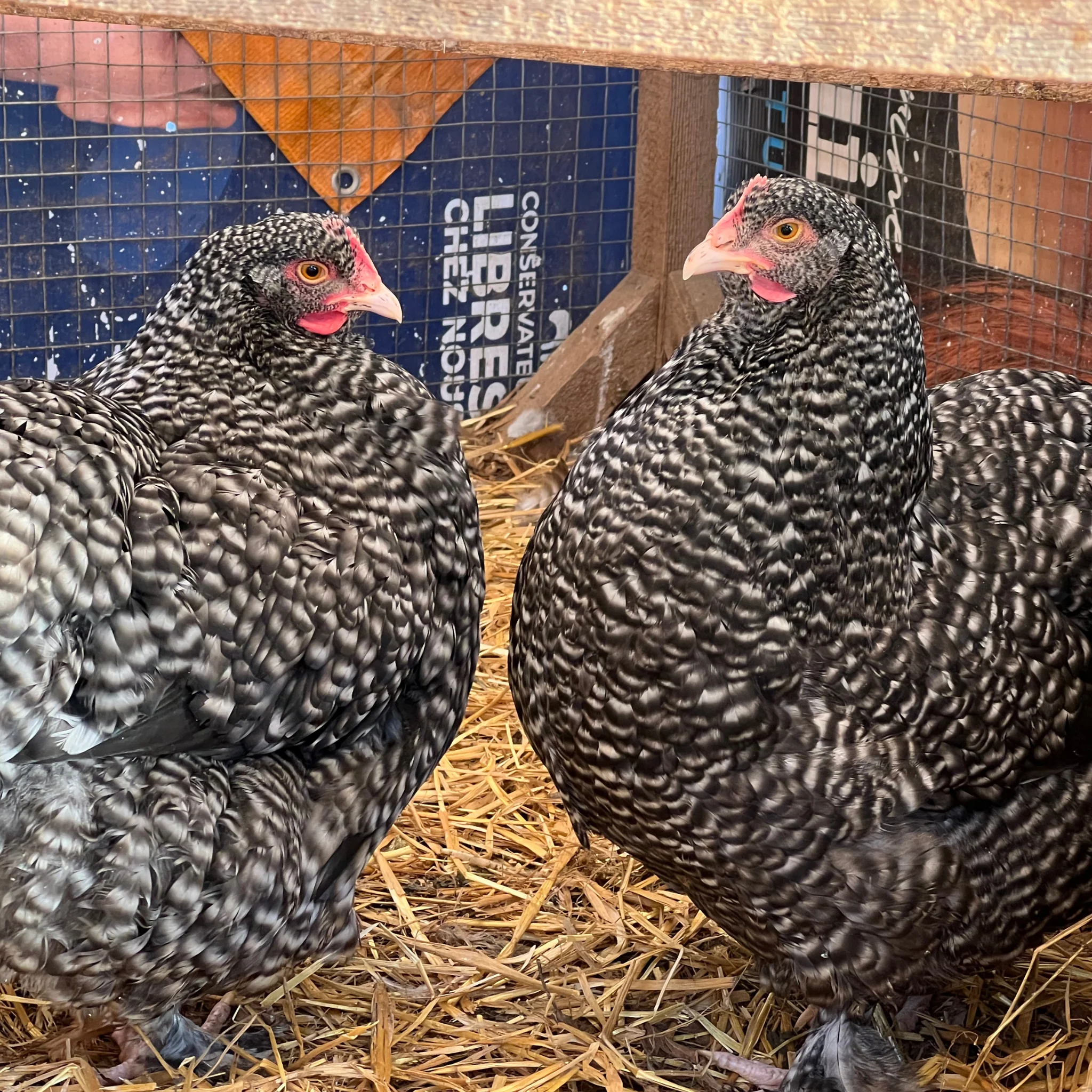
The cuckoo reference is down to the colour of the chicken’s plumage, which is most often a striking black and white pattern, reminiscent of the much smaller and unrelated species, best known for invading other birds’ nests.
The Mechelse koekoek is also found in white, blue, gold and ‘colombian’ – that’s a predominantly white body with black markings on the neck, tail and wing. This colouring is often associated with its US cousin, the Wyandotte, first exhibited in Bogotá in 1893.
The Mechelen variety’s origins go back further, to the 1850s, when local poultry farmers mated their chickens with larger birds, which Antwerp Zoo brought over from Shanghai. Later, Brahma, Langshan and Cochin varieties were imported from China and cross-bred to create a robust breed, combining the typical large build of the Asian birds and the finely textured, tender meat of the Belgian stock.
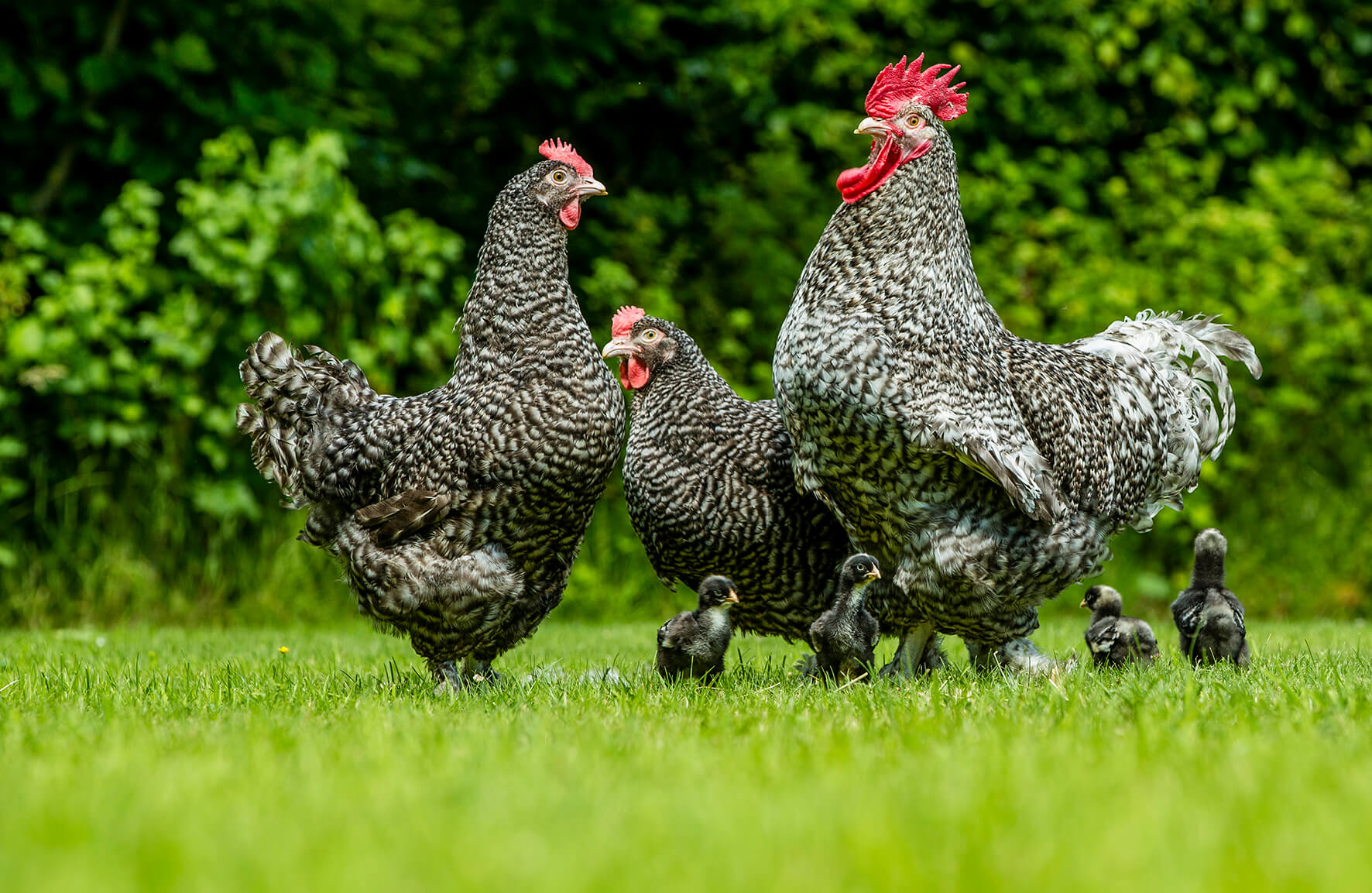
In the early 1900s, Florent Vermylen, from a wealthy family of beer brewers in Schriek, near Mechelen, diversified into breeding the new super-chicken. His birds were much sought-after at the poultry market in Mechelen.
Before long, the variety took off across the country. The koekoek/coucou was especially popular in the capital where it was also known as ‘Poulet de Bruxelles’.
Resurgence
After the Second World War, the breed was almost wiped out by a salmonella outbreak and then faced increasing competition from cheaper, intensively farmed varieties, capable of producing more eggs and higher profit margins due to their rapid farm-to-fork turnaround.
However, the bird remained popular with small-scale farmers and enthusiasts. In recent years, it has seen a resurgence thanks to the growth of organic farming and consumers keen to opt for more sustainable and ethical food choices.
One of the best-known organic breeders in Belgium is 30-year-old Julian Kinard, who is based at the Ferme de Froidefontaine near Havelange in Wallonia, which brings together producers committed to diversified and ecological practices.
Ferme la Petite Patrie inc. Credit: Alexandra Hébert-Dufour
“When I heard the farm was looking for new projects, I immediately put my hat in the ring and they invited me to join the group. I tried three different types of chicken: the coucou was definitely the winner when it came to taste,” he says.
“I’d been working in the agricultural sector for a while and had seen a lot of different farms and different ways of doing things. My objective was to combine respect for the animals and provide quality food.“
Welfare
In May 2018, Kinard created his own company, La Poule Qui Roule (literally ‘the chicken that rolls’ but also a play on an affectionate French greeting, ‘ça roule ma poule?’)
His 1.5-hectare plot at the Ferme de Froidefontaine consists of six chick pens and eight self-built mobile chicken coops which can each hold a maximum of 240 chickens. He currently has a flock of nearly 1,700. “We’ve sold a lot recently,” he says.
Kinard stresses that his operation maintains the highest welfare standards.
“Our chickens are carefully raised from the start. I chose mobile coops so I can move them around and ensure the poultry have an outdoor run that is always grassy and of high nutritional quality,” he explains. “The mobility factor also helps prevent soil degradation and preserves ecosystems.”
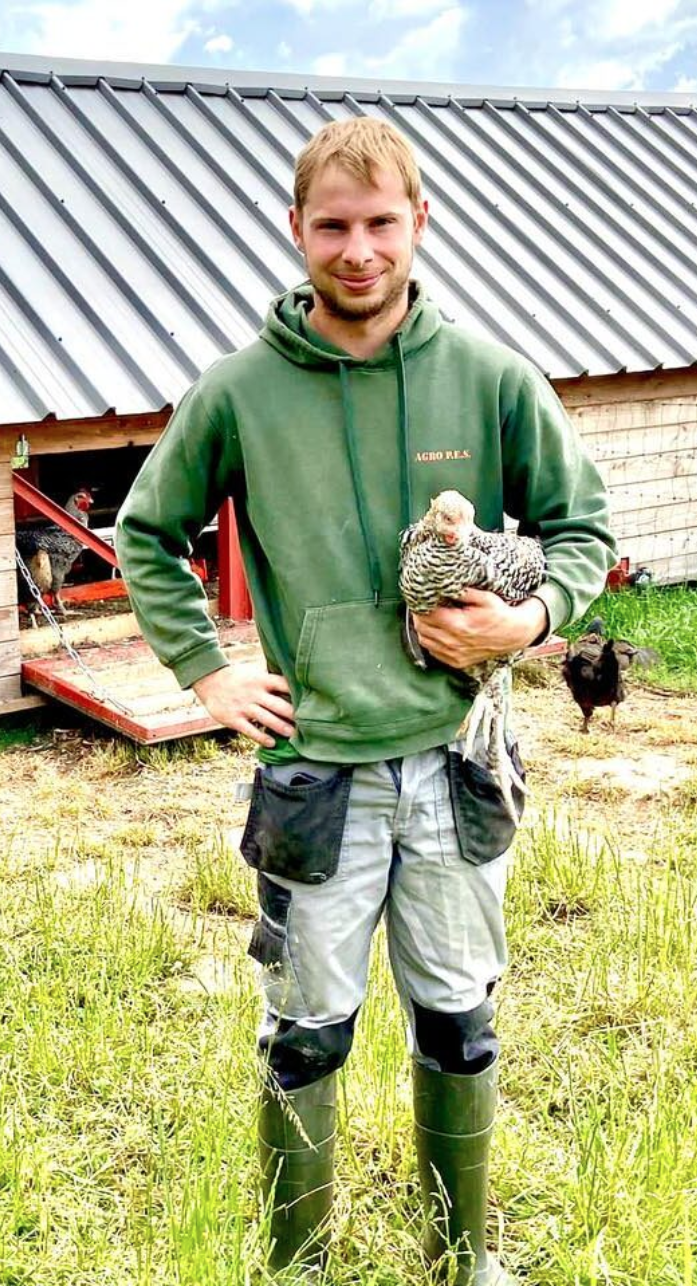
Julian Kincard with chicken
Kinard’s chickens are ‘dual purpose’, bred for their eggs but mainly for meat. “The coucou is not a ‘race pondeuse’. It lays only around 180-200 eggs a year compared with 350 for other breeds,” he says.
The birds are slow-growing and therefore more expensive to maintain.
“A cheap industrial chicken is grown for 35 days from birth until it’s slaughtered. It’s 40 days for a slightly higher-end chicken and 56 days for those sold with a ‘bien être’ label. That compares with 70-75 days for an organic chicken and 85-90 days for a coucou de Malines.”
With its deep, muscular chest and a long horizontal back, a fully grown rooster can weigh more than 5 kg, while the hen is typically 3.5 to 4.5kg.
In demand
Kinard slaughters the chickens himself or sends them to a small cooperative abattoir at Suarlée near Namur. “They can deal with 600 to 700 in one day,” he states matter-of-factly.
His chickens are in demand from restaurant owners across the country – but especially in and around Brussels. “We supply various places including La Bonne Chèr in the city centre, Ivresse in Uccle, Brut in Ixelles, Les Éleveurs at Halle and Monsieur V in Linkebeek, as well as small butchers, grocery stores and caterers. I don’t often sell direct to individual customers,” he continues.
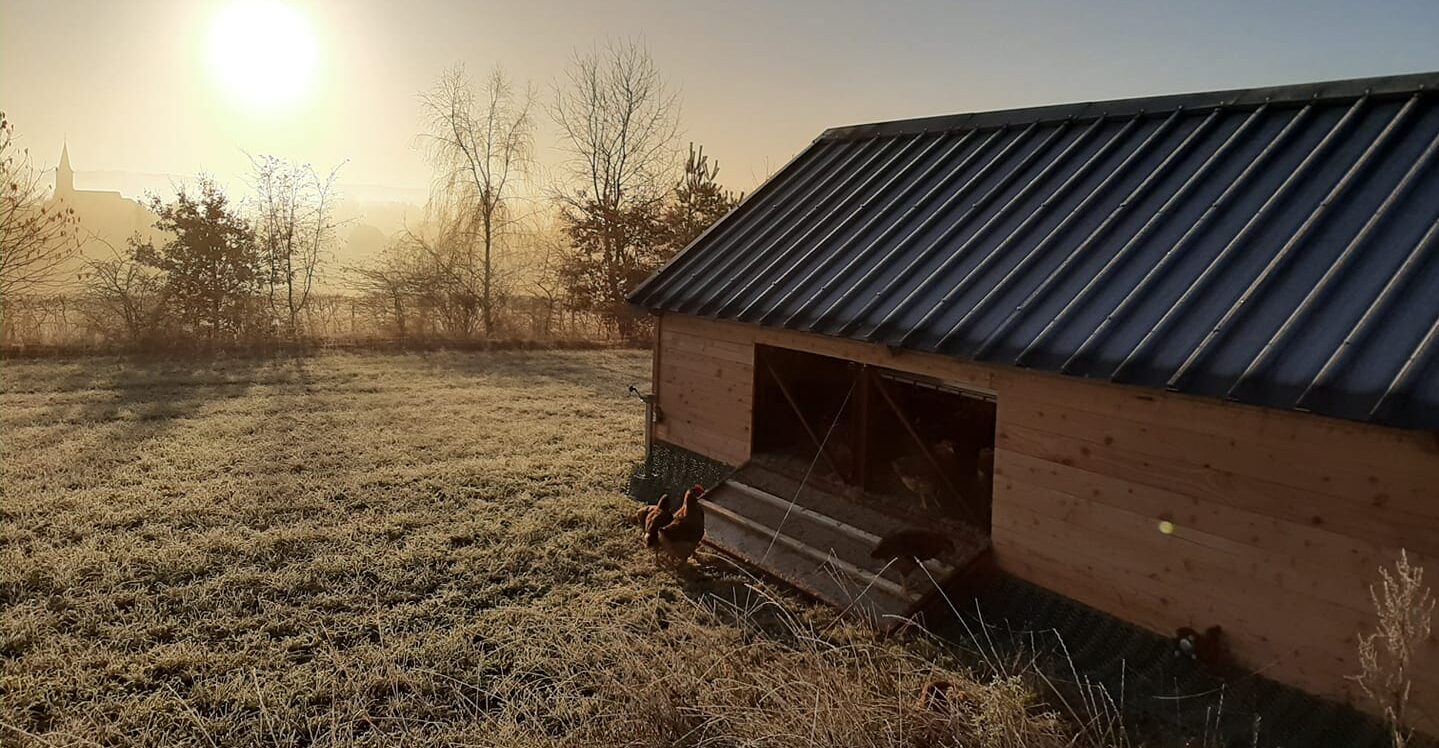
Kinard admits that it’s a tough business. “We only became profitable recently and I still have a second job. There's a lot of manual work involved and my dad, who’s retired, sometimes comes to help me out. Inflation has driven up costs but we can’t increase the price of the chicken by the same amount,” he says.
Pluck
Frans Van Laerhoven and his wife Anja (who also have draught horses, see separate article) are typical of the smaller farm owners who keep chickens.
They normally have around 15 Mechelse koekoek at their home in Nederokkerzeel but a fox recently diminished their stock. “It was my fault really. Our coop has an automatic door and I forgot to close it,” Frans confesses.
The couple mostly keep their mini-flock of Mechelse koekoek for their eggs – but also for eating. “It’s very easy to pluck their feathers compared with other breeds. The meat is slightly darker and very tasty,” says Frans.
He feeds the chickens with maize and fruit from the orchard. “That’s one of the reasons they have such a great flavour,” he says.
Frans adds that the breed has remained popular around Brussels since it first became fashionable and farms in the city’s green belt were the main source of supply. He reveals the local nickname for people in Brussels is ‘kiekenfretters’, which translates as chicken feeders.
He and Anja also keep Boerenhoenders, also known as Brabanconne, which are much better layers than the Mechelse koekoek. The hens produce smaller white eggs and Frans kindly offers me a box to take home.
The couple plan to replace their lost Mechelse koekoek soon. And, who knows, by the time you read this, I might have a little coop of my own.
