
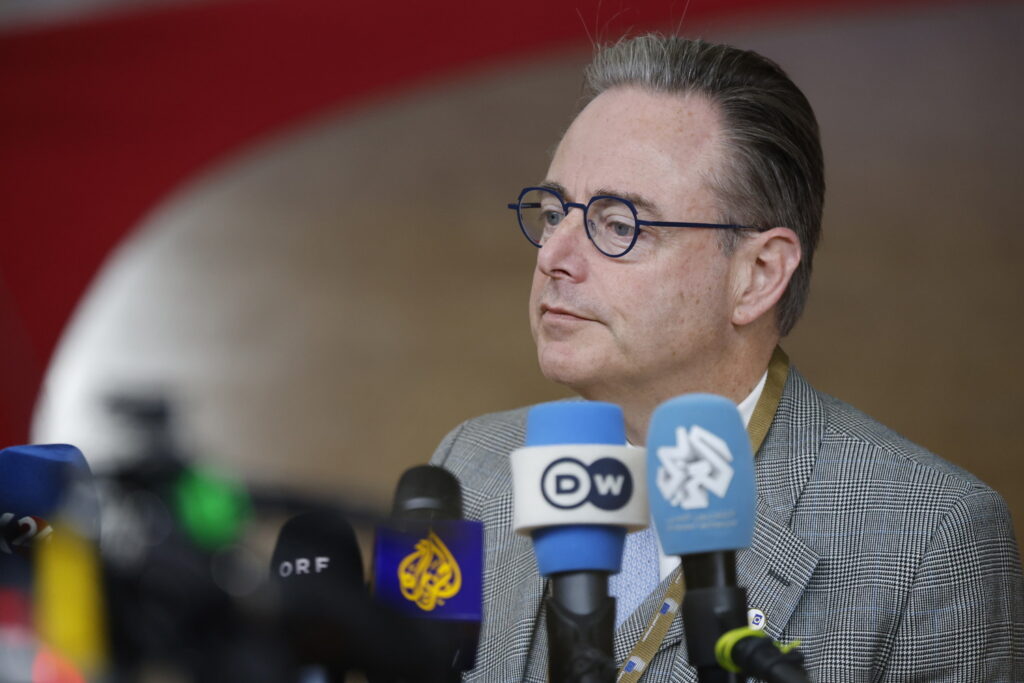
Belgium has warned it will block a proposed restoration loan for Ukraine using frozen Russian assets unless its three key conditions are met.
Speaking at the European summit in Brussels, Prime Minister Bart De Wever stated he would take all necessary political and legal measures at national and European levels to oppose the decision if the conditions are not satisfied.
The EU’s 27 member states are expected to approve a mandate for the European Commission to develop a legal proposal on the matter.
Belgium is demanding risk-sharing among member states, guarantees against potential repayment obligations in a worst-case scenario, and inclusion of other EU countries holding frozen Russian state assets in the mechanism.
While Belgium is open to discussions, it awaits clarification from the European Commission regarding the legal basis for the proposed mechanism.
“This is unprecedented—we didn’t even do this during the Second World War,” said De Wever, expressing scepticism about the plan.
Belgium is particularly affected due to its hosting of Euroclear, the central securities depository, which holds €170–180 billion of frozen Russian Central Bank assets. The loan proposal aims to channel some of these funds into Ukraine’s reconstruction, with an estimated value of €140 billion.
De Wever emphasised the risk of Russian retaliation, warning that Moscow could seize Belgian businesses or confiscate money from Western banks. He cited previous Russian actions against companies, such as Google.
The original intention, according to De Wever, was for Russia to bear Ukraine’s reconstruction costs as part of a peace agreement. “If we ignore international law, we risk empowering Putin, who could confiscate equivalent amounts and recover his funds, leaving us with nothing but problems,” he said.
