
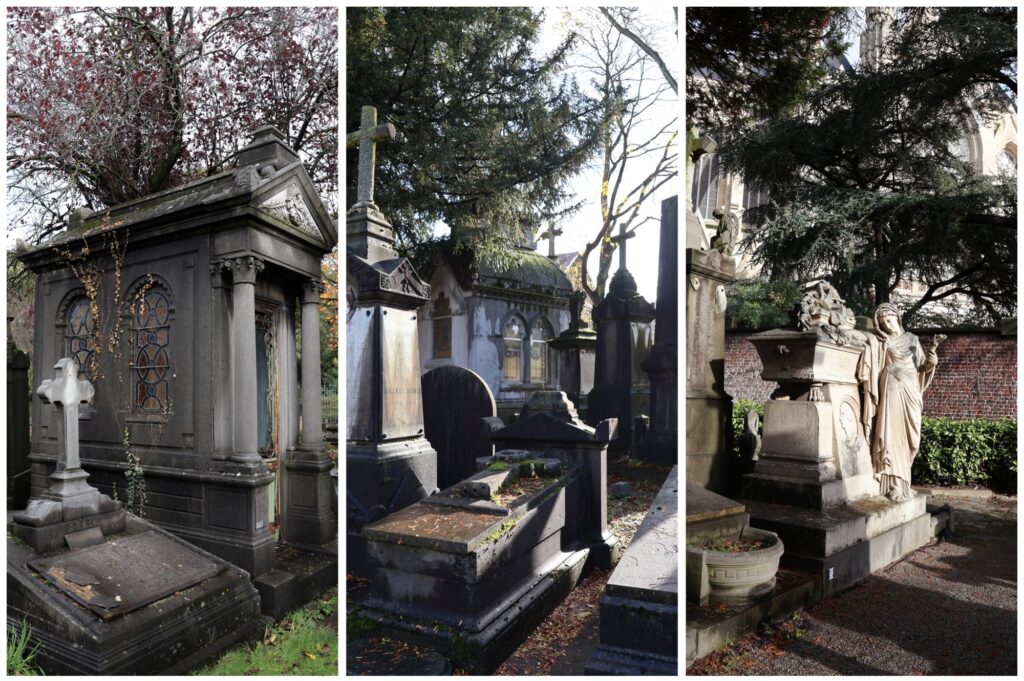
On 1 November, All Saints' Day, Belgian families traditionally visit local cemeteries to lay flowers on the graves of their loved ones.
To mark this sacred day, we went on a tour of the oldest graveyards in Belgium to capture these fascinating places in all their autumnal splendour.
While the thought of walking amongst graves is not maybe automatic for many of us, Belgium's varied and ancient cemeteries are atmospheric, architecturally diverse, and packed with history which transports you back in time and helps you to understand the country's rich and varied past.
Laeken Cemetery, Brussels
Established in 1275 as a parish graveyard, Laeken Cemetery is now the capital’s oldest still-functioning cemetery.
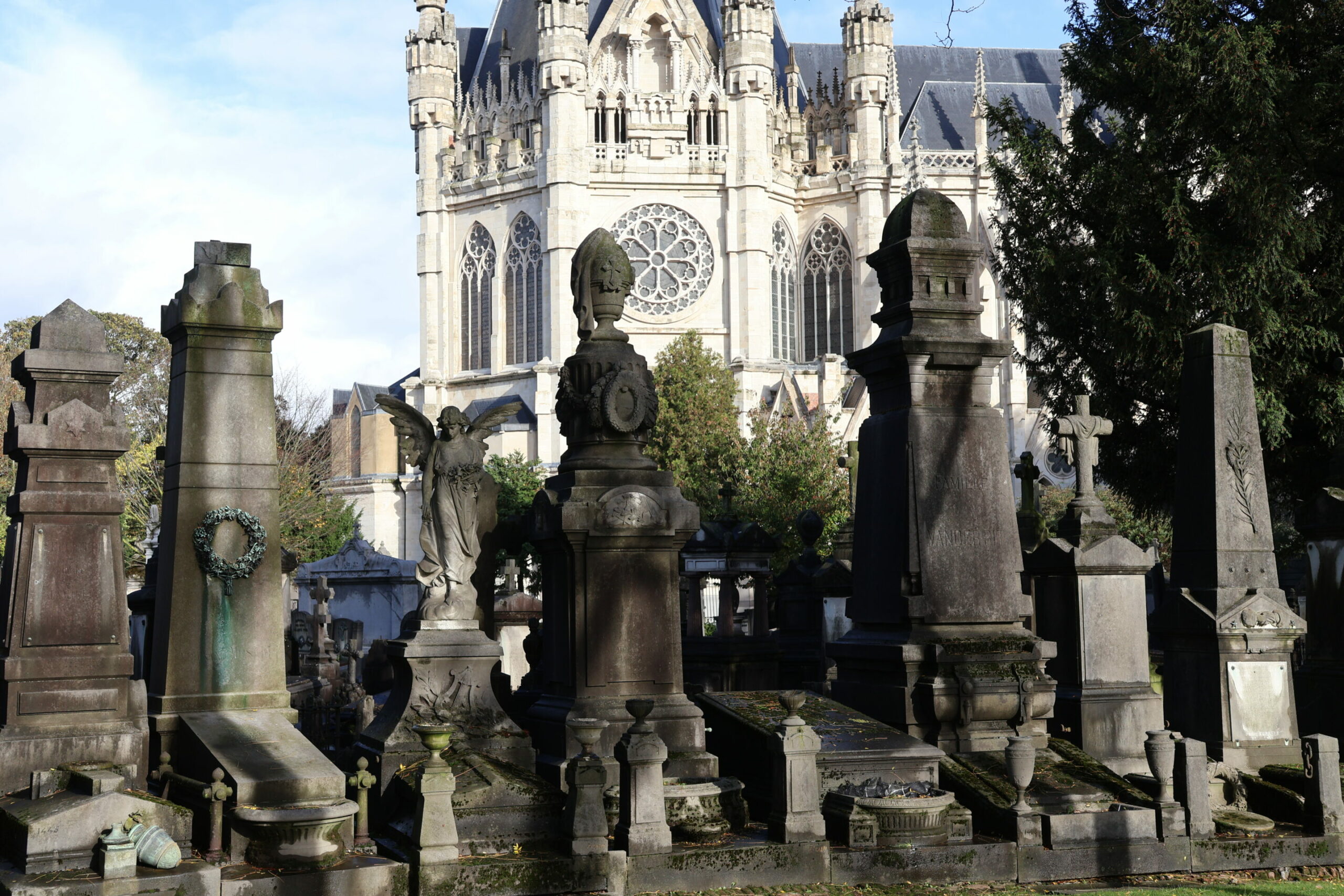
King Leopold I commissioned the Church of Our Lady of Laeken in memory of his wife, Queen Louise-Marie, who wished to be buried there. Credit: The Brussels Times/Eva Hilinski
Many prominent Belgians are buried here, lying near the final resting place of Belgian royalty under the Church of Our Lady of Laeken. Playwright Michel de Ghelderode, architects Joseph Poelaert, who designed the Palace of Justice in Brussels and violinist and composer Charles de Bériotto are all buried in Laeken.
Laeken Cemetery. Credit: The Brussels Times/Eva Hilinski
Not only is Laeken Brussels' oldest still-functioning cemetery, it is also notable in that it has a large church attached. The story of how and why is definitely unusual.
The Bruges Central Cemetery (West Flanders)

The Bruges Central Cemetery (West Flanders). Credit: The Brussels Times/Eva Hilinski
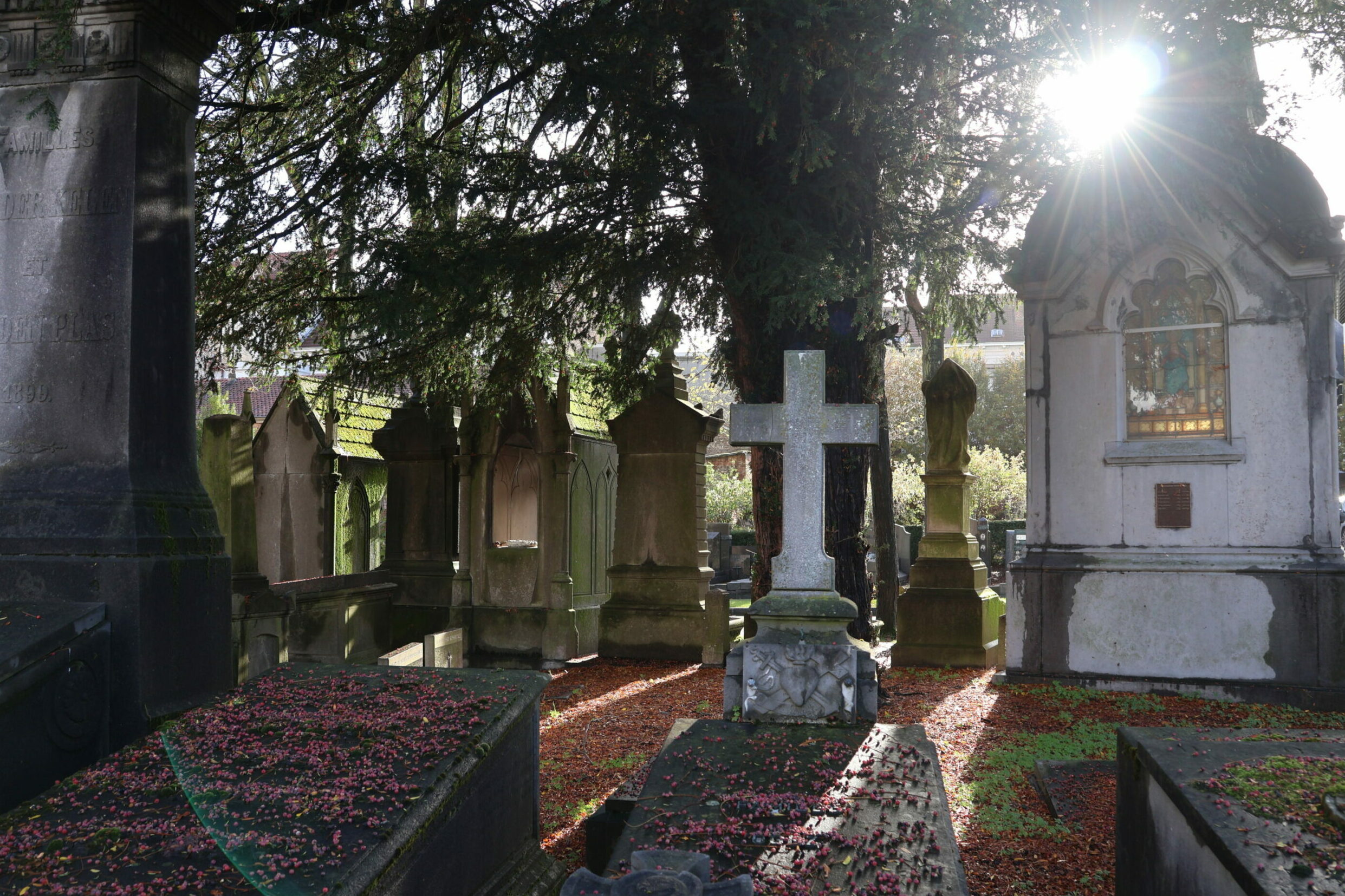
Founded in 1787, Bruges Central Cemetery is considered the oldest public cemetery in Belgium. To this day, the oldest burial places are being repurposed, and new names are added onto the old tombs, which are shrouded in moss and lichen.
The cemetery is well-kept and the greenery and tall trees that shelter the pathways from the bright daylight create a serene and contemplative atmosphere.

The Bruges Central Cemetery (West Flanders). Prominent Bruges figures from the arts, literature, politics or nobility have been given their final resting place here. Credit: The Brussels Times/Eva Hilinski
A statue of a grieving woman leaning on a column with a wreath adorns several tombs. The image is an example of a classic funerary allegory: the wreath (often laurel) represents eternal life or remembrance, while a broken column can symbolise a life cut short.
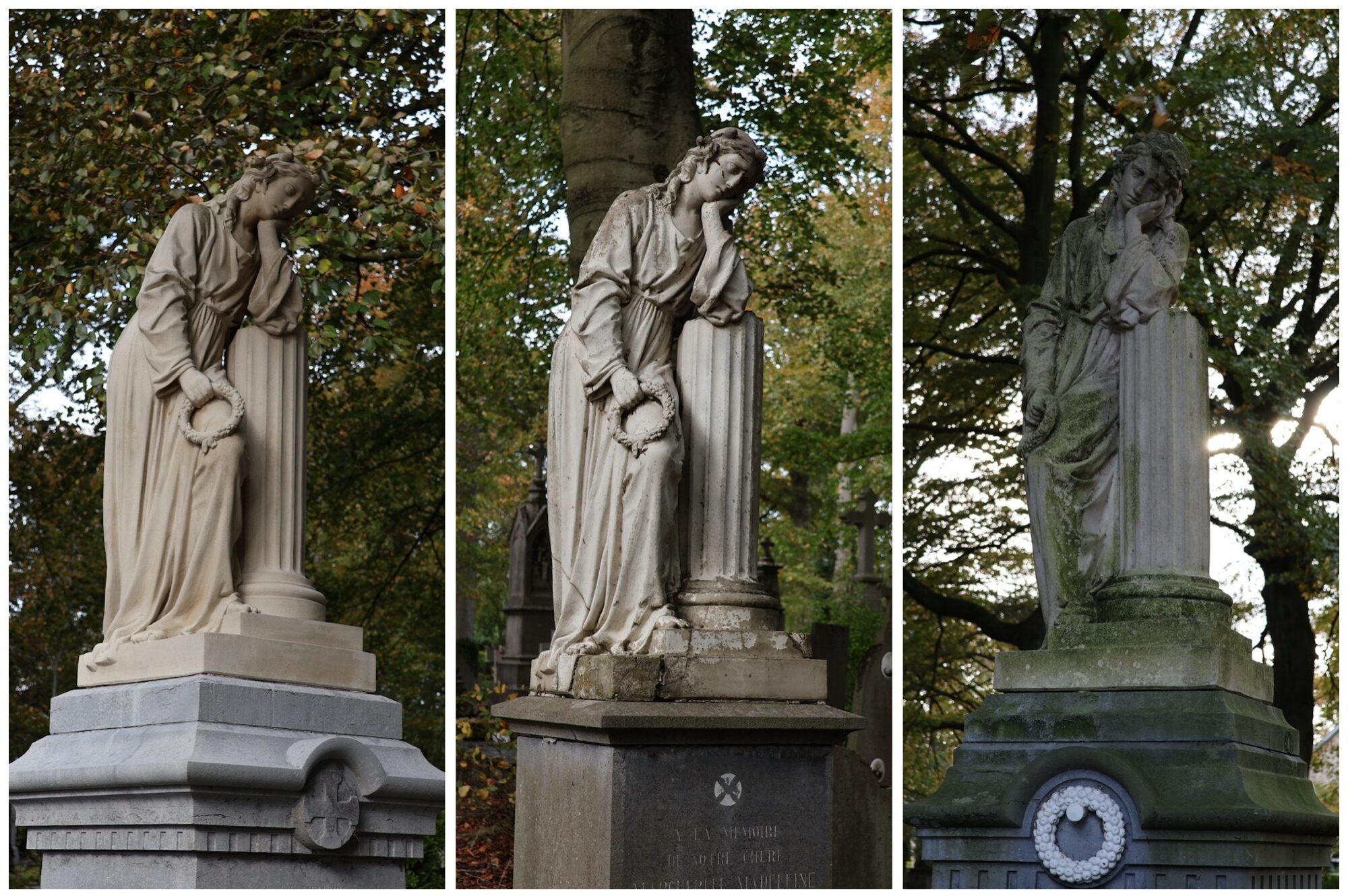
The statues of a grieving woman with a wreath at the cemetery in Bruges. Credit: the Brussels Times/Eva Hilinski
The statue has been attributed to a Belgian stone sculptor and politician from Antwerp, Clementius Jonckheer (1871-1932). However, these statues were likely mass-produced – identical ones can be found in Germany and Poland.
Campo Santo, Sint-Amandsberg, Ghent (East Flanders)

Campo-Santo Cemetery, Sint-Amandsberg, Ghent. Credit: The Brussels Times/Eva Hilinski
Campo Santo is a beautiful cemetery located on a small hillside. Established in 1847 as a Roman Catholic burial ground, the cemetery got its name after the Campo Santo in Rome, and soon became a prestige resting place for Ghent’s elite families.
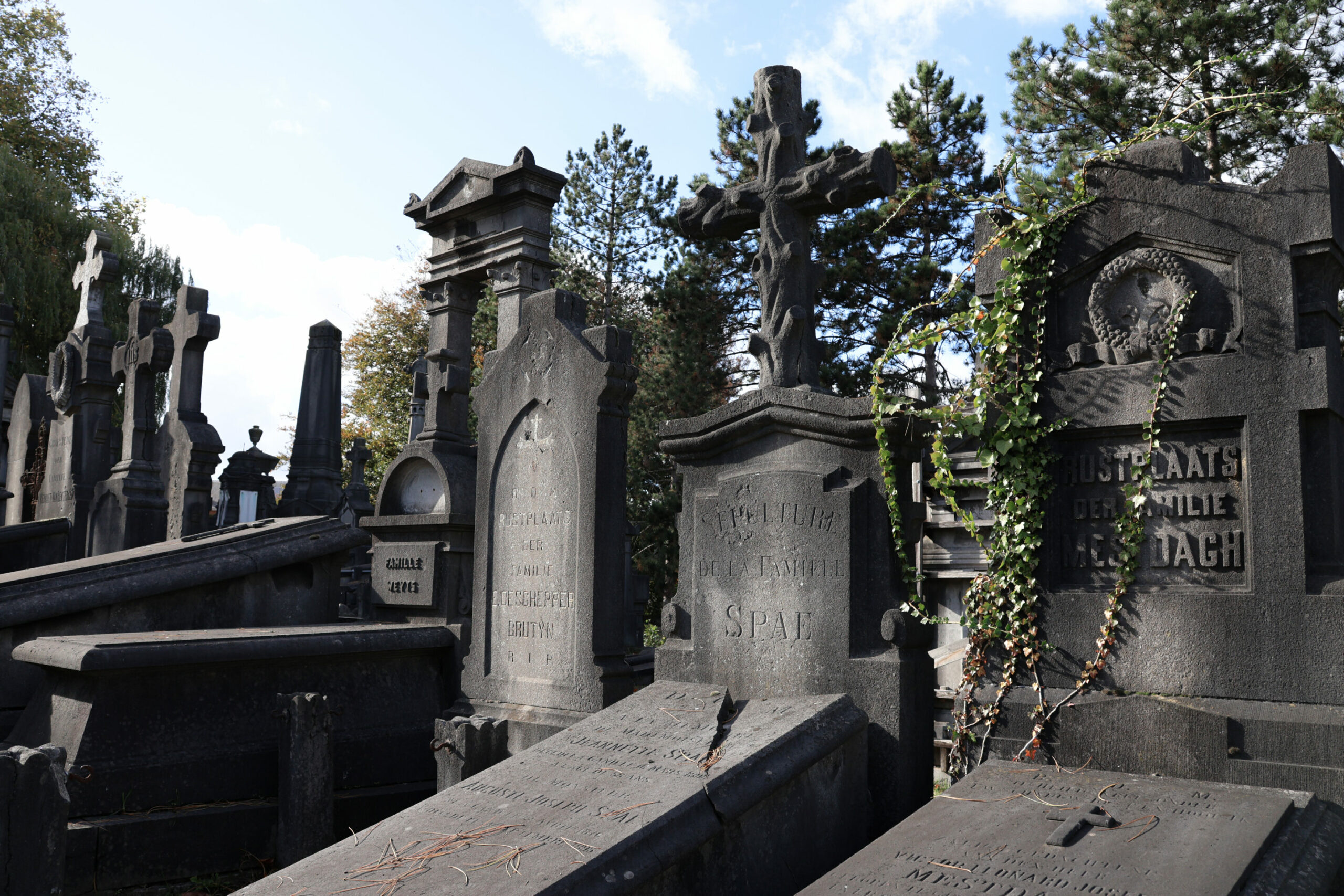
130 graves at Campo-Santo Cemetery in Ghent are protected as historical heritage. Credit: The Brussels Times/Eva Hilinski
Campo Santo also serves as the final resting place of a former Prime Minister, Wilfried Martens.
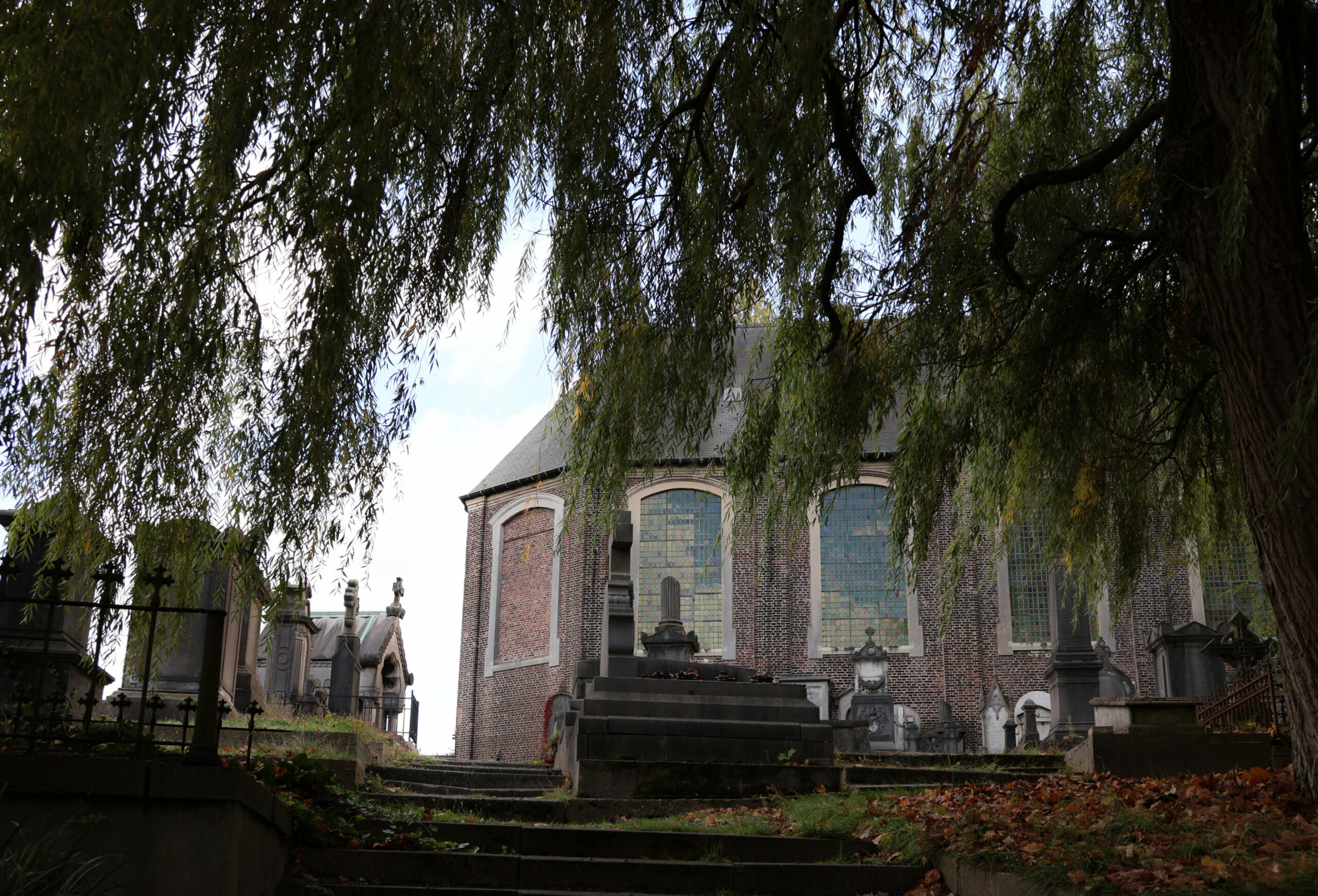
The Church of Our Lady of the Immaculate Conception, atop the hill in Sint-Amandsberg, functions as both a parish church and a cemetery chapel. Credit: The Brussels Times/Eva Hilinski
Dieweg Cemetery, Uccle (Brussels)
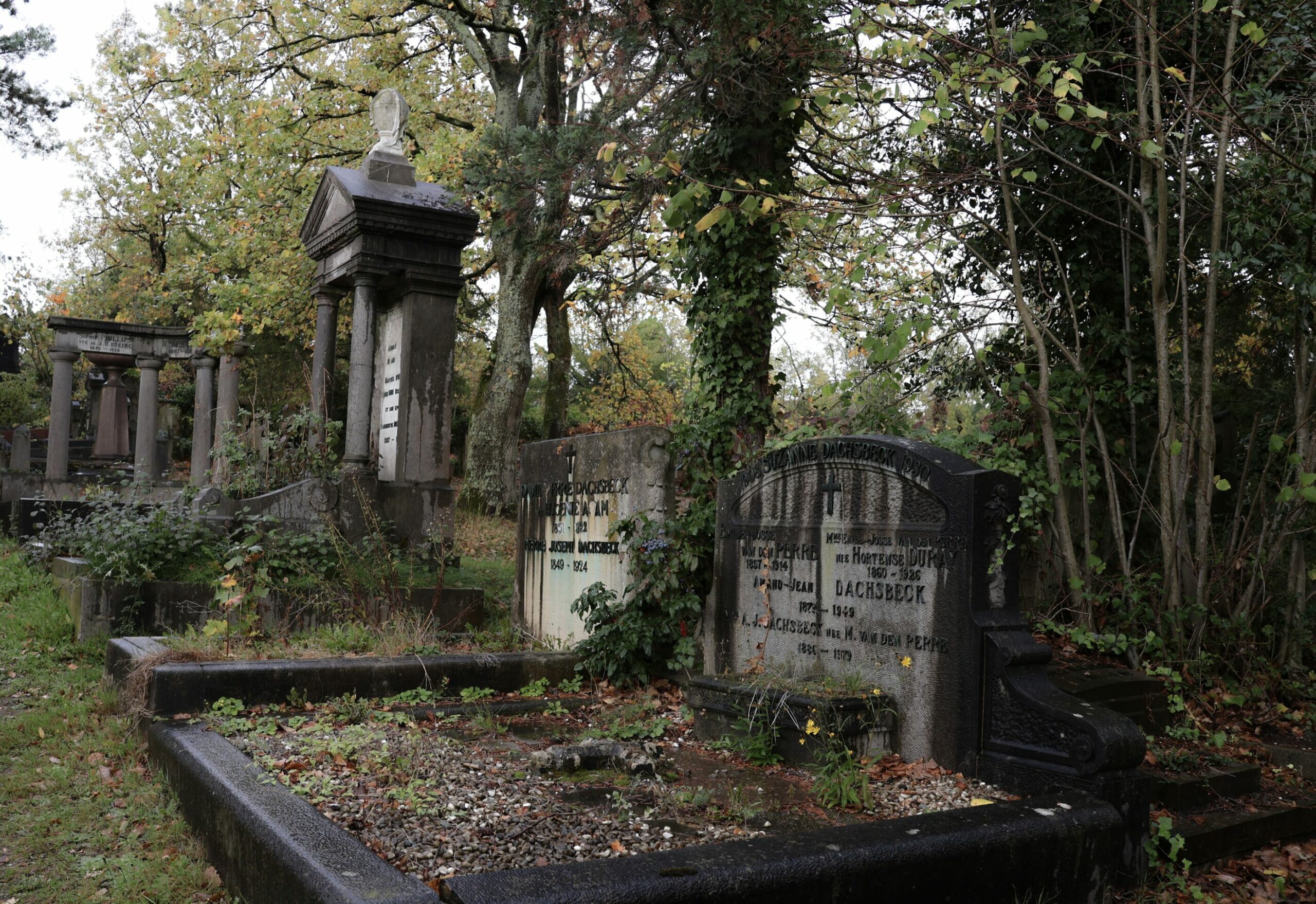
Dieweg Cemetery, Uccle, Brussels. Credit: Eva Hilinski
Founded in 1866 after a cholera epidemic, the cemetery was decommissioned in 1958 due to overcrowding and has since been overtaken by ivy and weeds, which have gradually captured the old tombs. People come here to wander among the dilapidated gravestones and crumbling angels.

Dieweg Cemetery, Uccle, Brussels. Credit: The Brussels Times/Eva Hilinski
The construction works are being carried out right now, but a walk through the old pathways can prove pleasant, even after the rain rinsed away all hopes for golden autumn photographs. The gloomy clouds and the gloss of the wet leaves amplified the mysterious atmosphere inherent to the place.
Many people come here searching for the grave of Hergé, the Belgian illustrator who created Tintin. Dieweg became the final resting place for Hergé in 1983, years after it had officially closed down.
