
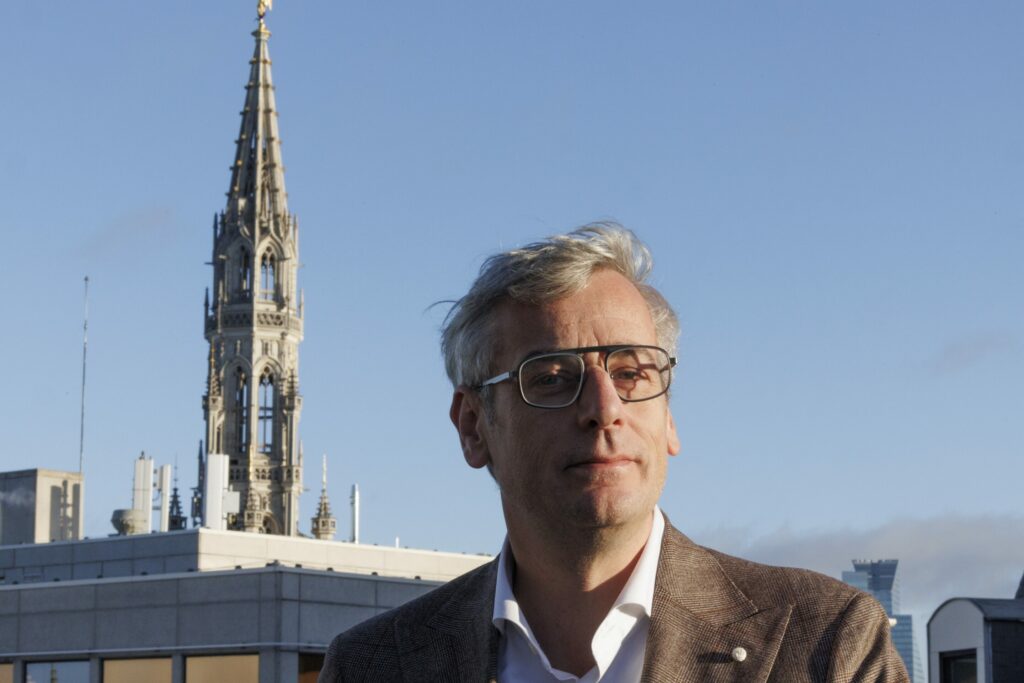
Dirk De Smedt certainly did not expect to take the torch to become Brussels' Budget Minister during one of the longest political crises the region has ever witnessed.
After his Open VLD colleague Sven Gatz stepped down due to health problems, he was appointed the Budget Minister of the Brussels-Capital Region last month. Surprisingly, he argues that in caretaker mode, things might even work better.
It has now been 524 days with no executive for the Brussels Region. It could not have been a more complicated moment for De Smedt to take up his new role. Previously, he was Director-General of the regional taxation agency Brussel Fiscaliteit since 2012.
His appointment was swift. Liberal Flemish party Open VLD insisted he could "ensure continuity" thanks to his technical expertise and years of experience overseeing the region's tax collection. Continuity, though, only goes so far when there is no functioning government to provide direction.
A stalwart of Open VLD, Gatz had stayed in office far longer than expected, simply because the region has failed to form a government for over 16 months. Multiple operations and a long recovery left him unable to continue in his post. His departure, however understandable, came at a politically awkward moment: the region is negotiating its budget.
A region negotiating its finances without an executive and a caretaker administration that is, in theory, supposed to do little more than keep the lights on. De Smedt disagrees with that characterisation.
'There is a lot of work'
Three weeks into the job, he describes his early days as a "trajectory of discovery". He is still learning the contours of his new job. But he is keen to challenge the assumption that a caretaker minister is powerless.
"A caretaker government cannot develop new policies," he acknowledges in an interview with The Brussels Times. "But nowhere is it written that it cannot improve how we develop, rationalise them or increase the quality of public services."
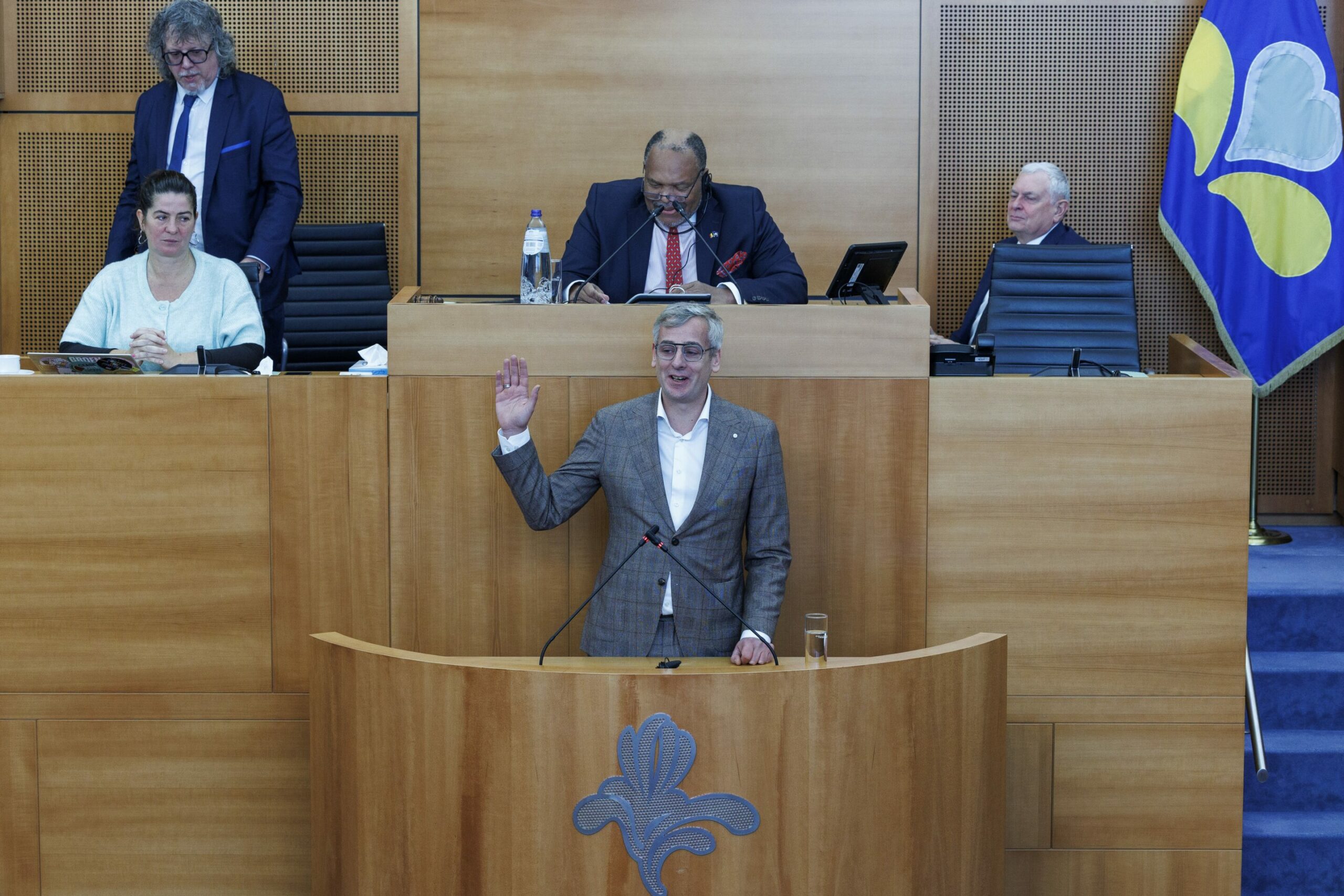
Newly appointed Brussels region Minister Dirk De Smedt takes the oath to succeed Minister Gatz in the Government of the Brussels-Capital Region, Friday 24 October 2025 in Brussels. Credit : Belga/Nicolas Maeterlinck
It is a striking argument. De Smedt insists the period is not one of paralysis. Instead, he sees the potential for sharper focus. "Because we cannot develop new policies, the focus on existing ones can be much more pointed," he says. "There is a lot of work." He intends to govern through meticulous scrutiny of the machinery that already exists.
De Smedt makes no secret of his political colour. "I am above all a liberal," he says. For him, the budget is "a political tool to create a better future" and to support residents "in their development". Even in a caretaker context, his political ideas shape how he weighs priorities.
When asked whether his liberal philosophy might clash with public sentiment, he admits the obvious: "Part of the population will certainly have another idea of how the budget should be analysed and discussed."
This prompts a reflection on Belgium's system itself, and how coalition agreements can alter political agendas in favour of compromises. "This is not a winner-takes-all system," he says. "None of the parties will ever get everything in their programme."
The result is a political culture where compromise is baked in, grand promises rarely survive the bargaining table, and ministers must adapt constantly to shifting constraints.
So is the system the problem or the politicians? De Smedt refuses the binary. Systems evolve, he says. Politicians must evolve with them. "Institutions designed 10, 20 or 100 years ago have a certain value, but they are not necessarily the ideal answers to tomorrow's challenges."
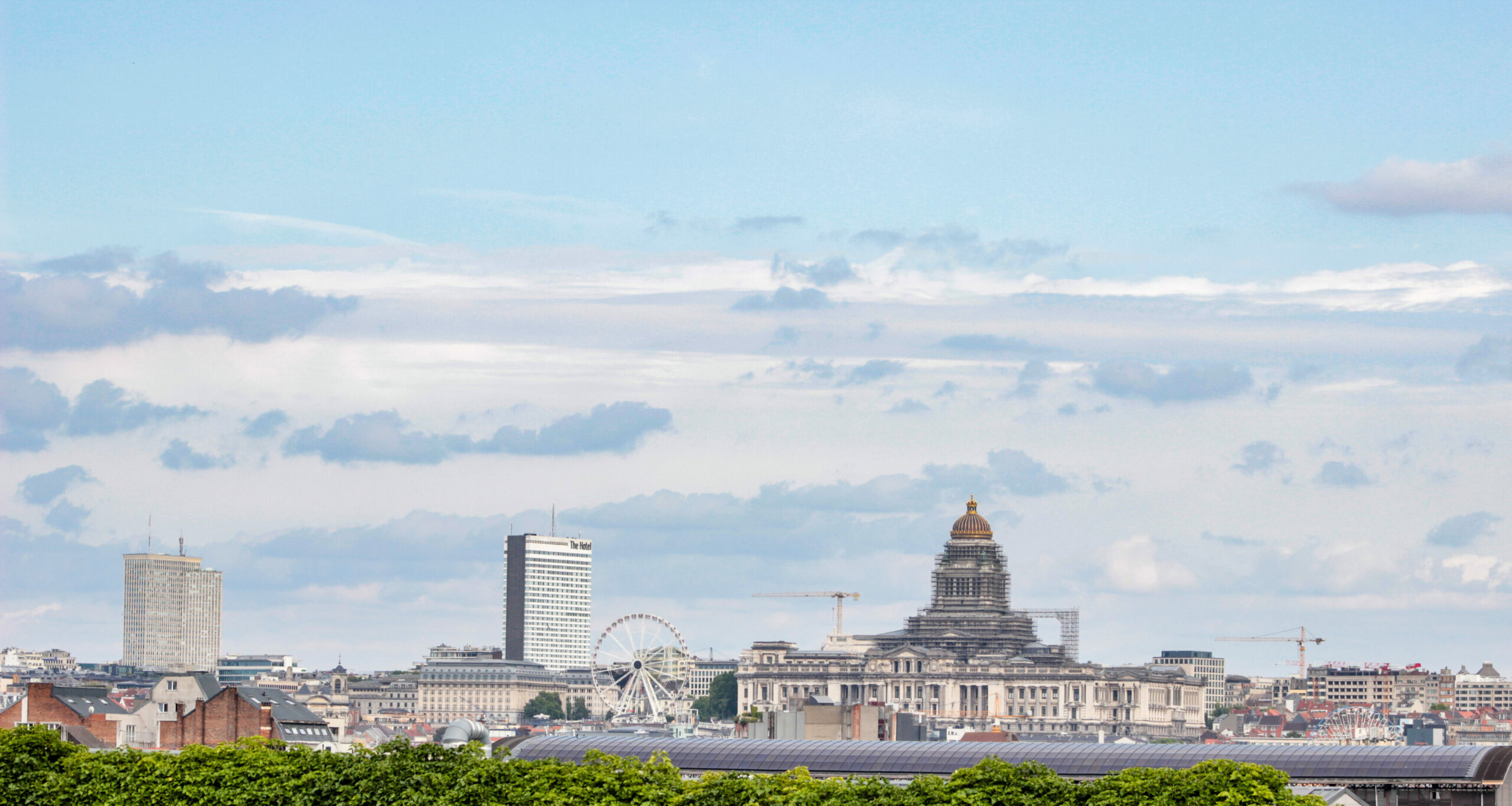
Brussels skyline. Credit: Ingrid Morales
Many Brussels international residents would argue that Brussels' politics is complicated. Whether it is mobility, safety or public services, many feel stuck in an endless political loop. De Smedt bristles at the idea.
"Saying nothing changes is simply not true," he says. He concedes that perception is "a highly individual feeling", shaped by emotion, media and personal experience. Crime figures, for example, may show declines in certain categories even as many residents feel less safe.
This frustration adds to the burden of a region with limited means and unlimited expectations. "Needs and expectations are unlimited," he says. "Resources are limited. That is the basic axiom of economics."
Political communication, he argues, must be more transparent. Without that, residents will continue to feel alienated even when administrative progress is real.
Brussels is in limbo and may stay there for the rest of this year. Ministers in the outgoing government operate in a twilight phase where they may be replaced in weeks or remain in office for years, depending on negotiations that residents know very little about.
If De Smedt is uneasy about the political storm around him, he hides it well. When asked whether he believes a new coalition could form before 2026, he becomes instantly cautious.
"I will not comment on the progress of negotiations," he says. Why? "Because any statement could break the dynamic."
Does that mean there is a dynamic? "There clearly is a dynamic," he concedes, before retreating again into silence.
