
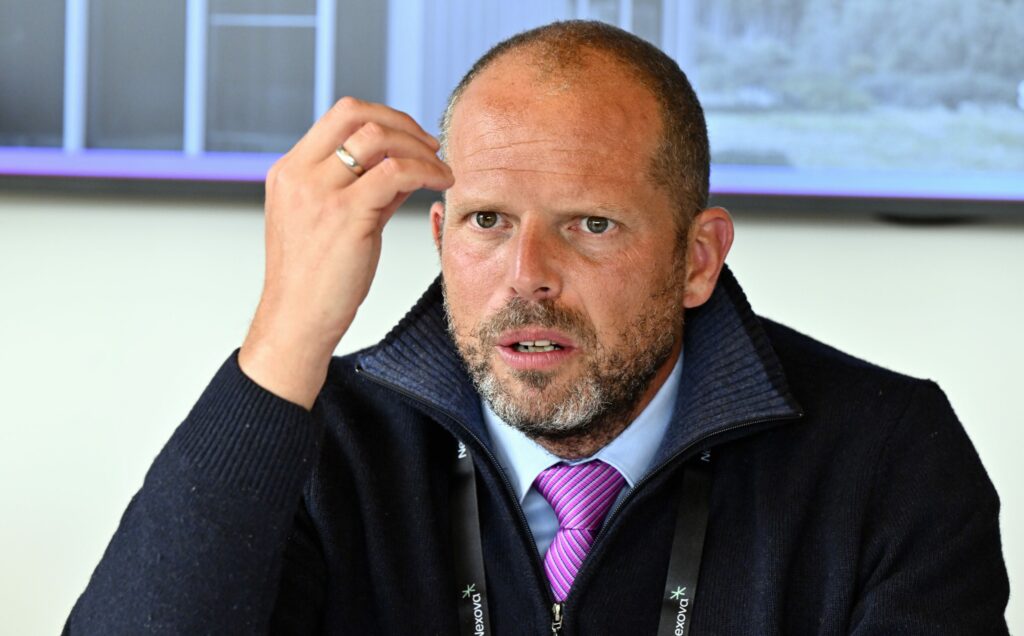
The Belgian Parliament's Defence Committee has approved, at first reading, the new military programming bill, which outlines defence investments for the 2026-2034 period.
At the request of the Socialist Party (PS), the bill will come up for a second reading before final approval.
This is the third military programming law to pass through parliament. The first was introduced in 2017 under Steven Vandeput (Nieuw- Vlaamse Alliantie, N-VA), followed by a second in 2022 from Ludivine Dedonder (PS).
Introducing new priorities
According to current Defence Minister Theo Francken (N-VA), that the new proposal aims to build on previous work, while introducing new priorities.
The bill is based on Francken’s strategic defence vision, which seeks to address current global security challenges, such as the ongoing war in Ukraine. It comes with a budget increase to meet NATO’s defence spending target of 2% of GDP.
Importantly, Parliament will still need to approve the government’s defence budget annually.
The proposed funding covers investments in equipment, personnel, and technology. Axel Weydts (Vooruit) noted the need to acquire weapons due to the state of global security, and countered criticism from the left-wing opposition, stating that defence spending is dwarfed by expenditure on social security, which is thirteen times higher.
No overreliance on US suppliers
Weydts clarified that this year’s €10.6 billion defence budget will not solely fund weapons. Most of it, he said, is allocated to personnel costs. Only 25% is directed towards investments, and not all of that is for weapons, he explained.
Weydts also addressed claims of excessive reliance on US suppliers, noting that only 7% of spending currently goes to the purchases from the US, compared to 41% from Europe, while decisions are yet to be made on the remaining 52%.
MP Kjell Vander Elst (Open VLD) questioned the deployment of soldiers on street patrols, arguing that they should not act as low-cost security guards. On the other hand, he advocated having the military take the lead in protecting critical infrastructure against drone threats.
Deploying soldiers against drug dealers? Consensus needed
Minister Francken disclosed that military security operations at Zaventem and Bierset airports had recently ended, as the police were no longer requisitioning defence resources.
Addressing calls from the Reformist Movement (MR) to deploy soldiers on the streets to combat drug crime in Brussels, Francken revealed that he would present a proposal to the government next week. "I want to be certain that all parties are on board if we are to do it," he explained.
Armed Forces General Harold Van Pee confirmed that there was a gap of a few years between the retirement of Belgium’s F-16 aircraft and the delivery of new F-35 jets. The delivery schedule is under review, with plans for 11 additional F-35s, likely to be built in Italy. Van Pee had hoped for deliveries between 2029 and 2031, but admitted that this timeline might be optimistic.
Heightened interest in voluntary service, including among girls
Francken also announced the accelerated purchase of two new Falcon aircraft for military use. One of the Defence Ministry's existing planes was the subject of criticism recently, following a forced landing with Foreign Minister Maxim Prévot onboard. Francken noted that the aircraft has been used extensively, prompting a decision to train new crews so as to ease the strain on existing staff.
Finally, Francken reported that 4,103 young people had registered for information sessions about Belgium’s voluntary service, 2,248 of them Dutch-speaking and 1,855 French-speaking.
Remarkably, a quarter of registrations came from young women — many more than anticipated, he noted.
