
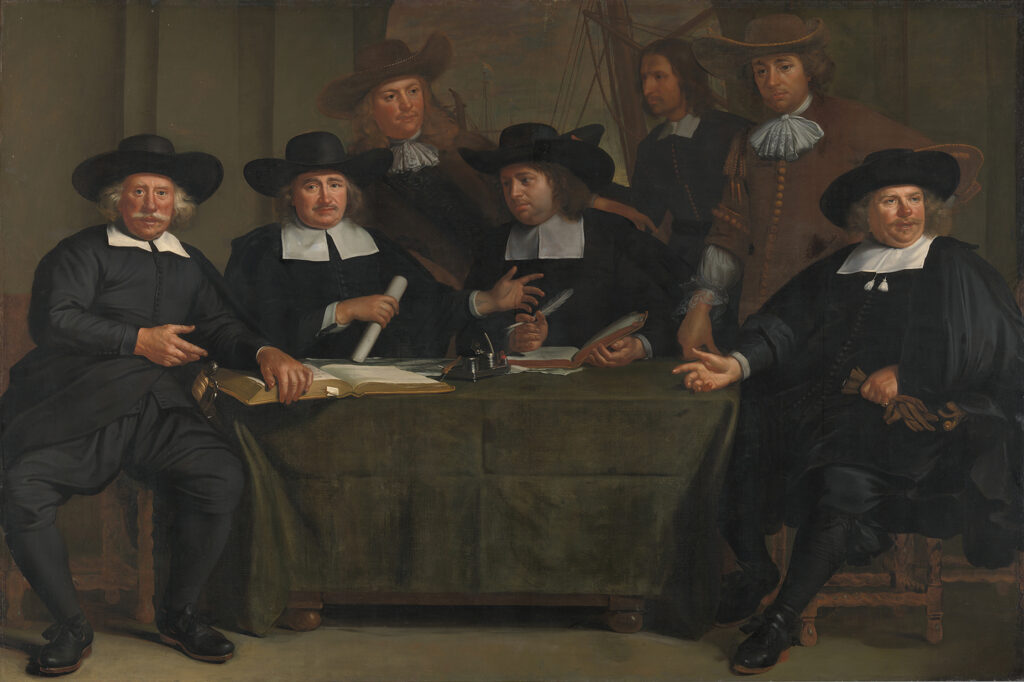
Art experts at the Amsterdam Museum were left puzzled when they noticed a detail on a painting of Walloons from the 17th century never seen before: a mystery tattoo.
Entitled ‘The Chief Commissioners of Walloons’, the painting is of portrait of a group of Walloon merchants from 1674, painted by the Lille-born Dutch Golden Age painter Wallerant Vaillant.
In that period, tattooing was not at all common, usually reserved to criminals and sailors.
"I have seen many 17th-century portraits, but never anything like this," Judith van Gent from the museum told Dutch public media NOS. "I immediately went to look at other portraits, but we haven't found anything else. As far as we know, this is truly unique."
It had recently been loaned to an exhibition at the H'Art museum in Amsterdam after years in storage, NOS and Het Nieuwsblad report.
When returned, experts examined the painting closely and noticed something they had not before – the presence of a tattoo on one of the men’s inner wrist. The tattoo is poking out of his sleeve, and the object depicted is believed to be a comet.
"The tattoo probably never got noticed before because the work was in storage for a long time. Plus, it was hanging pretty high up in the museum, so you couldn't see the tattoo. You really have to be right up close to it," Van Gent points out.
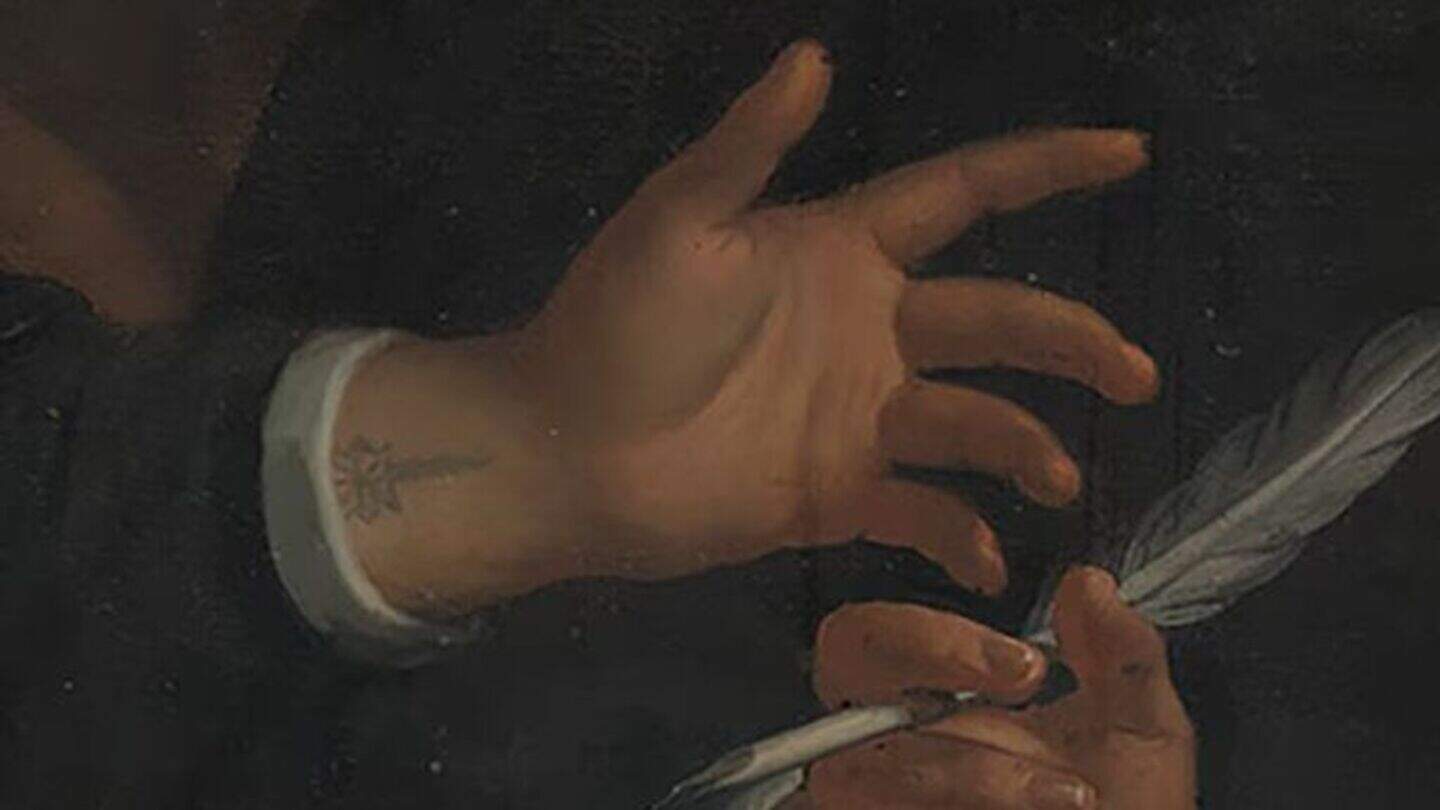
The tattoo zoomed in De opper commissarissen van de Walen (1678). Credit: Amsterdam Museum
The man with the tattoo is said to be Wessel Smits, a wealthy merchant. He was possibly born in 1618 or 1619 - precisely when a comet was prominently seen in the sky, said to have been the first seen with the use of a telescope by Johannes Kepler
However, experts are puzzled as to why a devout protestant would have got a tattoo, as it was strictly forbidden by the Book of Leviticus.
Smits was believed to come from an intellectual family, and that century, the study of comets – including by Isaac Netwon in 1680 – was to spearhead the scientific revolution.
Previously, comets were seen as symbols of impending doom such as war and disease, but Smits was not said to be superstitious.
So the mystery as to why, where and when this tattoo appeared on the wrist of Wessel Smits, remains unsolved – for now.
