
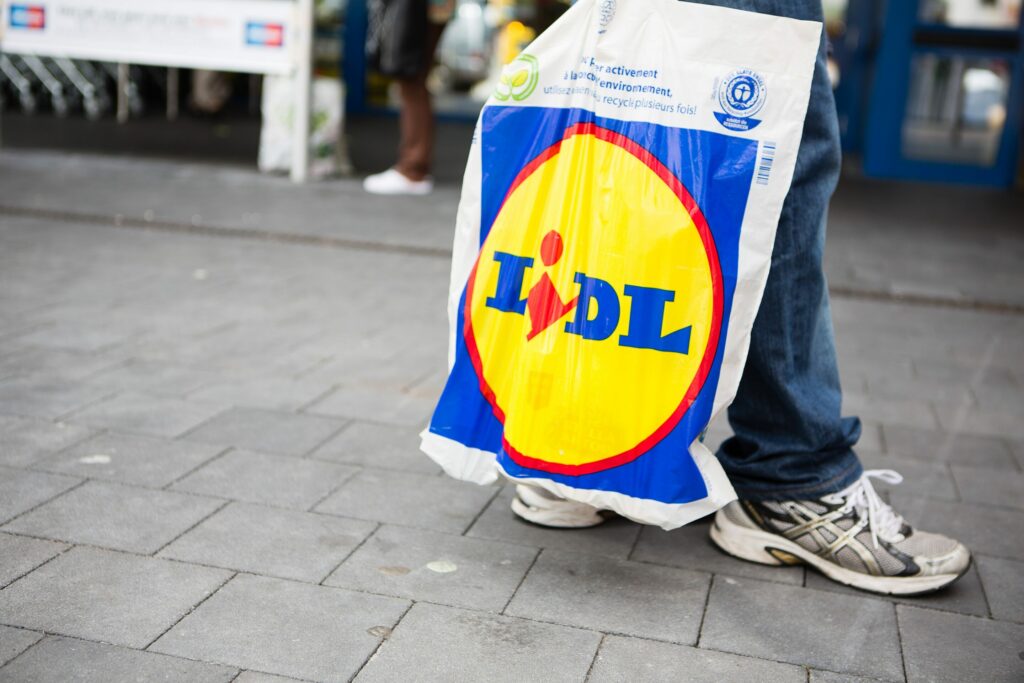
German discount supermarket chain Lidl is a go-to store for affordable grocery shopping in Belgium. Yet it is among the few grocery chains that do not open on Sundays. The reason? The budget.
If an integrated chain, such as Lidl, wishes to open on Sundays, it must pay its staff a 200% bonus, while supermarkets run by independent entrepreneurs contracted by supermarket chains, known as franchising.
Today, this allows Carrefour, Albert Heijn and Delhaize to pay lower wages and lower premiums, while also making it easier for them to employ students and flexible workers. Franchising allows them not to be bound by regulations or labour protections applied to supermarket chains.
For example, the majority of Delhaize, Carrefour, Intermarché, Spar, Jumbo and Albert Heijn stores can now open on Sundays.
Lidl has complained to the Belgian Government, calling for it to step in. "There is unfair competition," said Lidl CEO Marjolein Frederickx in an interview with De Tijd
"We must be able to compete on an equal footing. That is not the case today," said a representative of another discount supermarket chain, Aldi, who also sounded the alarm.
Both supermarket chains hope for a reform of the consultative bodies in which employers and employees by sector make agreements on wages and employment conditions. Previous talks between the unions and the chains have been suspended entirely due to conflicting interests.
So what is the difference between integrated supermarkets and franchised shops? The former are directly owned and operated by a large parent company, while independent supermarkets are individually owned, often as a franchise part of a larger network. The key difference is ownership structure.
Chains such as Delhaize are transitioning to a model where most stores are independently owned but operate under the main brand. This led to huge protests in Belgium, including a call for boycotting.
Transferring its stores to individual ownership is not an option for Lidl, according to Frederickx. Being a discount chain, Lidl finds it essential to manage the stores centrally.
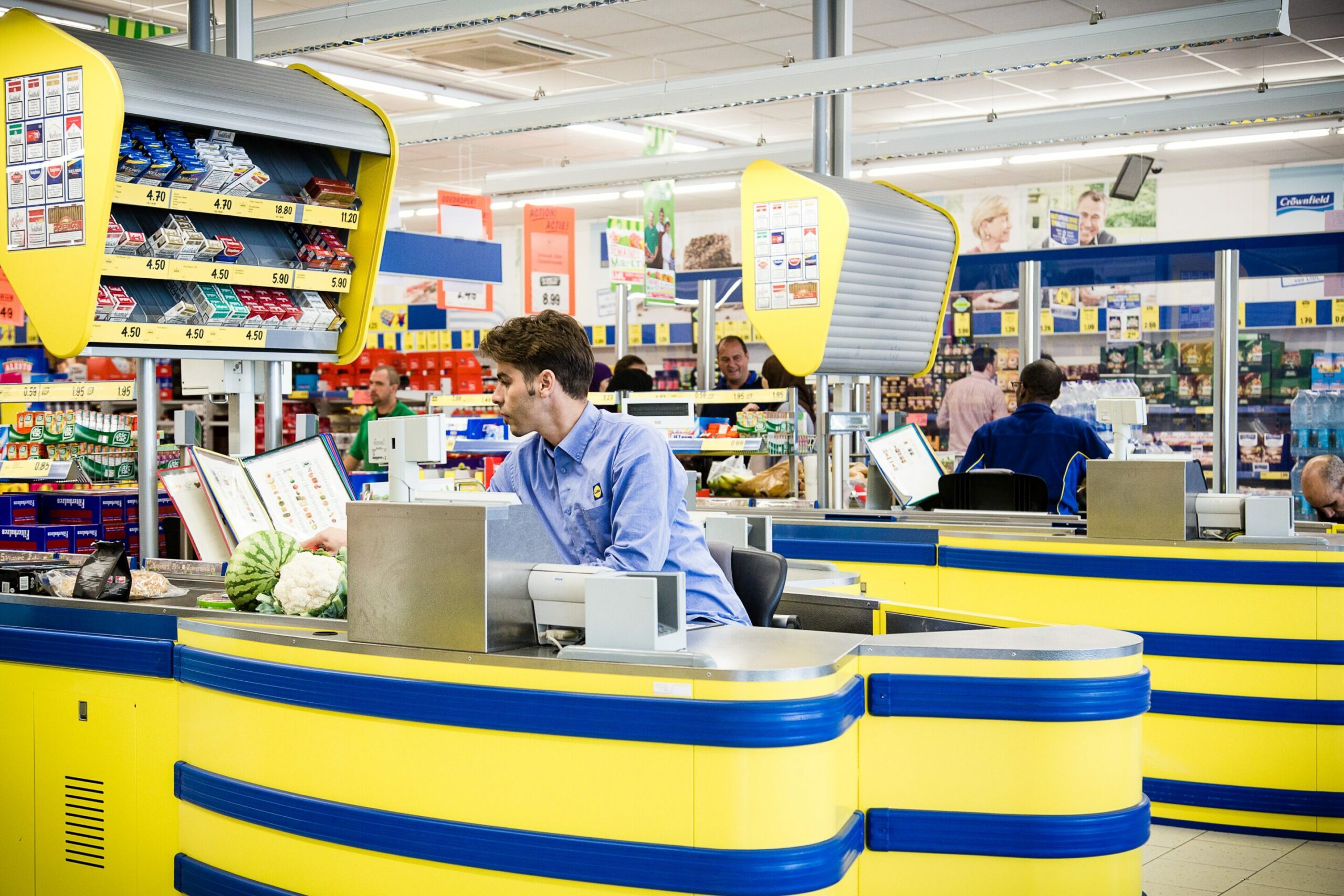
Illustration picture shows the cashier working at the cash register of a Lidl supermarket in Brussels, Wednesday 14 August 2013. Credit: Belga / Siska Gremmelprez
"'Our concept must be uniform both in terms of offer and processes. We offer low prices, and we can only do that with an assortment that is the same in every store. That results in large volumes, and therefore also the opportunity to negotiate good contracts with our suppliers," said Frederickx.
Delhaize lost about half a billion euros following the franchising of its stores, but wins customers back through its Sunday openings. Therefore, it has no interest in giving its competitors a reform gift.
Frederickx also notes that at the moment the chain remains afload in Belgium because there is no similar discount offer available. "Our customers are very price sensitive. Lidl can still convince them not to do their shopping on Sunday and come to us," she said.
"'We have indeed had some more difficult years,' says Frederickx. "Competition has only increased, and the uneven playing field does not make it any easier for us."
In 2022, Lidl recorded a loss of more than €50 million, as it had been struggling on the Belgian market for years.
Now, the chain plans to open six new stores each year, reaching 80 branches by 2038, reported De Tijd. This should create at least 24,000 new jobs.
Frederickx says Lidl's turnover has increased in recent years. However, it is a concern that heavy taxes for staff costs and other taxes weigh on profitability and Lidl's ability to invest.
