
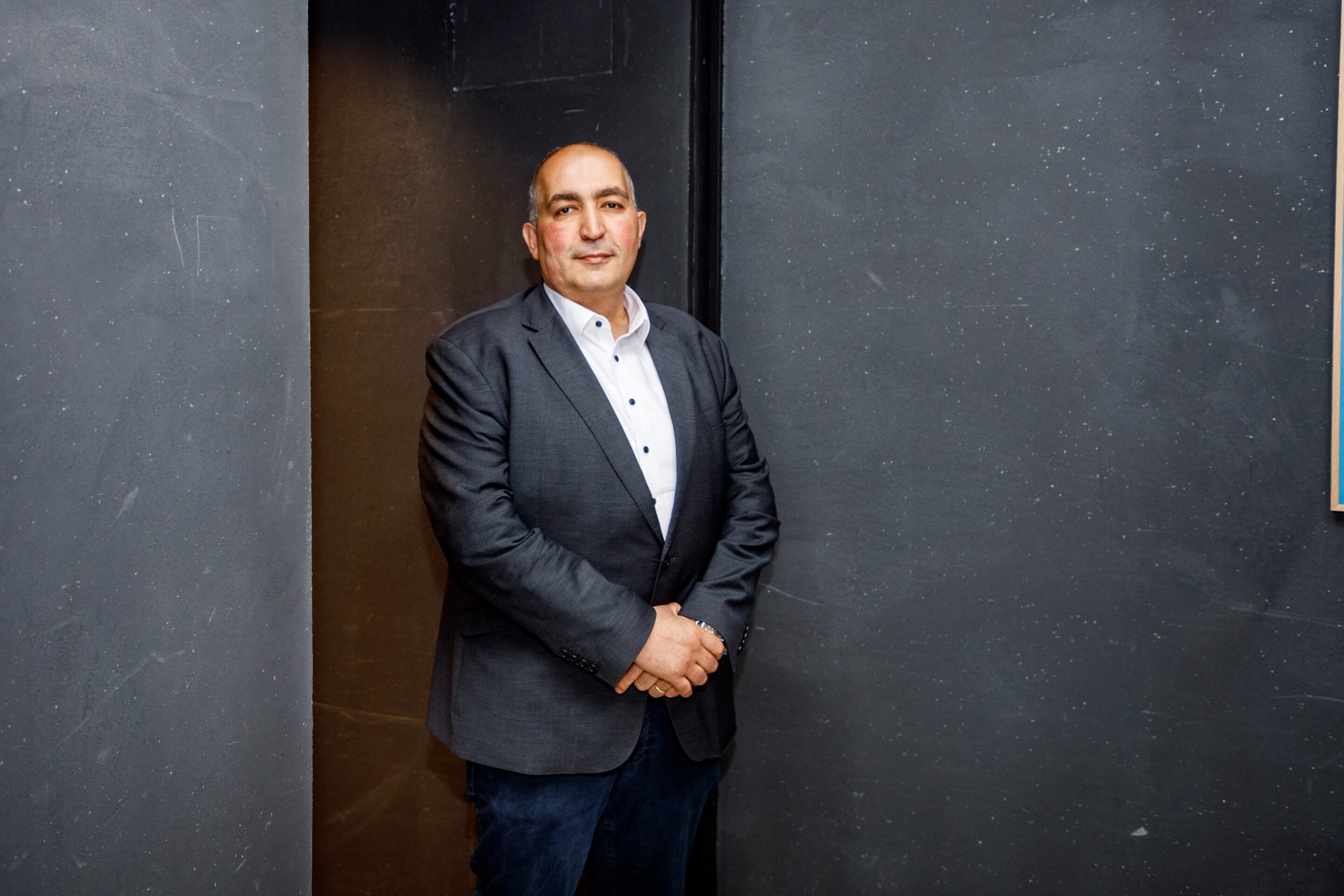
“Why must there always be an ideology?” Fouad Ahidar asks, leaning forward as if challenging not just his interviewer but the entire Belgian political class.
A loyal socialist for two decades, the 52-year-old Brussels native has reinvented himself as the capital’s most unpredictable insurgent. His new movement, Team Fouad Ahidar (TFA), stunned observers in last year’s elections, breaking through with voters who felt sidelined by both the left and the right.
In person, he is burly and warm. However, his avuncular demeanour belies hard and shrewd political instincts. Pressed, he concedes his platform is left-liberal: pro-entrepreneurs, pro-responsibility for those out of work, and unapologetic about a moral vocabulary rooted in his faith, whatever that means.
For Ahidar, faith is not a campaign theme but a compass. “I am a practising Muslim,” he says, keenly aware that this is the charge sheet for some of his opponents. “It’s my life’s thread. God gives you intelligence, strength and money. Great. The question is: what do you do with it? Do you crush people or help them? Politics gives me the chance to correct injustices.”
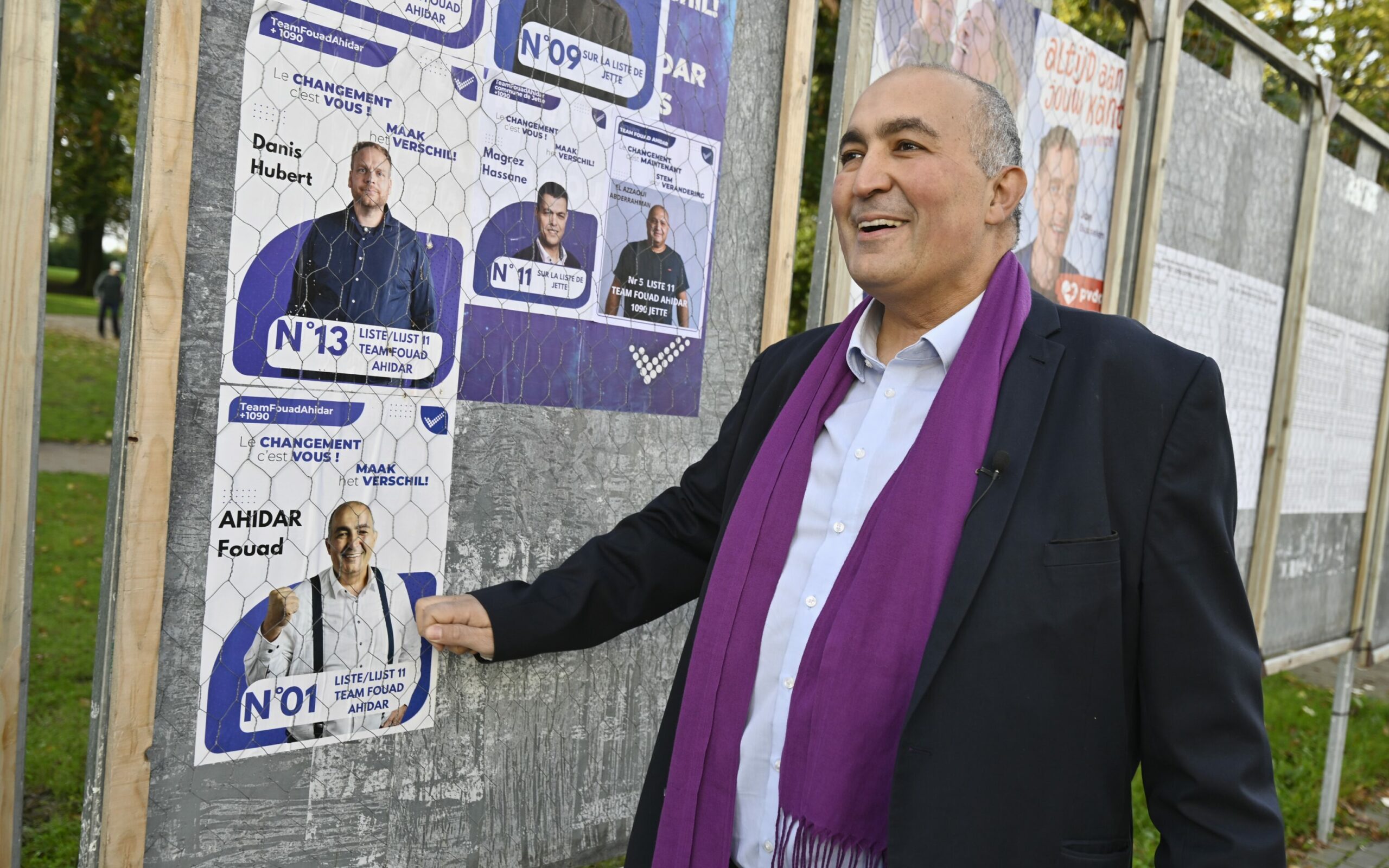
Team Fouad Ahidar + 1090's Fouad Ahidar pictured at a polling station in Jette, Brussels, Sunday 13 October 2024. Belgium holds local elections to elect new municipal and provincial councils and mayors. Credit: Belga
Born in Molenbeek to Moroccan parents from Tétouan and the Rif, Ahidar bridges multiple worlds – Flemish and Francophone, secular and devout, insider and outsider. He dislikes the word “origin” to explain his ethnic background, before offering the shorthand he knows people expect: Belgo-Moroccan. “I’m proud of both my identities,” he says. “It keeps me aligned with my philosophy: we work for everyone.”
Ahidar speaks fast, impatient with political jargon, and insists that his project is more moral than ideological. “We want people to be happy,” he says. “We want administrations to do their jobs. Facilitate life. That’s it.”
New team
The break with Flemish socialist party Vooruit – he cites quarrels over ritual slaughter during Eid as a trigger – coincided with what he saw as a hardening tone from new leadership. “They arrived saying there are too many religious people in this country, and they must be pushed back, even crushed.” Across Europe, he argues, an informal rule has set in: believers may exist, “As long as you look like us.”
Last June, his fledgling TFA party seized three seats in the Brussels regional parliament, winning 16.47% of the Flemish vote (at the time of writing, the regional government has yet to be formed, more than 500 days since the elections), and he is now convinced the established parties would rather freeze him out than share power. He followed that in last October’s local elections, winning seats in various municipalities, including five of the 49 in Brussels commune, seven of Molenbeek’s 45, and seven of Anderlecht’s 47.
“They’re scared of us,” he says with a flash of mischief. “They know that once we’re in government, we won’t let anything slide.”
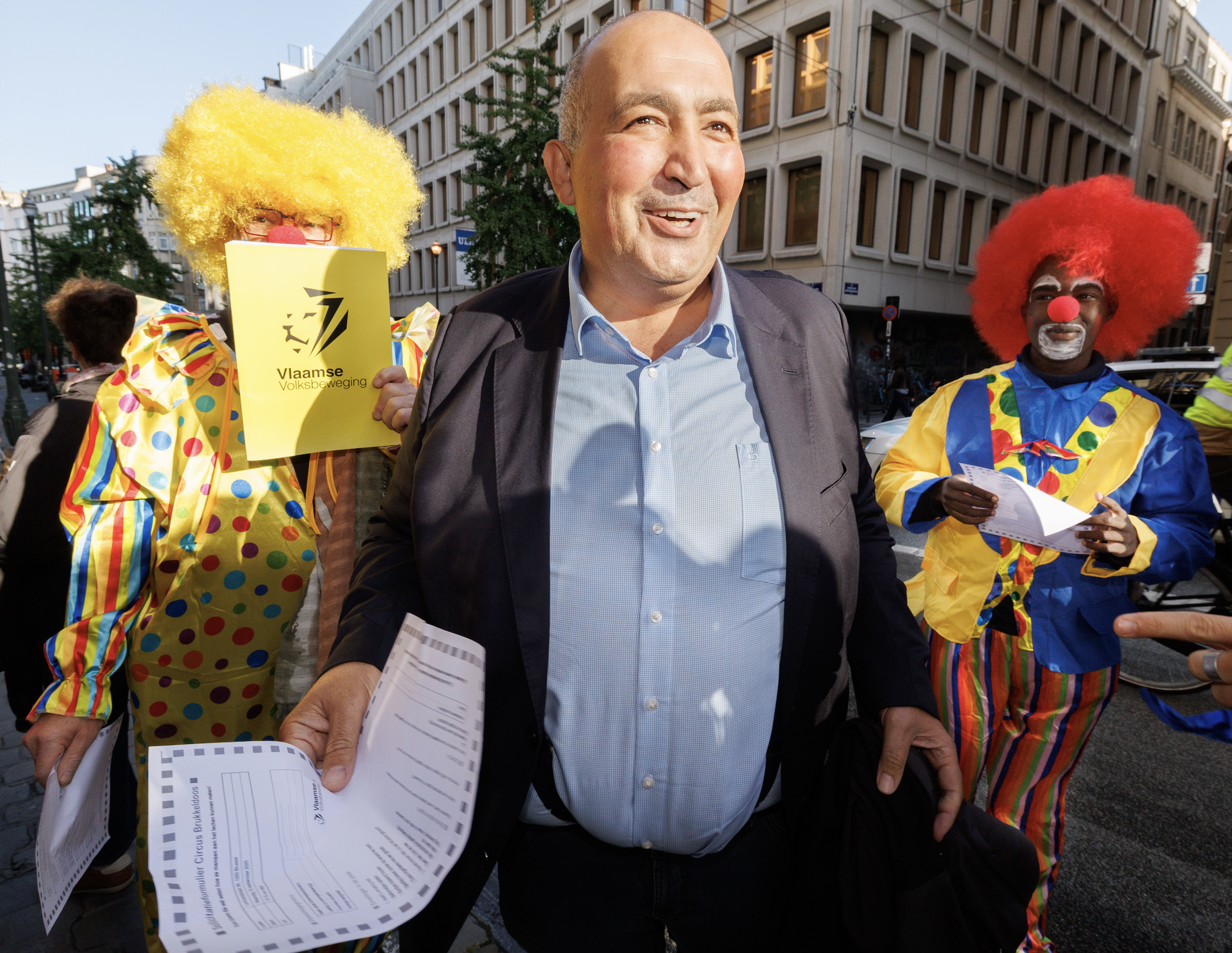
Fouad Ahidar pictured during a Flemish People's Movement (VVB) action following the opening session of the Brussels Parliament, on Monday 15 September 2025. Credit: Belga
But he bristles at caricatures. The morning after his party’s breakthrough, he says, a broadcaster mapped its result in black. “Our colour is mauve,” he laughs, still affronted. When a veteran liberal claimed he would “impose sharia” in Brussels, the story was picked up across the media. “He knew exactly what he was doing,” Ahidar says. “His party had miscalculated; we took seats they thought safe.”
Ahidar insists he can govern with anyone who respects “lines” he won’t cross: dignity in social protection, housing, and freedom of worship. He is sharpest about the right-wing francophone MR party on culture and religion – “almost racist at times, Islamophobic” – but suggests overlaps on security, cleanliness and business creation.
What about the Flemish conservative-nationalist N-VA, whose leader Bart De Wever is the Prime Minister? “They govern. We can work with them if they drop this idea that people on benefits are all scroungers and stop fantasising about breaking the country up.”
Drug money
If there is a subject that animates him beyond identity, it is Belgium’s drug economy and the way it disfigures neighbourhoods. “When I go after drug problems in Molenbeek or Schaerbeek or Leuven, I go after dealers,” he says. “Not Moroccans or Turks or Belgians.” He rejects ethnic profiling and blames media habits for flattening nuance. “Good news is not news,” he says. “Drugs touch every community.”
Why do some young men sell? “Easy money,” he answers. “If you can earn €100 for ten minutes as a lookout, a part of you will be tempted.” The costs fall on families: fathers paying lawyers, mothers crying through the night. “There is no pleasure in this. It’s a catastrophe.”
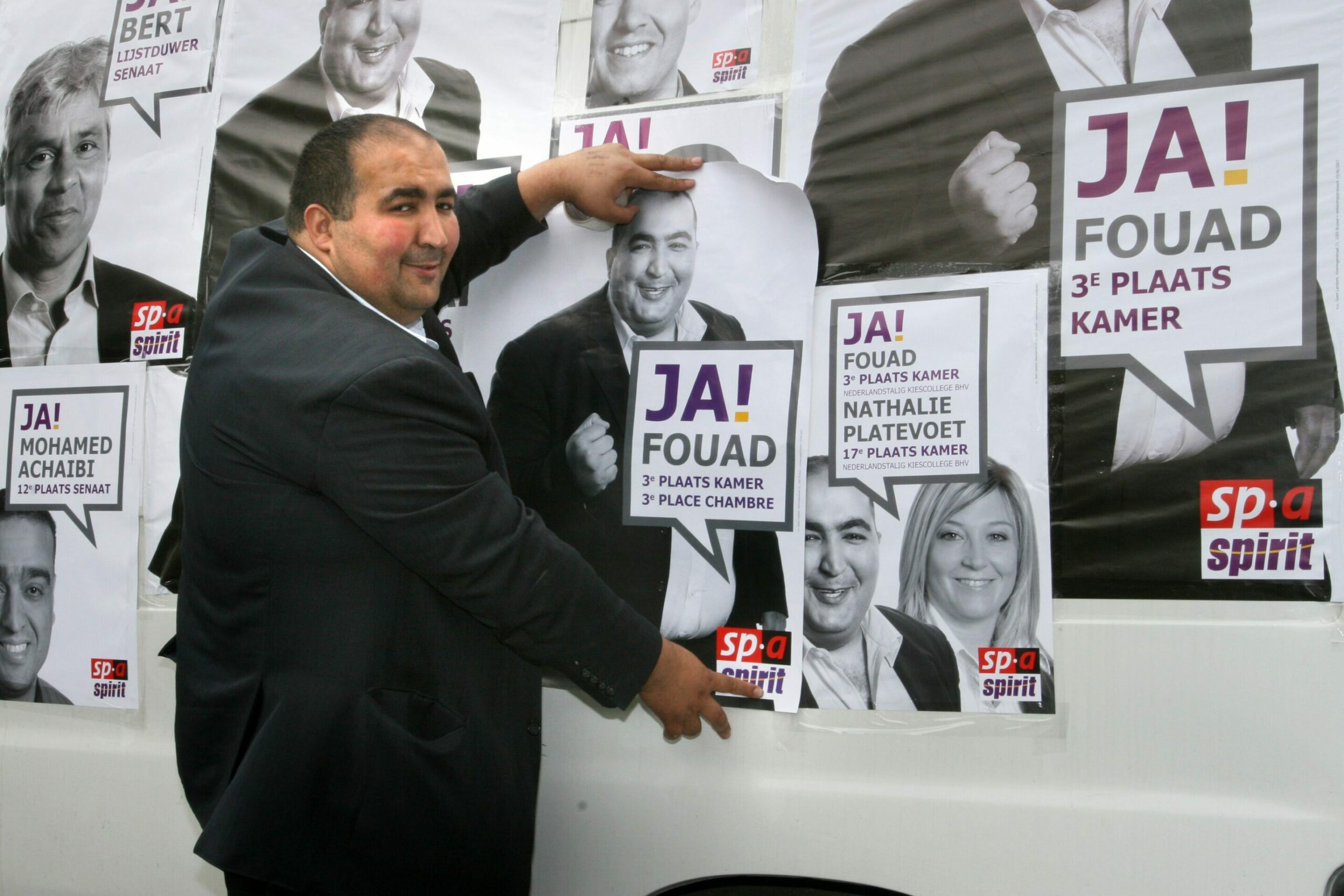
Fouad Ahidar pictured with his posters for the 2007 elections, when he was running with the Flemish socialists. Tuesday 5 June 2007 in Brussels. Credit: Belga
His provocative suggestion, carefully framed but unmistakable, is to ask whether a regulated legal supply could gut the street market and pull users into treatment. “I’m not saying ‘legalise drugs’ as a slogan,” he cautions. “I’m saying: do we want to break an international traffic that costs society a fortune? If people can buy in a specific building at a reasonable price, with support attached, you can undercut criminality. Prevention and accompaniment, not moral panic.”
On security, he wants a more agile Brussels police set-up: keep local stations and bureaucracy close to residents but allow a central command to surge officers into hotspots for operations. “At the moment, egos and zones make it cumbersome,” he says. “People say it won’t work. Have we tried?”
He is no fan of political monopolies. “Keeping a mayoralty or executive post for too long creates temptation,” he says, arguing for regular changeovers after a decade or so.
Faith, state and the headscarf debate
Ahidar is unequivocal about secular values, or as the French call it, laïcité. “I am for the separation of state and religion,” he says, then flips the question. “It’s the state that meddles with what you wear, what you eat, how you slaughter, where you gather. That is the state entering religious life.” His test is simple: “Let people who want to believe or not believe exist without being restricted in their rights.”
And he is tired of the endless debates over headscarves. “If a uniform is mandatory and women shouldn't be wearing a scarf, fine: don't hire them. But stop excluding. We’re training teachers and then telling veiled students there will be no jobs for them. Could we agree on a bandana or a discreet adaptation that respects religious prescriptions? We can debate that.” Full face veils are, he notes, already covered by law. “We don’t need to live in extremes.”
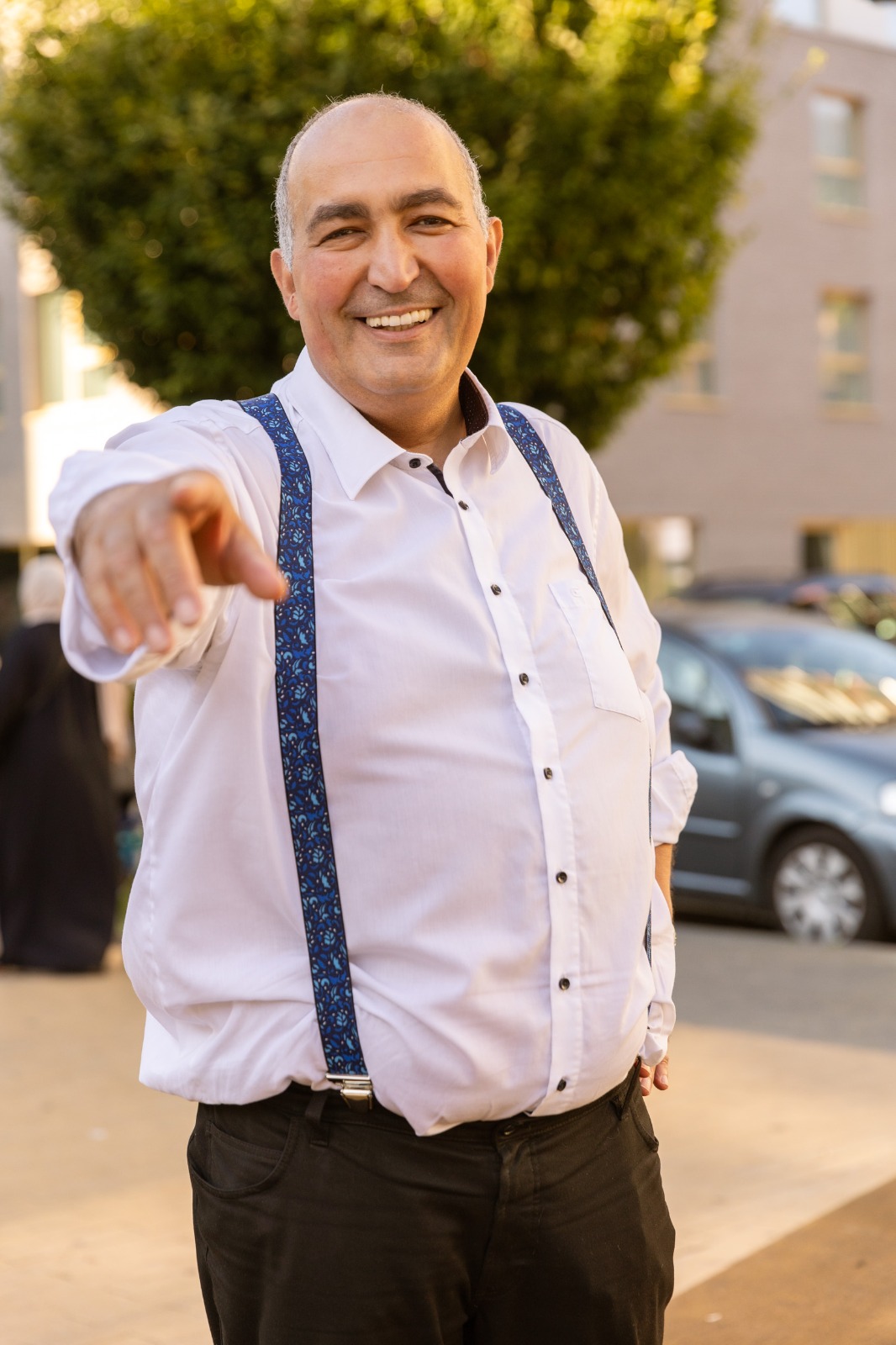
Fouad Ahidar
The immigration argument, in his telling, is riven with double standards. Europe, he says, gladly recruits Moroccan nurses when it needs them; elsewhere, it shuts doors and moralises. “There is no ‘regulation’; there is selection,” he says. “Keep the poor out, bring in the skilled and the wealthy.”
He wants humane basics (shelter, food, showers, information) offered to anyone physically present in Belgium, documented or not. Then, clear procedures: “If you must leave, you must leave. If you qualify for protection, we say so. But you cannot leave people on the street.”
Migration will never stop, he argues, because it has never stopped. “Humans aren’t trees,” he says. “Trees have roots; if there’s no rain, they die. Humans have legs. If there’s no work in the village, they move to the next one, then the city, then across the sea. It has always been like this.”
Who pays for it?
Ahidar’s social housing agenda is his most concrete policy. “We should be a society where people feel safe,” he says. Safe enough to take risks, to start again, to fail without giving up. He imagines a 500-room building amongst a lot of empty buildings in Brussels, where someone in crisis can shut his door, eat a hot meal, take a shower, and sleep. “Give people a right to rest,” he says.
Is his party anti-capitalist? No. “We promote entrepreneurship,” he says, alongside clear responsibilities for those who’ve spent years out of work. Is everything free? “Nothing is free. Someone pays.” He is wary of easy slogans but pragmatic about alliances as long as his “red lines” hold: don’t strip entitlements from the poorest; build social housing; protect freedom of worship; invest in schools and prevention.
On the left, Ahidar has little time for anti-religious reflexes. On the right, for identity games. He rejects the “communitarian” tag and the “Islamist” smear outright. “We are useful to others, that’s the measure,” he says. “The best among us are those useful to others.”
Then there is the question of his friends and acquaintances, some of whom are seen as radical Muslim extremists. He waves away the insinuation. “They asked if I’m a ‘Muslim Brother,” he smiles. “I am Muslim, I have brothers, but I’m not a Muslim Brother.” He once listened to Muslim academic Tariq Ramadan, “because he spoke French well”, only discovering later the extremism and the rape charges. “We didn’t care about that. We cared about ideas.”
Another is Mohamed Toujgani, the Moroccan-born imam accused of anti-Semitic hate speech and expelled over "serious danger to national security.” Ahidar’s response is to talk about the procedure. “I followed the file with his lawyer. Judges decided he was entitled to Belgian nationality. Politicians should respect the law.” If the imam said things in anger about Gaza, he says, “they were words; wrong, perhaps; but words”, and words should be tested in court, not inflated into an existential threat.
Green, amber and red lines
He categorises his own programme into shades: green lines he will pursue; amber lines he will negotiate; and red lines he won’t cross. The list runs like a civic catechism: a roof over people’s heads, a hot meal, internet access, training and local doctors.
Nor does he believe that unemployment benefits and sick leave should be cut for people out of work for long periods: they may need a lot of time to recover. “If someone needs a year, they need a year,” he says. “Let them rebuild. Maybe they come back stronger.”
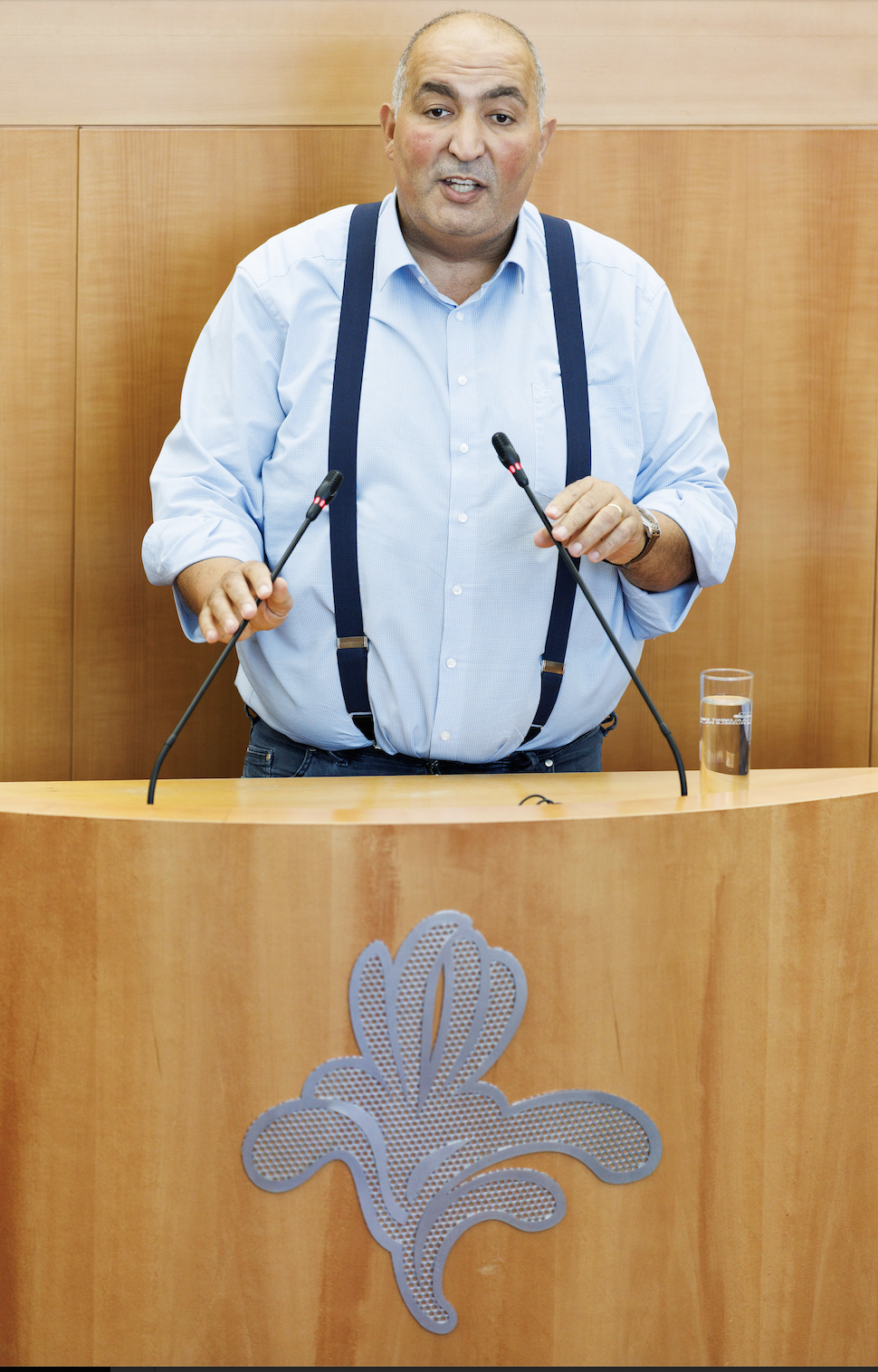
Fouad Ahidar pictured during the opening session of the Brussels Parliament, for the 2025-2026 year, on Monday 15 September 2025. Credit: Belga / Benoit Doppagne
What he won’t do is dilute his core values to be palatable to parties that, he believes, prefer him outside the room. “They couldn’t buy me then; they won’t buy me now,” he says, recalling his 25 years in politics, five as a councillor, 20 as an MP, and his current stint as president. “People told me: you’ll throw it all away if you leave. But more than ever, we need people whose hearts are in the right place.”
Nonetheless, he admits his politics are less a platform than a promise. “When we get up in the morning, the question is: how many people will we make happy today?” he asks, rhetorically. “Twenty? Thirty? Fifty? If you don’t take pleasure in making others’ lives easier, you’re in the wrong party.”
He smiles at the simplicity of it. “We’re not asking for anything special,” he says. “Just respect. Freedom to pray, to eat as our consciences require, to work without being excluded, to be treated like everybody else. The rest is administration. Do the job well, and people will be happier than any ideology could make them.”
