
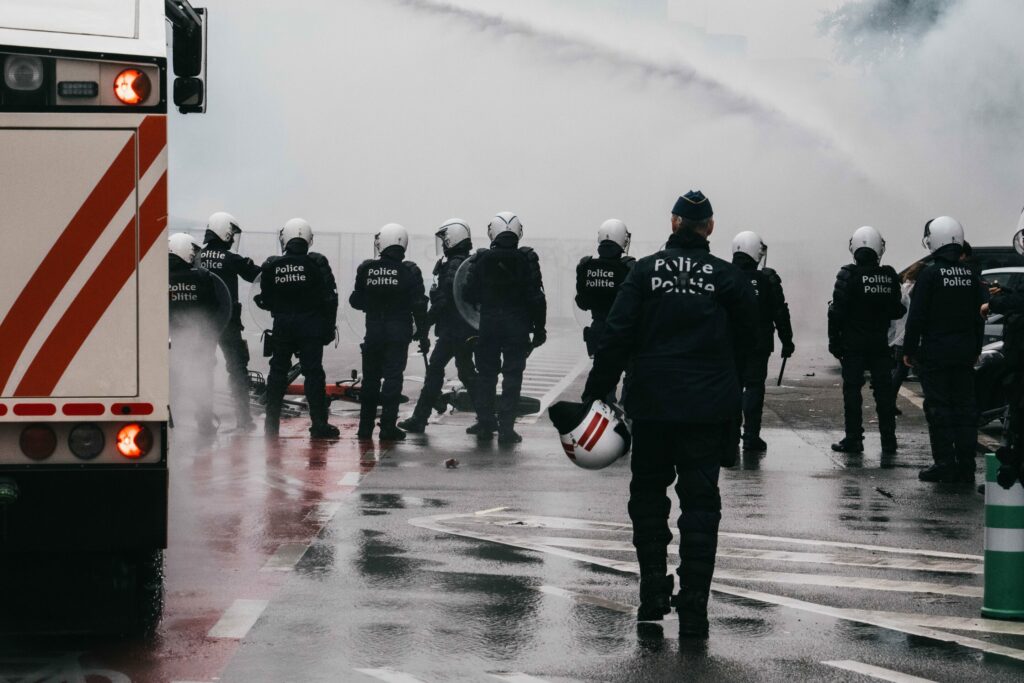
There will be no change in the potential use of the non-lethal riot gun FN303, a type of air rifle, by police during public demonstrations, according to Belgian Interior Minister Bernard Quintin.
The minister denied claims reported on Monday that he intended to reopen discussions on whether the weapon could be deployed during protests.
The clarification follows an earlier statement made by Defence Minister Theo Francken about the use of FN303 rifles against protesters involved in vandalism during demonstrations.
Francken first raised the issue a month and a half ago, suggesting that police should have broader authorisation to use FN303s against what he called antifascist and left-wing "troublemakers" following incidents during recent union protests.
On Monday, news outlet Het Nieuwsblad ran a headline suggesting Quintin proposed tougher weapons for dealing with violent rioters.
The article quoted him as saying that non-lethal weapons could be deployed by police if demonstrations escalated significantly. Police unions were also reportedly supportive of this stance.
However, Quintin’s office stated that no police zone is allowed to use the FN303 for public order management.
They emphasised that the weapon’s use remains strictly prohibited in scenarios involving the negotiated management of public space, previously referred to as general public order enforcement.
The minister did, however, view considerations on proportional use of other non-lethal weapons as necessary. These weapons could include measures for legitimate defence or immediate neutralisation in cases of aggression.

Minister of Interior Bernard Quintin at a plenary session of the Chamber at the Federal Parliament in Brussels, 09 October 2025. Credit: Belga / Dirk Waem
Manufactured by Liège-based FN Herstal, the FN303 is often described as a robust paintball rifle capable of firing plastic projectiles at speeds of up to 300 kilometres per hour.
Unlike rubber bullets, which are discharged from firearms using gunpowder, the FN303 operates using compressed air.
Currently, the FN303 can only be deployed under very specific circumstances. These include interventions by special assistance teams, incidents in prisons or psychiatric institutions, safeguarding individuals in danger, or subduing persons posing a threat to themselves.
Green MP Matti Vandemaele has expressed concerns about expanding police weaponry beyond batons and shields. He warned that deploying such weapons could escalate tensions, leading to unintended harm to bystanders or officers. Vandemaele also cautioned that this move could provoke reactions from anarchist protesters, potentially leading them to arm or shield themselves more heavily.
Amnesty International has previously reported serious injuries caused by weapons like the FN303, including cases of permanent blindness. Other documented injuries involve fractures, brain trauma, internal damage, and bleeding.
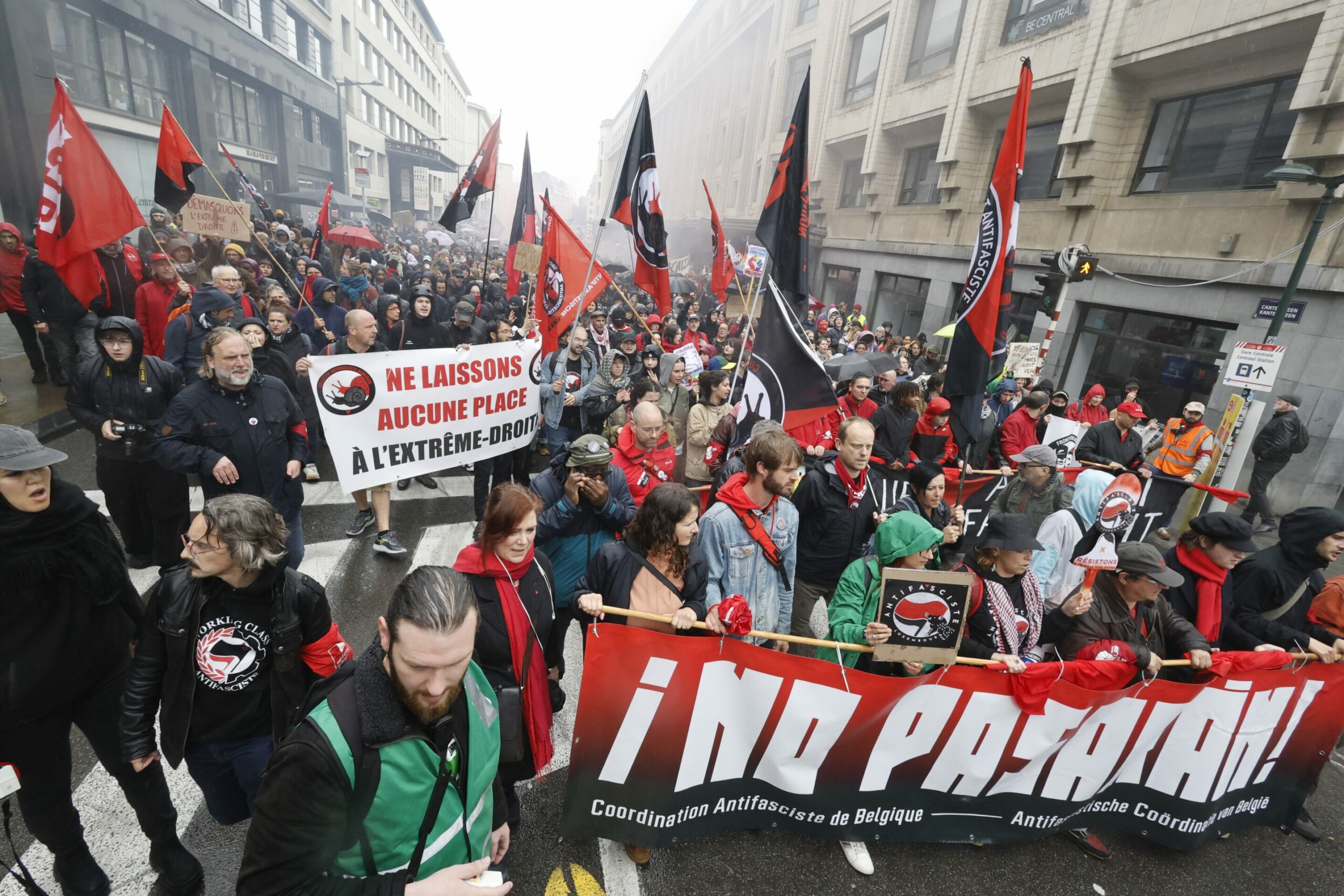
A march against fascism and right-wing political parties is organised on Sunday 16 June 2024 in Brussels. Credit: Belga
In June, Quintin (MR) sought explanations from the police regarding the use of rubber bullets on protesters during the march in tribute to young Fabian.
Two officers were armed with orange FN303 rifles, which fire rubber bullets. Alarmingly, one of these rifles was used near a playground where children were present.
In response, the police district said that rubber bullets are only used by a special team responsible for arrests.
Fewer than 20 rounds were fired, according to the police, who emphasised that these weapons are used exclusively for self-defence.
