
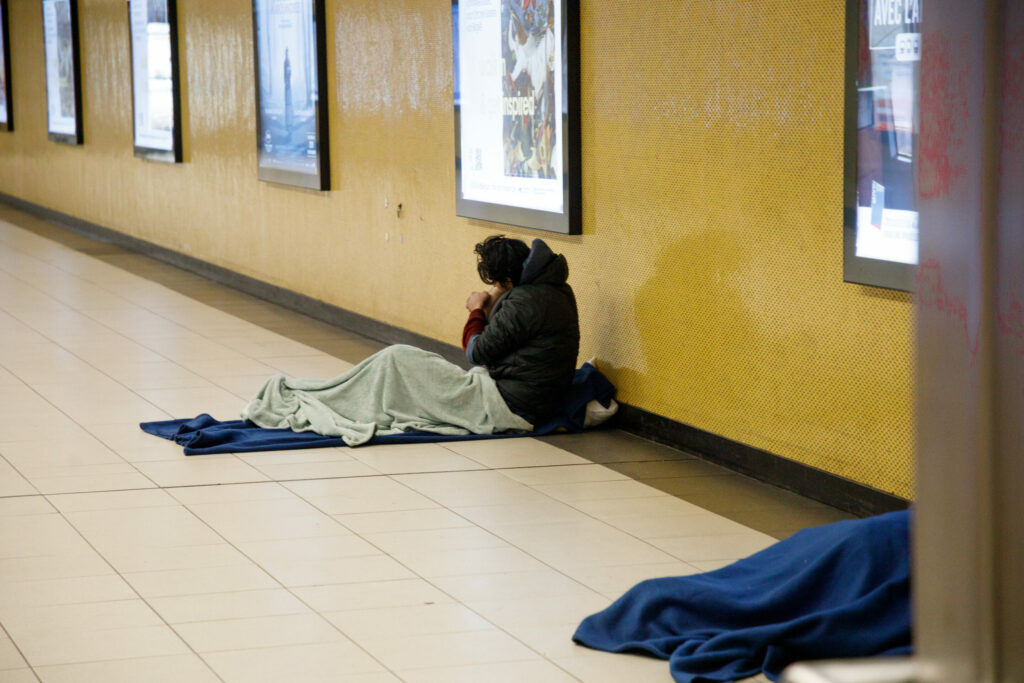
Nearly one in five homeless people in Wallonia are young adults aged 18 to 25, according to data shared by researcher Nicolas De Moor of the CIRTES research centre at the Catholic University of Louvain (UCLouvain).
Of the 7,759 homeless adults counted in 113 Walloon municipalities, 1,482 are aged 18 to 25, with 58.7% being men. Within this group, 74% hold Belgian nationality, and 66.2% were born in Belgium.
The study reveals that 14.1% of these young homeless individuals previously stayed in youth welfare institutions, while nearly 10% were admitted to psychiatric institutions at some point. Mental health problems affect 15.2% of them, and over 10% struggle with addiction issues.
Certain areas report slightly higher proportions of young homeless people, such as La Louvière (23.9%), Mons (20%), and Tournai (19.6%). Economically stable areas such as Walloon Brabant show comparable figures, with 20.5%. These consistent numbers across urban and rural areas challenge conventional stereotypes, notes Nicolas De Moor.
Around half of these young people rely on friends, family, or acquaintances to provide temporary shelter. Others use homeless shelters (24.4%) or unconventional housing like garages, tents, or squats (8.3%) and 3.4% remain on the streets.
A significant proportion benefit from social integration income (61.3%), while 5% manage to maintain employment despite their circumstances.
Nicolas De Moor links these challenges partly to the housing crisis, questioning whether social income or even salaries are sufficient to secure housing in some areas. He also highlights landlords’ reluctance to rent to recipients of social benefits.
For 36.3% of young homeless people, housing instability lasts between 4 and 11 months. However, 17.3% experience instability for one to two years, and 9.2% are left without housing solutions after two years.
This high representation of young people among the homeless underscores diverse life trajectories.
“We are far from the stereotypical image of homeless adults on the streets with a beer can," De Moor stresses.
"These situations are the result of both individual factors—such as intrafamilial violence, migration, or addiction — and structural mechanisms of social exclusion such as unaffordable housing and persistent poverty,” the researcher adds.
