
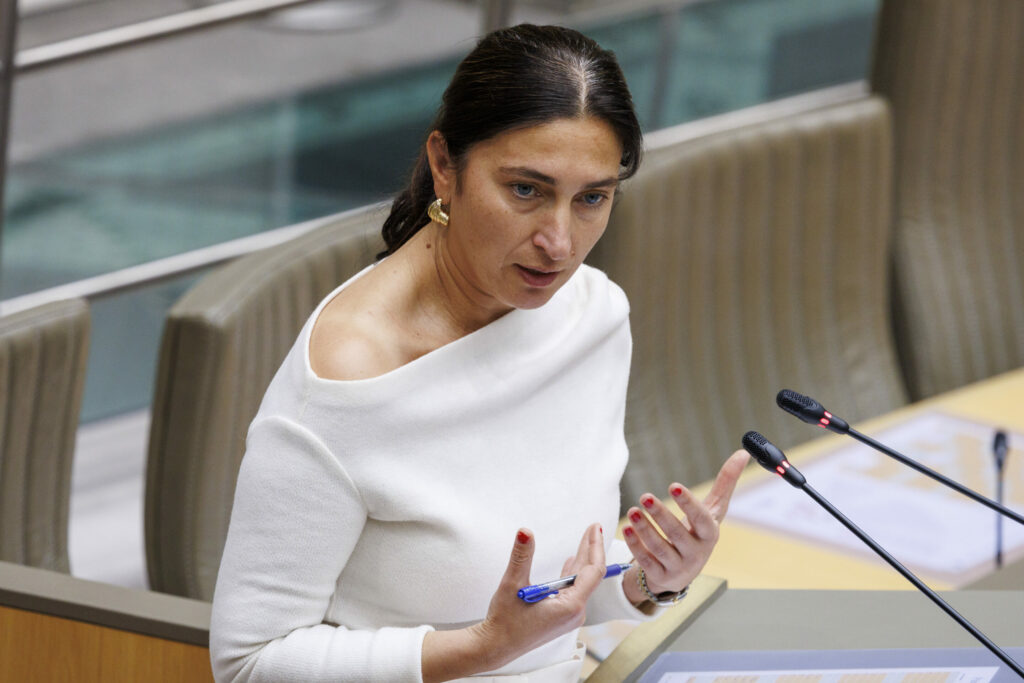
Flemish Education Minister Zuhal Demir plans to integrate special needs education into inclusive school campuses by 2040.
A decade ago, the Flemish government introduced a strategy to include as many pupils with special needs as possible in mainstream education.
However, over the years, successive ministers scaled back these ambitions due to insufficient resources in mainstream schools to support such pupils adequately.
The current plan seeks to integrate students with special needs into “mainstream education whenever possible, and special needs education when necessary.”
The Flemish government stresses that the region has a disproportionately high number of pupils in special needs education—5.9% during the 2020-2021 school year, compared to the European average of just 1.7%.
Demir advocates for fewer “medical labels” being assigned to children and instead proposes tailored support for those who are classified in this way.
Her proposal centres on creating inclusive school campuses that house both mainstream and special needs education, supported by multidisciplinary teams of experts from both fields. The government plans to prioritise investments in the infrastructure of such schools.
The reform will unfold in three phases: starting phase from 2025 to 2029, transition phase from 2029 to 2034, and full implementation by 2039. By 2040, all schools are expected to operate as “schools for all,” offering supplementary specialised education.
As early as 1 September 2026, forty pioneering schools will begin operating under this new model, providing a foundation for further rollout.
A comprehensive initial evaluation of the initiative is scheduled for 2029.
