
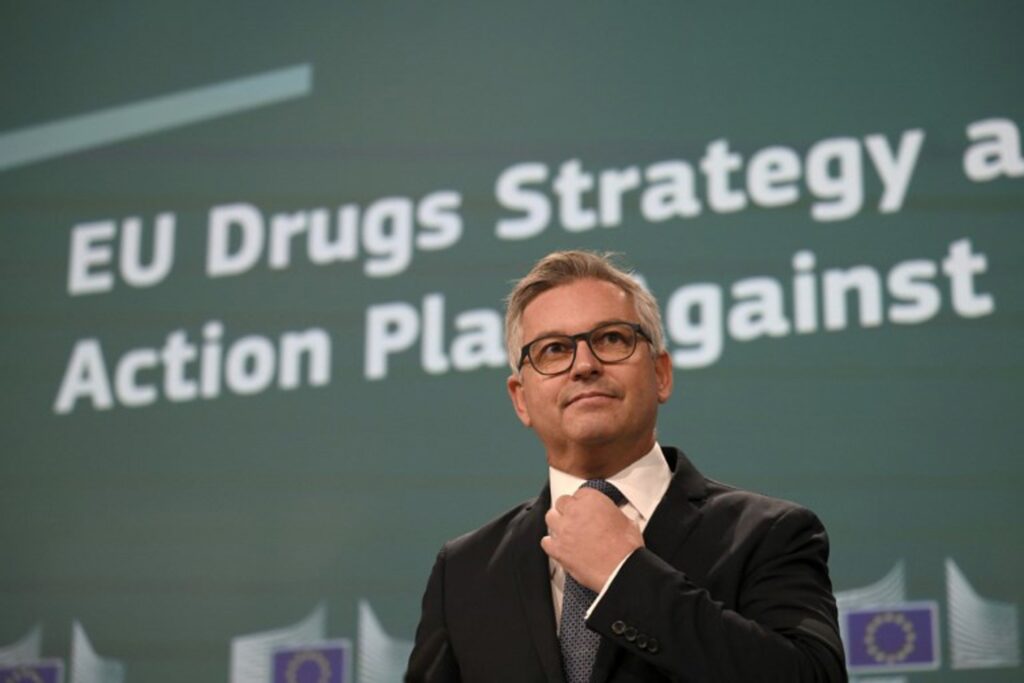
The European Commission has unveiled a new strategy and action plan to tackle drug trafficking and its related challenges.
The initiative aims to address security, health, social and environmental issues resulting from drug trafficking and consumption.
European Commissioner for Home Affairs, Magnus Brunner, warned that Europe is at a crisis point with illegal drugs. He announced that cocaine seizures in the EU have increased sixfold over the past ten years, while methamphetamine and ecstasy seizures have tripled and doubled, respectively.
Drugs also have a human cost, with 7,500 Europeans dying annually from drug-related causes, Brunner added, highlighting additional consequences like violence, corruption, and social harm tied to the illicit drug trade.
The plan intends to send a "very clear" message to criminal organisations: "Europe is fighting back," the commissioner asserted.
The Commission’s proposals include a rapid alert mechanism through the EU Drugs Agency (EUDA) and enhanced preventive measures to protect public health and prevent young people from being recruited by criminal networks.
Strengthened efforts against organised crime will involve public-private partnerships to secure ports and bolster cross-border collaboration between police, judicial, and customs authorities.
The initiative also aims to detect emerging synthetic drugs more efficiently by establishing a specialised European database.
Commissioner Brunner emphasised the need for a comprehensive approach addressing prevention, treatment, and security simultaneously to tackle the drug problem effectively.
