
According to the UN, Belgium is one of the leading countries in terms of gender equality. However, there are still structures beneath the surface that require more work.
One such area is the medical field, particularly in developing medications for women's needs.
Today’s western medicine typically follows a clinical and biological model rooted in an approach that treats men and women as one, rather than taking their different clinical needs into account.
To this day, the effects of medication are tested mostly on males. This often prevents researchers from assessing how the treatment will affect women or determining the correct dosage for women. This oversight is especially problematic when investigating pain mechanisms and it can have serious repercussions.
According to feminist scholar Caroline Criado Perez, although cardiovascular disease is the number one killer of women globally, we know far less about female-specific risk factors leading to heart disease. Male data still predominates in risk-prediction models, and women are 50% more likely to be misdiagnosed after suffering a heart attack.
Tackling the issue in Belgium
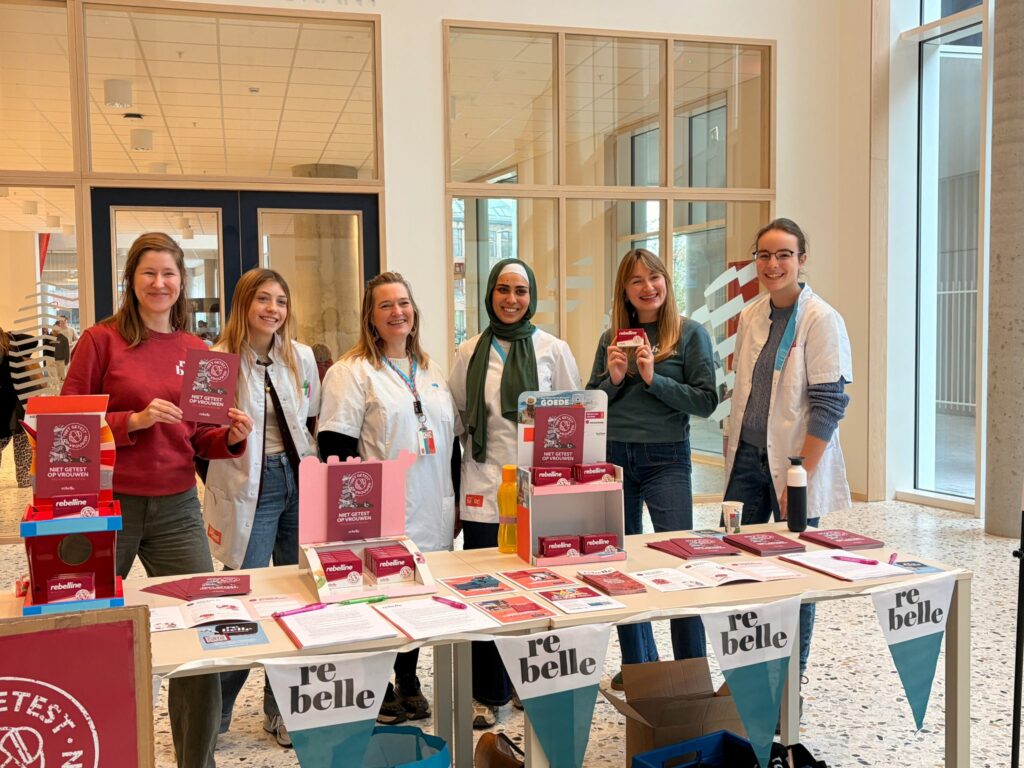
Rebelle, a non-profit organisation that advocates for women's well-being, is raising awareness about this topic, campaigning to put feminism, gender equality and hormonal well-being on the public agenda.
The NGO, which operates women's consultation clinics across the country, is travelling across Belgium to tackle the issue, collecting signatures to put pressure on politicians to ensure women are also equally represented in medical research.
As part of a recent campaign, Rebelle travelled to university campuses across the country to encourage people to sign a petition urging the Federal Government to create a law promoting gender equality in medical studies and obliging universities to adapt their education accordingly.
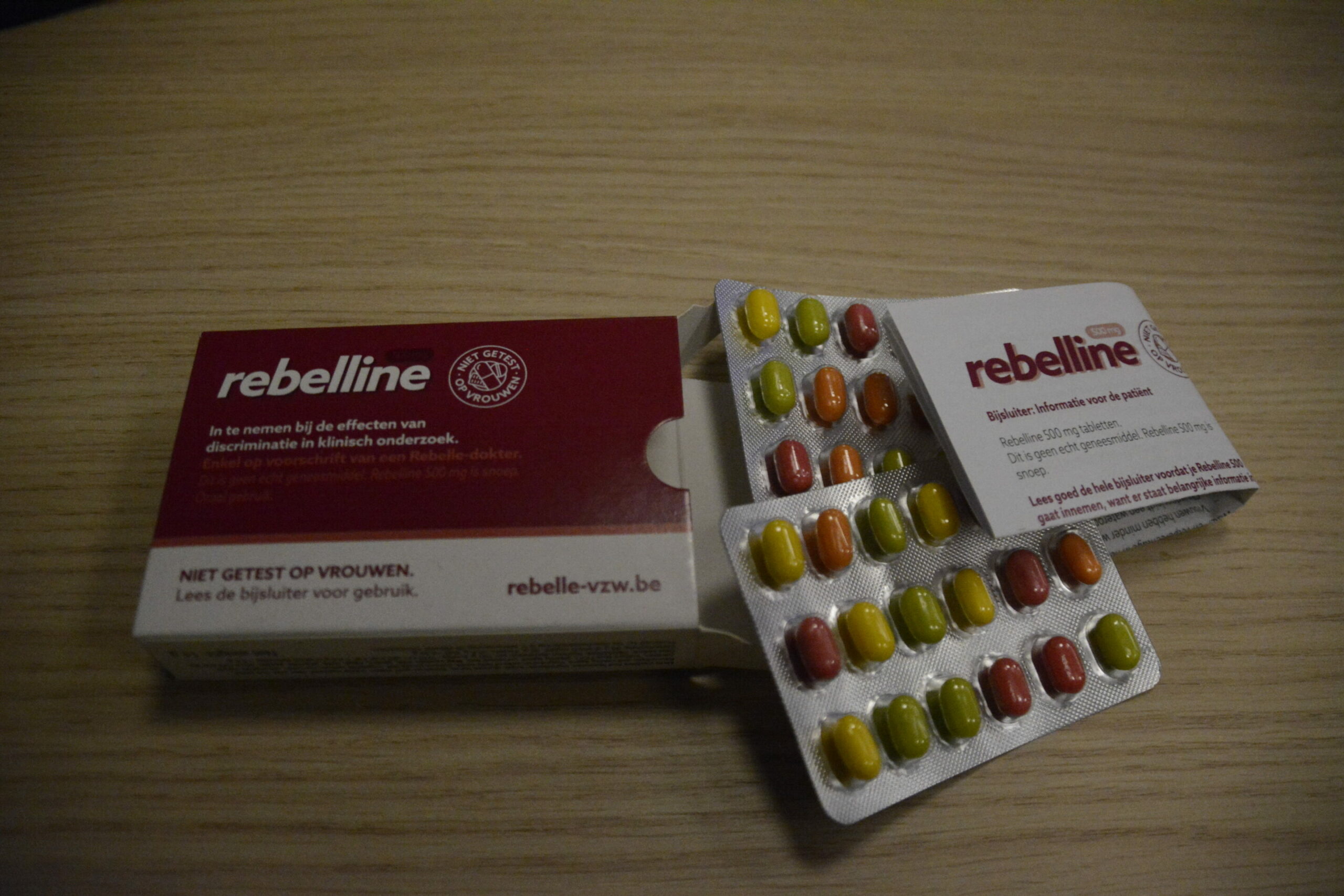
Rebelle distributes candy in a medication-shaped box. Both the packaging and the 'instructions leaflet' inside raise awareness about women's medication needs. Credit: Tiziri Tebani/The Brussels Times
In an innovative approach, Rebelle has created candy packaged to look like medication to raise awareness of its petition. While sweet on the inside, the packaging hides a serious message: many medications have yet to be tested on women.
Incorrect dosage puts women at risk
“Women have a lot more side effects and a lot more complications from medication than men. And that is often because they would require a different dosage. Or the same medication can just have a different effect on women than men,” Ann Dewalque, a representative of Rebelle, told The Brussels Times.
According to pharmacology-epidemiologist Dr Loes Visser, the side effects sometimes cause women to stop using a medication that could have helped them. She noted that sometimes this could be solved by giving women lower doses, which often yield the same results with fewer side effects.
“Especially in cardiovascular and cancer research, women are the least represented of all, which is quite a bad thing because cardiovascular diseases are the number one cause of death for women in Belgium and in Europe,” Dewalque explains.
Rebelle aims to conclude this project on International Women's Day in March 2026, and Dewalque says they have already reached their signature target.
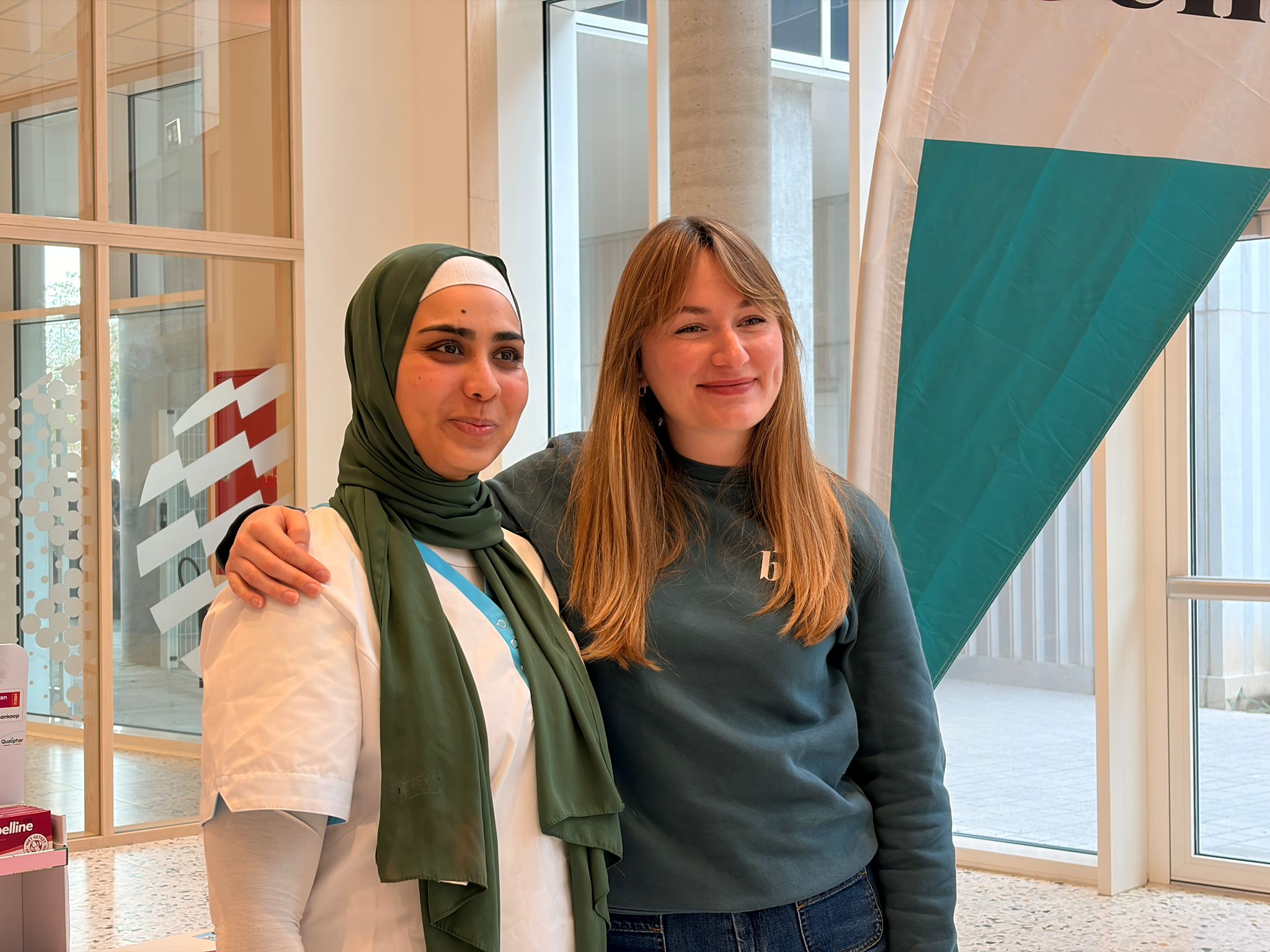
Maryam Messaoudi (right) and Ann Dewalque Credit: Aagje Van Raemdonck/The Brussels Times
Dr Visser stressed the importance of public knowledge of data surrounding women's health issues: “It would be ideal if the pharmaceutical industry made its research data available to universities. Right now, that data is considered a trade secret, which means we can’t use it to conduct meta-analyses. But if that knowledge were available, we could learn so much more."
Rebelle is putting pressure on the health education sector to end this secrecy, engaging students to spread awareness on university campuses. At Thomas More University of Applied Science in Mechelen, Maryam Messaoudi, a third-year nursing student, said that the campaign had allowed her to reflect more actively on this topic. She noted that, while advocating for this project at the university, most women seem unaware of this issue.
At the heart of pharma
Belgium has a vast biopharmaceutical sector and is home to industry giants such as Pfizer, Procter & Gamble and Johnsen and Johnsen. By raising awareness across Belgium, Rebelle hopes that this project will gain relevance on a much larger scale.
Related News
- Medicines for chronic illnesses soon accessible before European authorisation
- Giant IUD installation arrives in Brussels as activists warn women's health is 'non-negotiable'
Dewalque highlighted that part of the project is also to ensure that government funding for medical research is directed equally towards male- and female-specific diseases.
In 2024, research and development in the pharmaceutical sector totalled €6 billion, according to an annual report by Pharma.be. The Belgian government will invest an additional €228 million annually in the pharmaceutical sector starting in 2026.
