
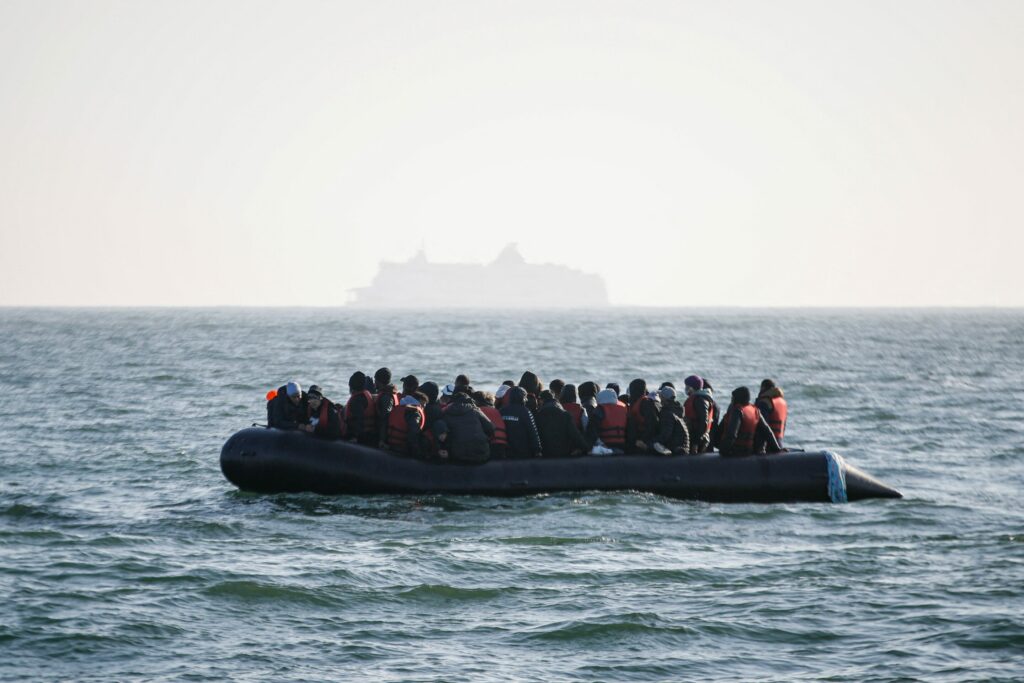
A group of European countries, including Belgium, is pushing ahead with attempts to modify the interpretation of the European Convention on Human Rights (ECHR) to facilitate the deportation of migrants who commit a serious crime.
On Wednesday, ministers from the 46 Member States of Europe's leading human rights institution, the Council of Europe (CoE), met in Strasbourg to bring forward discussions on curbing European human rights laws to help protect borders, citing security concerns.
Following the meeting, an official statement was signed by all 46 Member States, committing to supporting the role of the ECHR, while also recognising the fundamental responsibility of countries to protect national security.
However, a separate unofficial document was also signed by 27 states – the vast majority of EU Member States, including Belgium. The group is calling for states to be allowed to deport criminals even when they have family ties in the host country. France, Germany and Spain are notably absent from the list, having not signed the document.
'Most serious issues'
The 27 signatories are calling for a reinterpretation of the ECHR's Article 3, which bans inhuman or degrading treatment, to be "constrained to the most serious issues in a manner which does not prevent state parties from taking proportionate decisions on the expulsion of foreign criminals."
This includes cases where the court has raised issues concerning healthcare and prison conditions. However, the ECHR guarantees a right to "private and family life" that the Court could assert in the event of an appeal.
They also argued for a revision of Article 8, to put less weight on the foreign national's social, cultural, and family ties with the host country after committing a serious crime, meaning they could deport the individual in spite of these ties.
Another key demand is to allow countries to enter into cooperation with third countries for asylum and return procedures, once the human rights of irregular migrants are preserved.
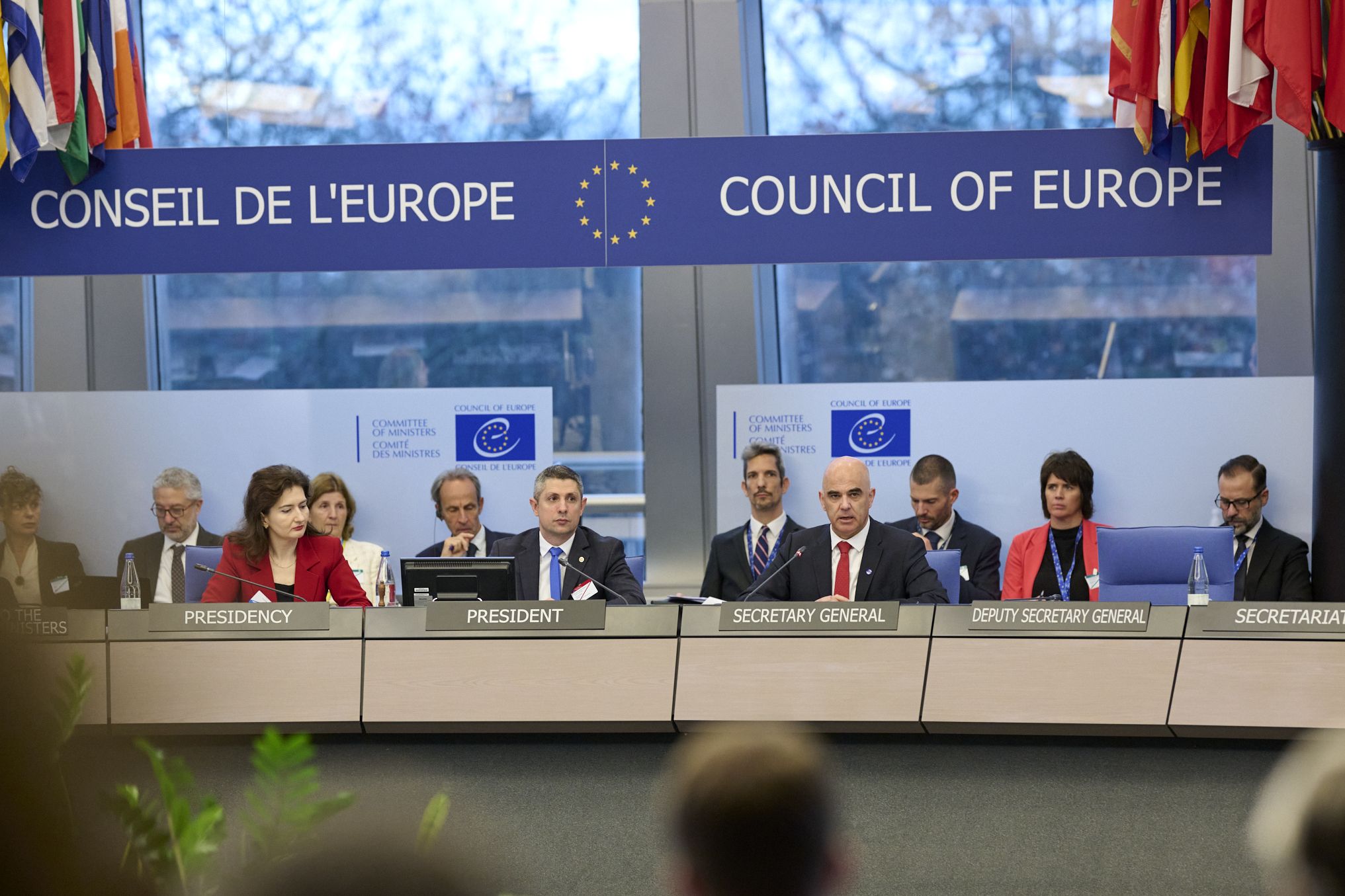
The Council of Europe summit on Wednesday, 10 December 2025. Credit: Belga / AFP
This would facilitate agreements to send asylum seekers abroad to have their application processed, such as the Italy-Albania deal. In Belgium, there have been discussions about opening a prison abroad for convicted criminals with no right of stay in the country, possibly in Kosovo or Albania.
The unofficial document signed by the 27 also references the "extremely sensitive geopolitical context" and the need to properly ensure national security and public safety, to stop the instrumentalisation of migrants by hostile regimes.
"Migration issues are high on the agenda of countries and people across Europe," CoE Secretary-General Alain Berset said ahead of the event.
"Our task is not to weaken the Convention, but to keep it strong and relevant – to ensure that liberty and security, justice and responsibility, are held in balance," he added.
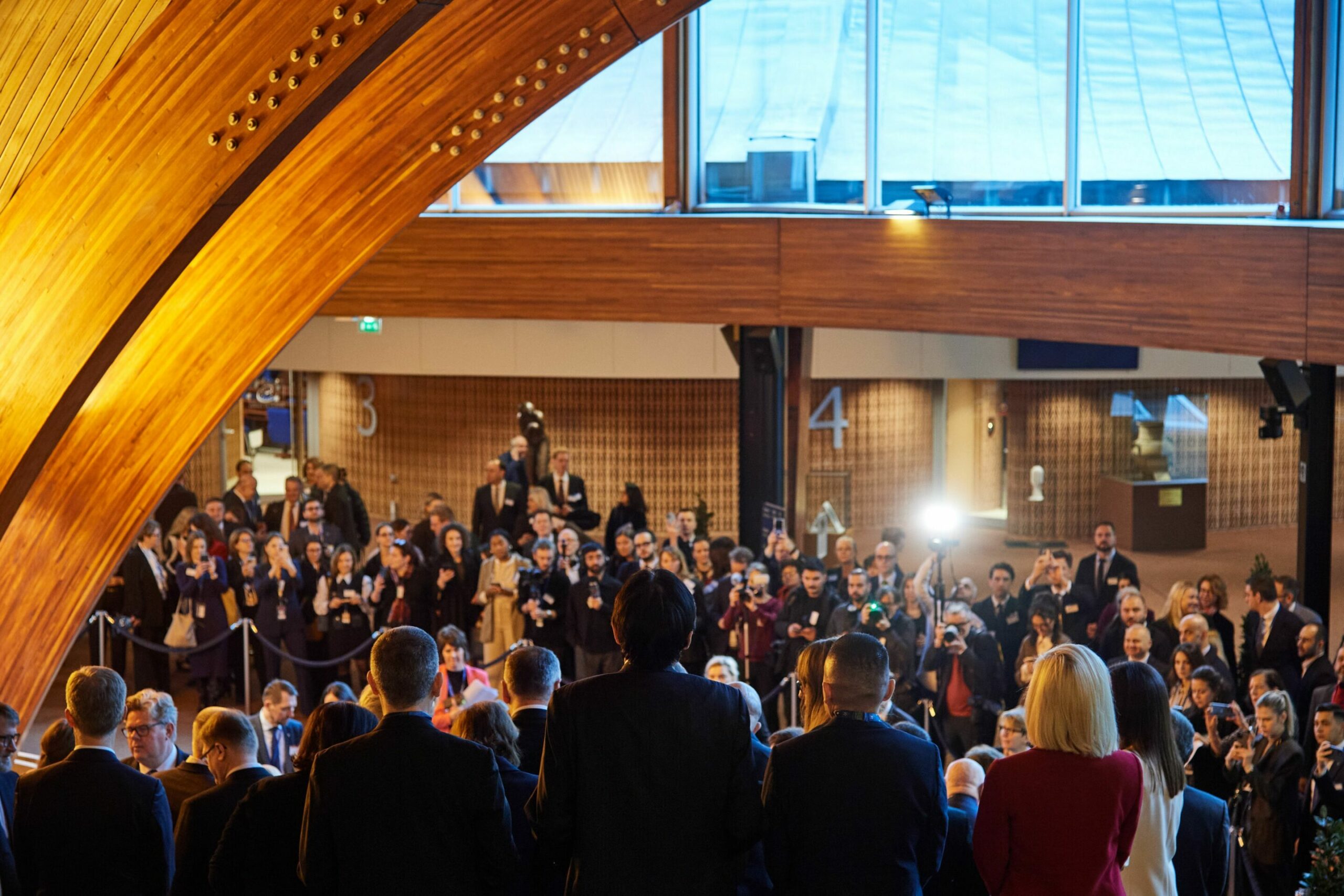
Ministers posing during the Council of Europe summit on Wednesday, 10 December 2025. Credit: Belga / AFP
"The instrumentalisation of migration, migrant smuggling, human trafficking, and other criminal activities that threaten stability and security are real and legitimate challenges," said Berset in a press conference after the summit.
However, he stressed that the convention would not be changed, as it is "the final safeguard of individual rights and freedoms across our continent and a pillar of democratic security."
"What we need is dialogue, cooperation, and shared solutions that allow Member States to engage on an equal footing within the framework of the Council of Europe," he said.
However, the two separate statements show there is a divide inside Europe on how to deal with security issues, protecting fundamental rights and migration.
When asked at a press conference about the potential threat to the Court's independence posed by the requests of the 27 protesting countries, the Secretary General said he wanted to "address political issues such as immigration without compromising international law."
The countries that signed the unofficial document were Denmark, Italy, Albania, Austria, Belgium, Bulgaria, Croatia, Czechia, Estonia, Finland, Hungary, Iceland, Ireland, Latvia, Lithuania, Malta, Montenegro, the Netherlands, Norway, Poland, Romania, San Marino, Serbia, Slovakia, Sweden, Ukraine and the United Kingdom.
France criticised the "insidious" approach of the 27 protesting countries, reaffirming the independence of the court in a comment to AFP.
Hardliner push
Even though irregular migrant arrivals in the European Union are declining (down 38% in one year in 2024, according to Frontex), the issue remains at the heart of political debate, particularly with the recent support of the Trump administration in the US.
Ahead of Wednesday's summit, several European countries have lobbied to reinterpret the convention, including Belgium, Italy, Denmark, Austria, Poland, Czechia, Estonia, Latvia, Lithuania and the UK, to confront the "challenges posed by mass migration" in a series of letters.
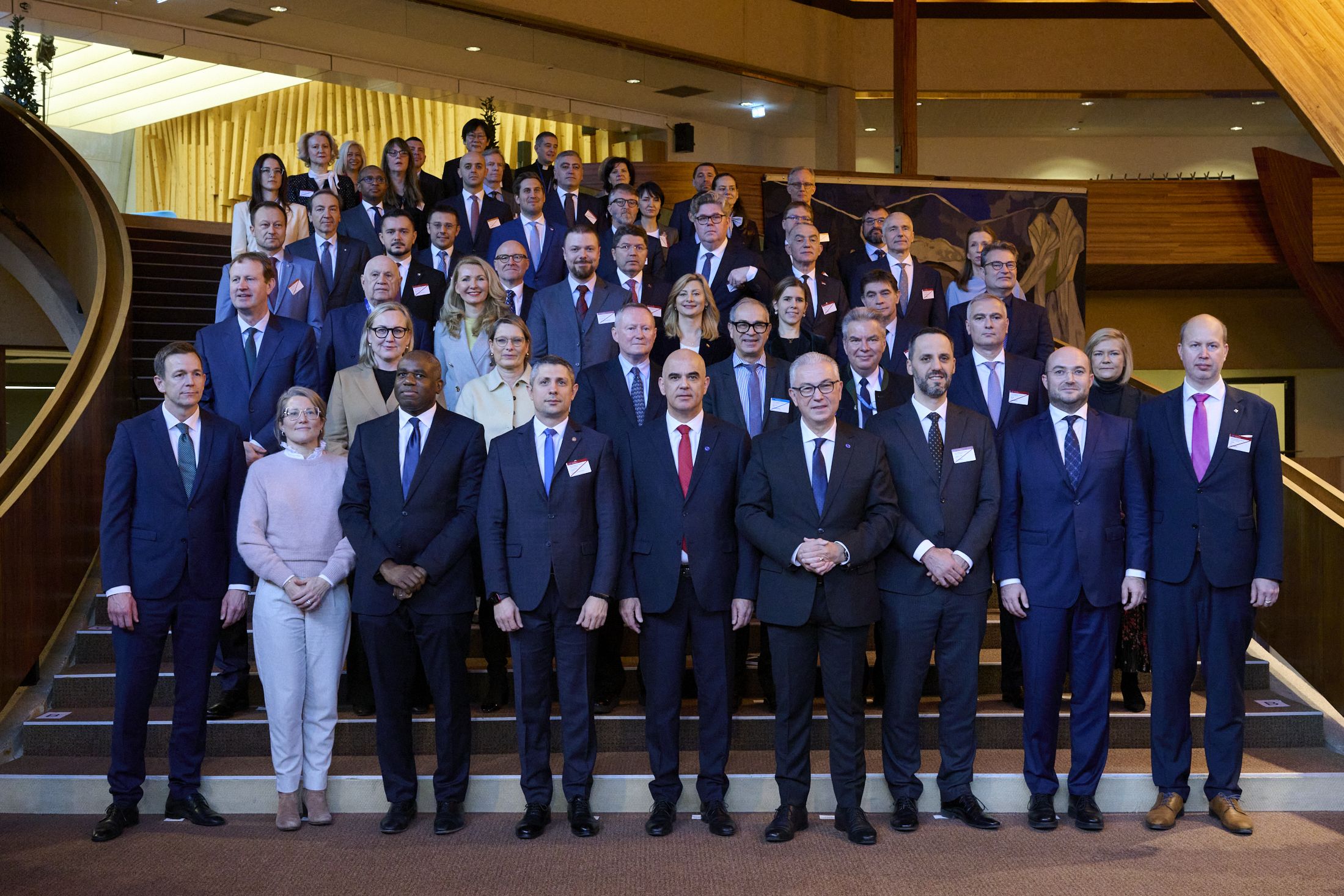
Ministers posed during the Council of Europe summit on Wednesday, 10 December 2025. Credit: Belga / AFP
Belgium has been a key part of this ongoing challenge to the ECHR's protections, with Prime Minister Bart De Wever (N-VA) joining eight EU Member States in a letter calling for the reduction of fundamental rights in the name of security and the fight against crime.
At the time, the CoE publicly responded to the letter, stating that "debate is healthy, but politicising the Court is not." "Institutions that protect fundamental rights cannot bend to political cycles," said CoE's Berset. "The Court must not be weaponised – neither against governments, nor by them."
On Wednesday, UK Prime Minister Keir Starmer and his Danish counterpart Mette Frederiksen issued yet another call ahead of the summit. Both from traditionally centre-left parties, they said the changes are needed to stop far-right forces dividing mainstream opinion across Europe.
"The best way of fighting against the forces of hate and division is to show that mainstream, progressive politics can fix this problem," Starmer and Frederiksen wrote in the Guardian.
"Listening to legitimate concerns and acting on them is what our politics is about. That’s not empty populism, it’s democracy. We are determined to show that our societies can act with compassion while upholding law and order and fairness."
'Unconvincing'
Yet calls to reinterpret the ECHR have come under intense criticism from Belgian and European legal experts and human rights campaigners, who warn against the wider implications of weakening individuals' fundamental rights for political reasons.
The Council of Europe's Commissioner for Human Rights, Michael O'Flaherty, criticised the claim that instrumentalised migration undermines national security, calling it "unconvincing."

Illustration shows the conditions of waiting outside for asylum seekers in front of the 'Klein Kasteeltje - Petit Chateau' (Little Castle) Fedasil registration centre for asylum seekers in Brussels, Wednesday 01 December 2021. Credit: Belga
He also called for the independence of the European Court of Human Rights not to be diminished. "We should not frame these crucial discussions as a balancing of convention rights," he said in a statement.
"Their concerns about alienation and disadvantage, often amplified by disinformation, must be addressed directly – but not by weakening the European human rights system," O'Flaherty concluded.
Many critics also say that these policies amount to appeasing the far-right, saying that they do not weaken it but rather give it legitimacy and instead weaken the political position of its opponents.
It also comes as EU Member States voted on Monday to strengthen the practical application of key safe country concepts in EU asylum rules.
The Council agreed that the following countries should be designated as safe countries of origin by the EU: Bangladesh, Colombia, Egypt, India, Kosovo, Morocco and Tunisia.
