
A major poll suggests there is strong public support for the Belgian government’s position on the use of Russian frozen assets.
The ‘Grand Barometer’ poll, a joint venture by Ipsos, Le Soir, RTL, Het Laatste Nieuws and VTM, showed 67% of Belgians questioned do not want the government to agree to use the assets of the Russian central bank to fund a reparations loan to Ukraine.
The Belgian government has been placed under intense pressure in recent weeks over its refusal to give the go-ahead to an EU plan to use €210 billion in frozen Russian state assets to finance Ukraine’s war with Russia.
The majority of the assets are held in Brussels-based financial clearing house Euroclear, and Belgium fears it will be held liable should Russia mount a legal challenge against the seizure of the funds.
Crunch meeting with EU leaders this week
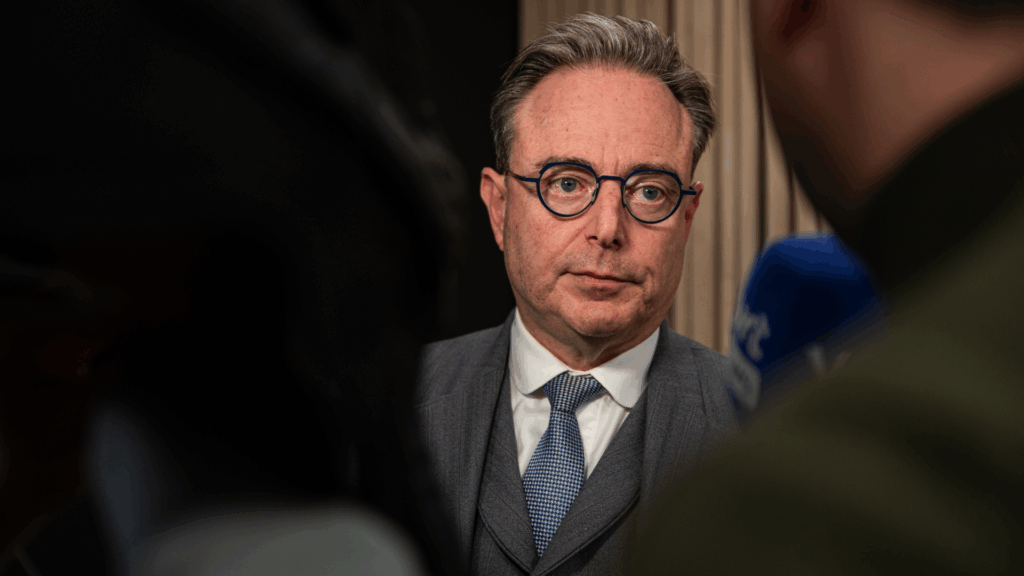
News that so many of his compatriots back his approach will be music to the ears of Belgian Prime Minister Bart De Wever ahead of his crunch meeting with EU leaders on Thursday, 18 December.
Proponents of the EU scheme say Russia should foot the bill for Ukraine’s funding shortfall through its frozen assets. Otherwise, they argue, European taxpayers will have to pay the €90 billion needed to meet Ukraine’s budget shortfall over the next two years – all this at a time of belt-tightening in many European capitals.
De Wever, however, remains deeply sceptical over the EU proposals and believes that if a peace deal with Russia were agreed and Moscow claimed back its money, Belgium would be on the hook to repay the sum.
He has said the plan could bankrupt Belgium. He also argues that seizing the assets would deprive the EU of leverage against Moscow in any future peace negotiations.
The prime minister is demanding risk-sharing among member states, guarantees against potential repayment obligations in a worst-case scenario, and inclusion of other EU countries holding frozen Russian state assets in the mechanism. He also wants EU liquidity so that Euroclear has funds to pay Moscow if it is compelled to do so.
'It won't be easy' to override Belgium
Italy, Bulgaria, and Malta have joined Belgium’s calls for an alternative plan, while Hungary and Slovakia have also voiced opposition to the EU proposals.
Last week, Belgium, Italy, Bulgaria, and Malta signed a joint declaration saying that while they support the European Commission’s proposal to indefinitely immobilise Russian assets held in the EU, the move “should not pre-empt any use of the money to bankroll Ukraine”.
Following a decision last week to use emergency powers to immobilise the assets indefinitely, the EU does not need unanimous backing from Member States to use the assets.
However, top EU diplomat Kaja Kallas said on Monday that given that the bulk of Russia's assets are held in Brussels, it would "not be easy" to override Belgium's wishes. "I think it's important that they are on board with whatever we do," she said.
De Wever is not completely ruling out a change in position, however. After a meeting with his British counterpart Keir Starmer in London on Friday, De Wever said, "If we return from the European negotiating table with the assurance that we are not alone and that we share these risks, then perhaps my people will be reassured."
