
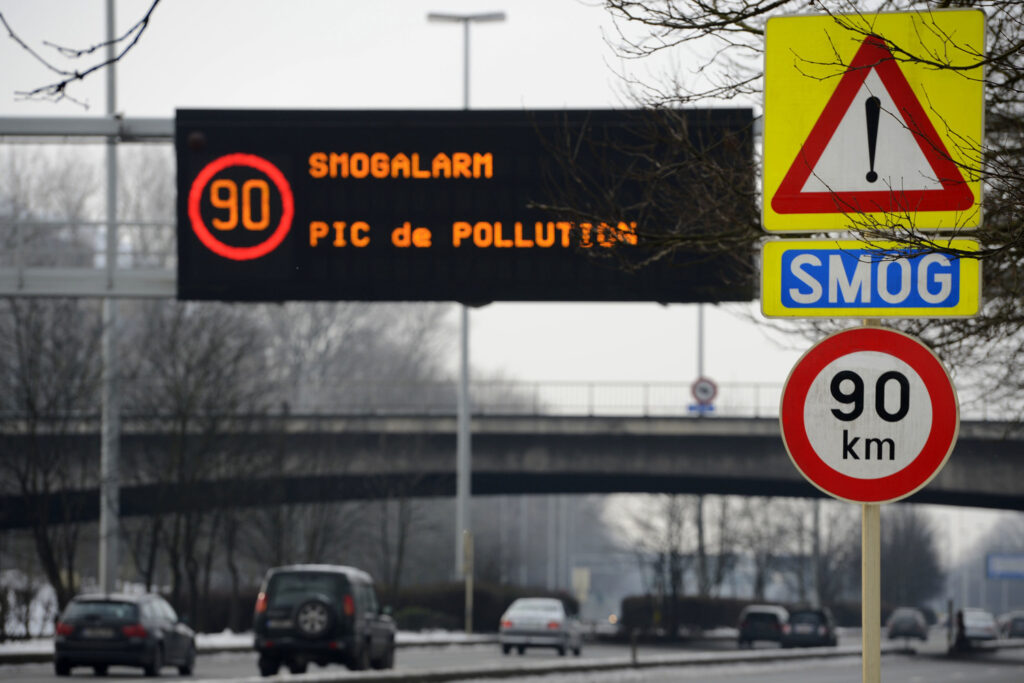
Air quality in Belgium worsened slightly in 2025 compared to 2024, according to a preliminary analysis by the Interregional Environment Cell (Celine) published on Wednesday.
Annual average levels of nitrogen dioxide (NO₂) and fine particulate matter (PM2.5) increased, along with daily limit breaches. However, the number of ozone (O₃) days remained the same as in 2024.
Despite this setback, Celine reaffirmed that Belgium’s long-term air quality is improving due to stricter vehicle emission regulations and the establishment of low-emission zones (LEZ) in several cities.
NO₂ concentrations linked to road traffic remained below the EU limit of 40 µg/m³. Following a decline between 2014 and 2020, levels have stagnated in recent years and rose slightly in 2025, attributed to dry and less windy spring conditions.
The stricter EU NO₂ limit set for 2030, at 20 µg/m³, is still not met in certain areas. Locations heavily exposed to traffic, such as Antwerp and Brussels, recorded concentrations between 30 and 40 µg/m³, indicating that further efforts will be needed to meet future targets.
Fine particulate matter (PM2.5) followed a similar trend. After years of decline or stagnation, levels rose by approximately 11% in 2025 due to adverse weather conditions. While current EU annual limits of 25 µg/m³ were adhered to, the more stringent 2030 limit of 10 µg/m³ was already exceeded at a growing number of monitoring stations.
Local sources, such as wood burning for heating, contributed to occasional sharp spikes in PM2.5 levels. The World Health Organisation’s recommended thresholds, which are even stricter, remain largely out of reach except in a few rural areas.
Despite a hot summer with two heatwaves, Belgium saw only two ozone days in 2025, exceeding the EU information threshold of 180 µg/m³ on just one occasion.
