
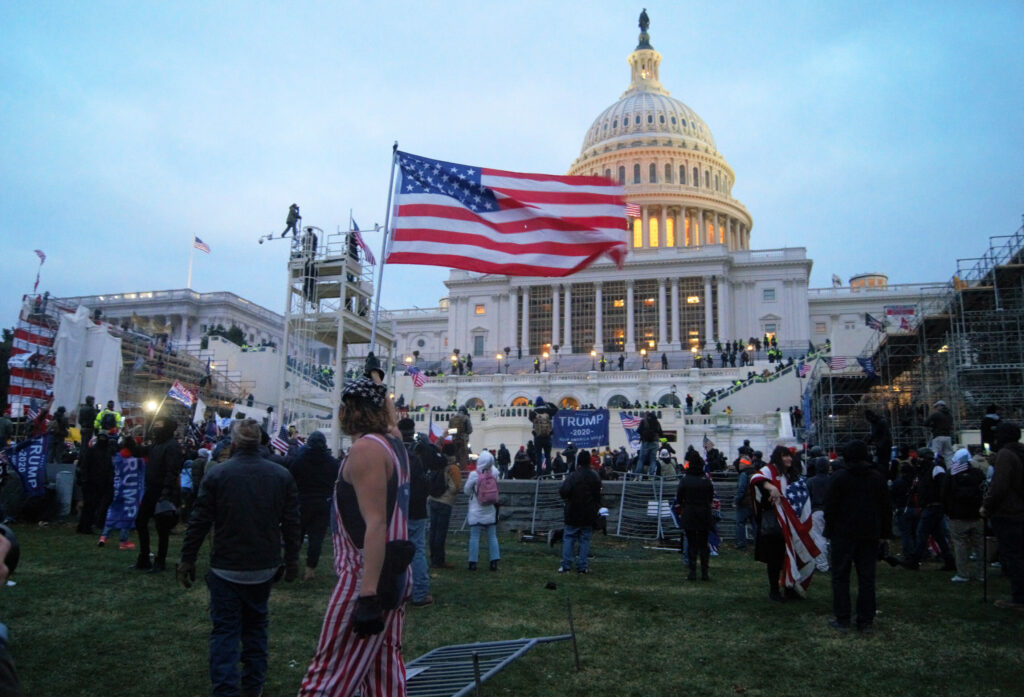
Exactly five years ago, on 6 January 2021, a demonstration by thousands of Donald Trump supporters in the centre of the American capital Washington DC led to an unprecedented storming of the Capitol, the heart of American democracy.
The angry crowd wanted to prevent Congress from officially confirming Joe Biden's victory in the Presidential elections.
The road to the storming began with the presidential elections on 3 November 2020. Democrat Joe Biden won convincingly, with 306 electoral votes to Republican Trump's 232.
On 6 January, the procedure for Biden's election victory was to be formally completed under the leadership of Vice-President Mike Pence.
Convinced that Biden only won through fraud and deception, thousands of Trump supporters gathered in Washington for a large demonstration, the so-called "Save America March." Around noon, Trump addressed them. A few smaller groups were already making their way to the Capitol.
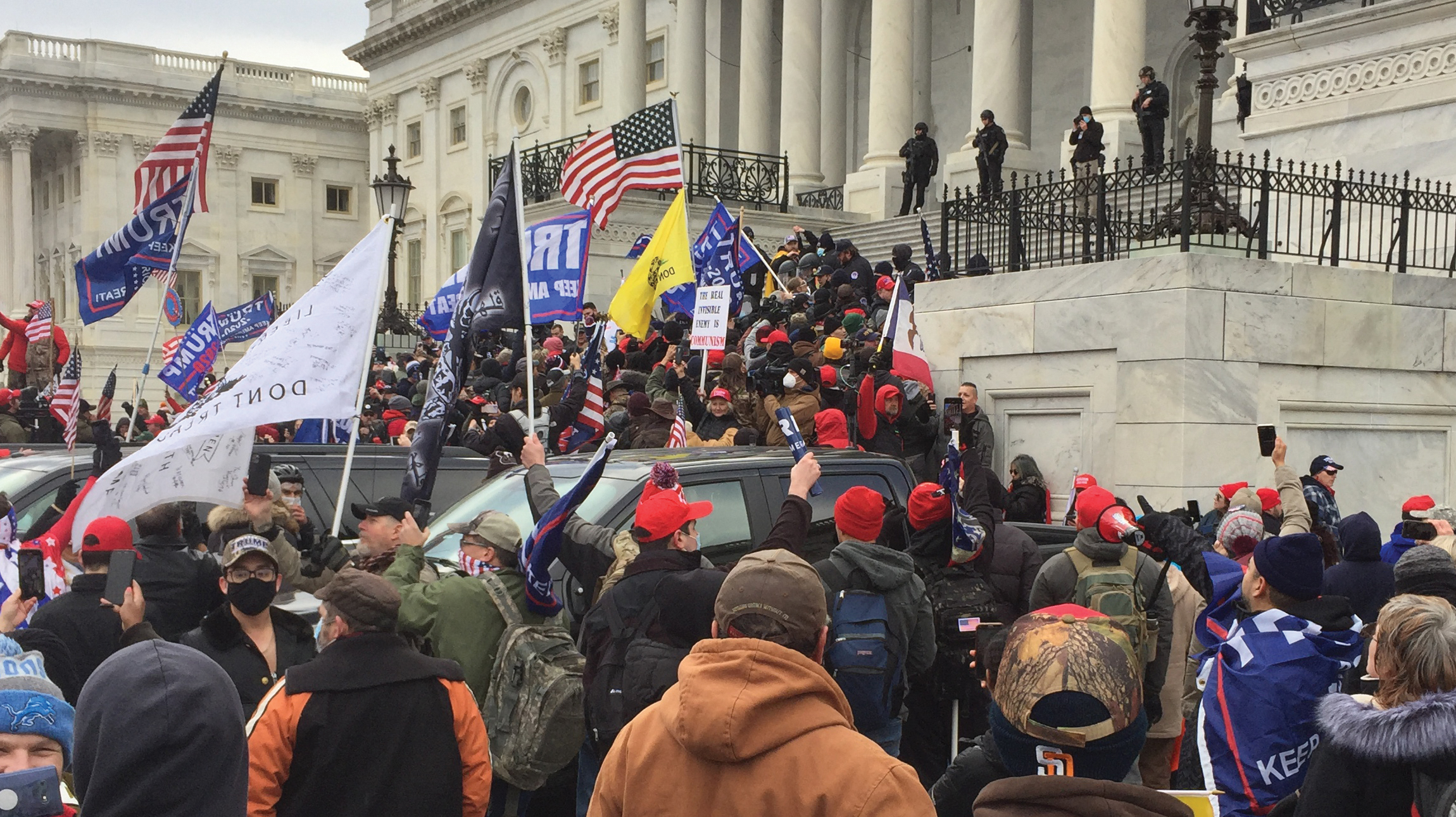
Trump supporters storming the Capitol on 6 January 2021. Credit: ADL / Creative Commons
At 1 pm, the joint session of the House of Representatives and the Senate began in the Parliament building to count the electoral votes. By then, hundreds of demonstrators had already gathered at the building.
They quickly broke through the outer police barriers, after which they continued to advance, with more and more people joining them. Eventually, they forced their way inside. "Hang Mike Pence" was chanted, and a gallows was erected.
Around 1:45 pm, Pence was escorted away by security services, followed shortly thereafter by other members of Congress. The stormers succeeded in effectively blocking the counting and announcement of the election results.
It was not until after 5 pm that some 150 National Guard troops arrived on the scene and chased the rioters out of the Capitol.
After 8 pm, the House of Representatives reconvened to continue the procedure. Only around 3:30 am on the night of 6 to 7 January was Joe Biden officially declared the winner of the election.
Five people were killed during the storming, including one officer defending the Capitol. That officer, Brian Sicknick, was attacked with pepper spray on the day itself. Later that evening, he collapsed and was taken to hospital. He died on 7 January 2021.
The other four victims were Capitol rioters. The best known among them is 35-year-old Ashli Babbitt, who was shot dead by police as she tried to reach the House of Representatives chamber.
Her family sued the government and in May this year, the Trump administration reached a settlement with the family for £4.5 million.
Two other Capitol Police officers died by suicide in the days following the storming. The Department of Justice officially recorded their deaths as "in the line of duty."
Credit: Belga / Dirk Waem
A week after the events, on 13 January 2021, the House of Representatives opened a second impeachment proceeding against Trump.
A month later, 57 of the 100 senators found Trump guilty of inciting riots. However, because the required two-thirds majority for a conviction was not achieved, the trial formally ended in an acquittal.
Since 27 July 2021, a parliamentary committee of inquiry has been investigating the events of 6 January, in particular the role played by Trump.
In December 2022, the committee requested the criminal prosecution of Trump. In the summer of 2023, the Department of Justice effectively indicted him, but the case was shelved at the start of Trump's second term in January last year.
Immediately after 6 January, American political leaders almost unanimously condemned the riots as domestic terrorism that threatened democracy. Now, however, Trump calls the storming of the Capitol a "day of love" and the rioters "great patriots."
On the first day of Trump's second term, on 20 January 2025, he pardoned more than 1,500 people who were convicted or charged in connection with the storming, including prominent members of the far-right groups Proud Boys and Oath Keepers.
Since then, his administration has been trying to rewrite the history of that unprecedentedly violent day.
In November 2025, Trump announced he would be suing the British public broadcaster BBC, accusing it of defamation and of violating a trade practices law, according to court documents filed in Florida. Trump's legal team accused the BBC of defaming him by "intentionally, maliciously, and deceptively doctoring his speech" in an episode of the current affairs documentary "Panorama," demanding a total of $10 billion in damages.
The BBC acknowledged the edit had given "the mistaken impression" he had "made a direct call for violent action", but disagreed that there was basis for a defamation claim and said it would defend itself against the lawsuit.
