Three decades ago, Belgium experienced a deep institutional trauma. The lack of proper communication between the Gendarmerie and the Judicial Police during the Marc Dutroux case in the 1990s led to catastrophic investigative failures and, ultimately, the deaths of several victims.
The shock was so profound that it triggered a major police reform aimed at promoting unity and improving the efficiency of police data management. The Police Reform of 2001 established a two-tier system (Federal Police replacing the Gendarmerie and Judicial Police, and Local Police consolidating the former municipal forces) with the promise that information would finally flow seamlessly between them.
Decades later, Belgium confronts yet another failure in data integration with the collapse of the i-Police project. Conceived in the aftermath of the 2015 terrorist attacks, the initiative aimed to unify fragmented police databases (many still running on 1990s-era software) into a comprehensive, smart, and modern system capable of addressing contemporary threats.
But the Belgian i-Police project was never just a project. It was a discourse, a seductive promise of a technologically enlightened future.
Surveillance theatre
When the idea was launched in 2016, then-Prime Minister Alexander De Croo (Open VLD) proclaimed: "The i-Police system takes our police services into the 21st century. With better information, our people can be more concerned with the police work itself and less with administration."
At the time, Minister of Interior Jan Jambon (N-VA) reinforced this techno-futurist narrative. He promised a drastic modernisation of the police IT landscape and lamented how information "disappears too easily into databases." He insisted that police officers needed real-time mobile access to data to respond effectively in the field.
These hyperbolic claims echoed through several layers of the political apparatus. Marc De Mesmaeker, then Commissioner General, asserted that i-Police would make Belgian policing "one of the most progressive police services in Europe in terms of data governance." The system, he said, would analyse information automatically, generate investigative leads, and provide time-saving tools such as automated translations.
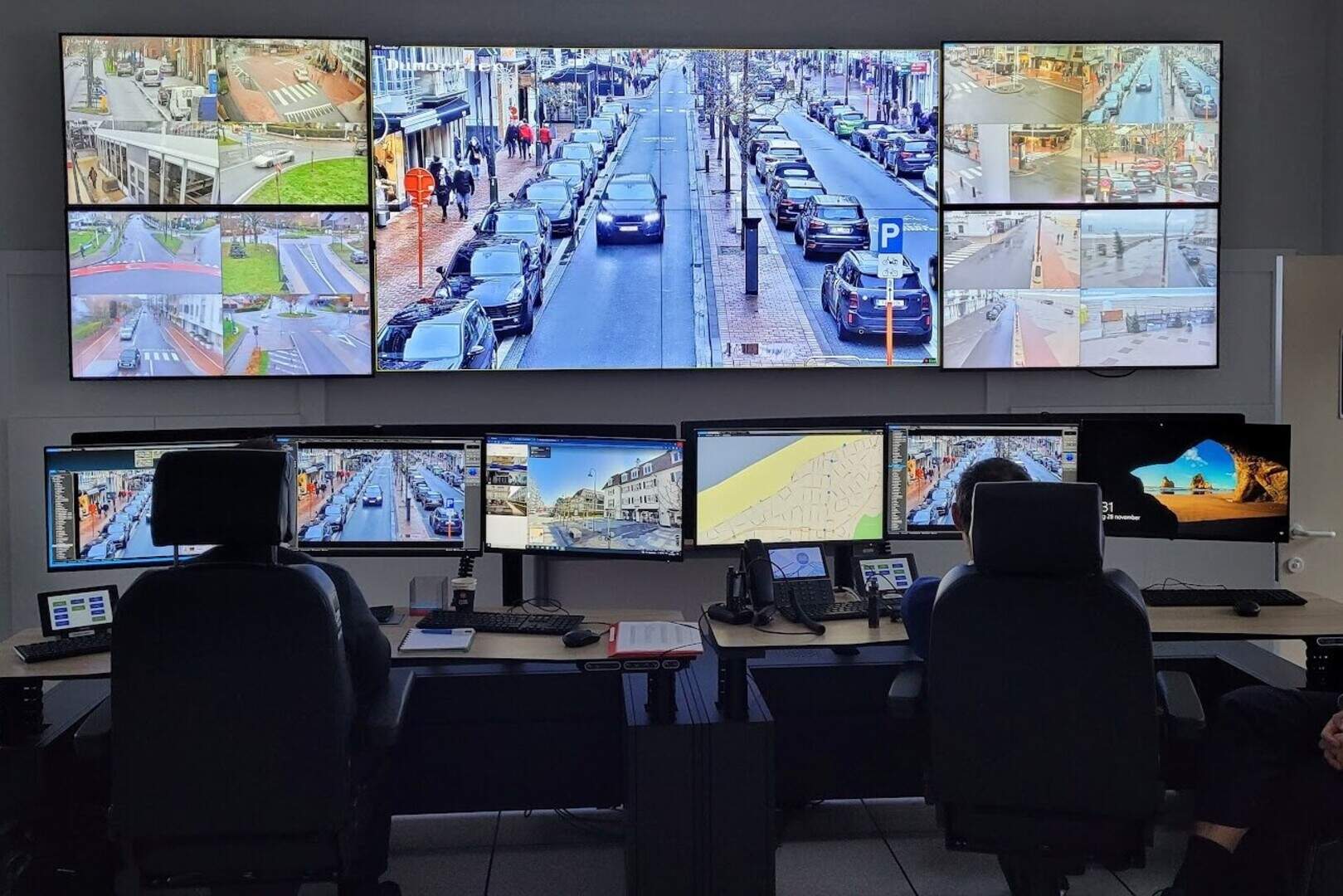
Credit: Police
For Interior Minister Annelies Verlinden (CD&V), the project seemed not just desirable but inevitable: "The world is evolving rapidly… We are taking a big step towards the digital transformation and modernisation of our police services. With i-Police, we arm our citizens and security services against today's threats and prepare our police forces for the future."
This script is familiar. It fits neatly into what my colleague Rosamunde Van Brakel and I once called "surveillance theatre." Inspired by Bruce Schneier's concept of security theatre, we draw attention to the technologies that are announced not because they are effective, but because their announcement serves a political purpose; they signal action, responsiveness, and modernity.
They reassure the public by evoking the image of control through technological prowess. In such performances, the visibility of technological ambition matters more than its viability.
Macho environments
The seduction of smartness reshapes policy debates. When public discourse becomes obsessed by promises and futuristic imagery, it becomes increasingly difficult to ask the most basic democratic questions: What problem are we actually trying to solve? For whom? At what cost? What risks accompany this solution?
What are the consequences for privacy and fundamental rights? Could the system reinforce discrimination against vulnerable populations? Is accountability built into its architecture? Are there less invasive alternatives? Is this truly the best use of public funds in a chronically under-resourced police service?
Back then, posing such questions was nearly impossible. Critics were dismissed as pessimists, obstructionists, or even Luddites: people supposedly standing in the way of progress, technology, and public safety. That is also the case because we are talking about police and technology: two very macho environments.
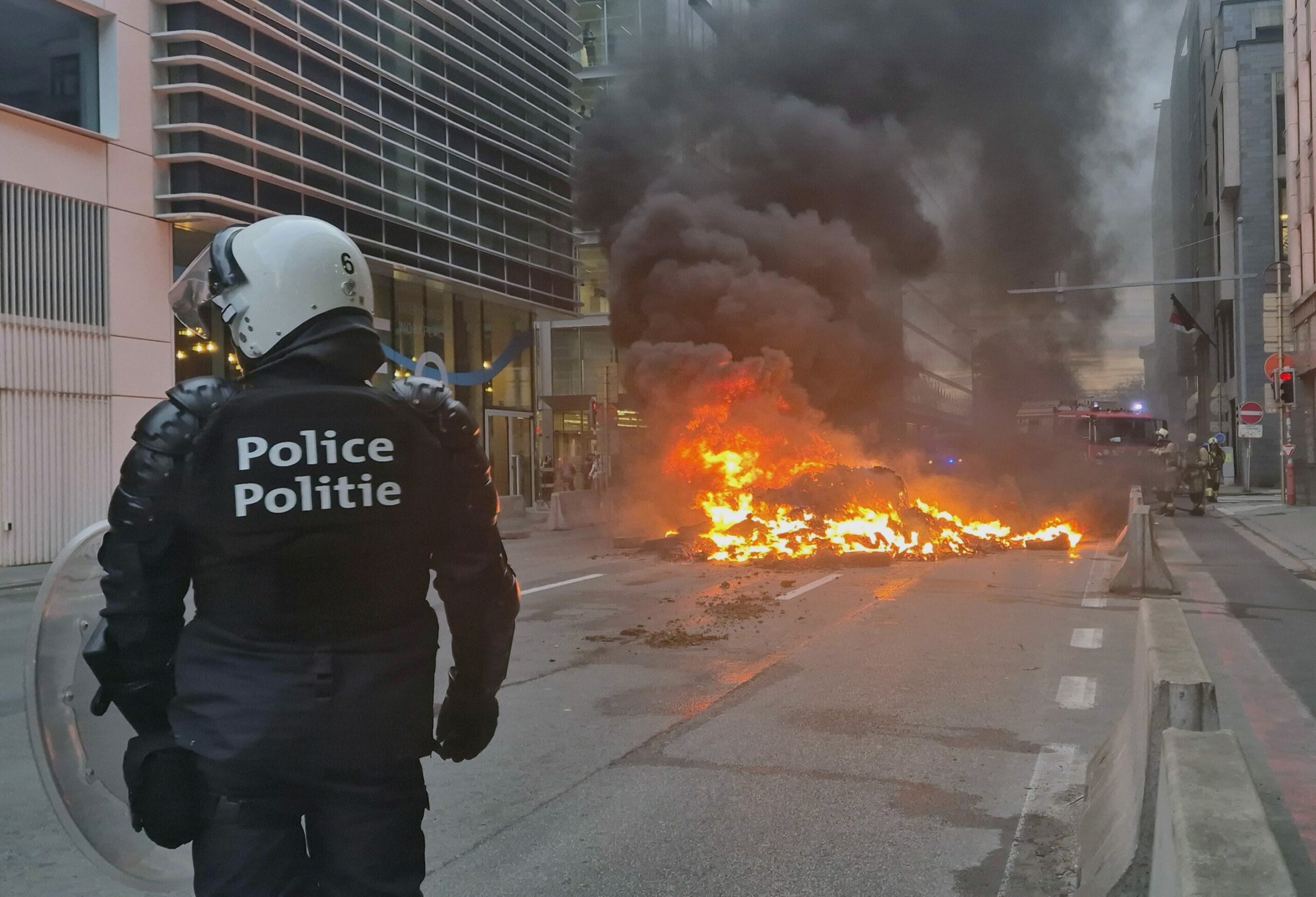
Police officer stands near a fire in the middle of Belliard street during a protest on 18 December 2025. Credit: Belga/Timon Ramboer
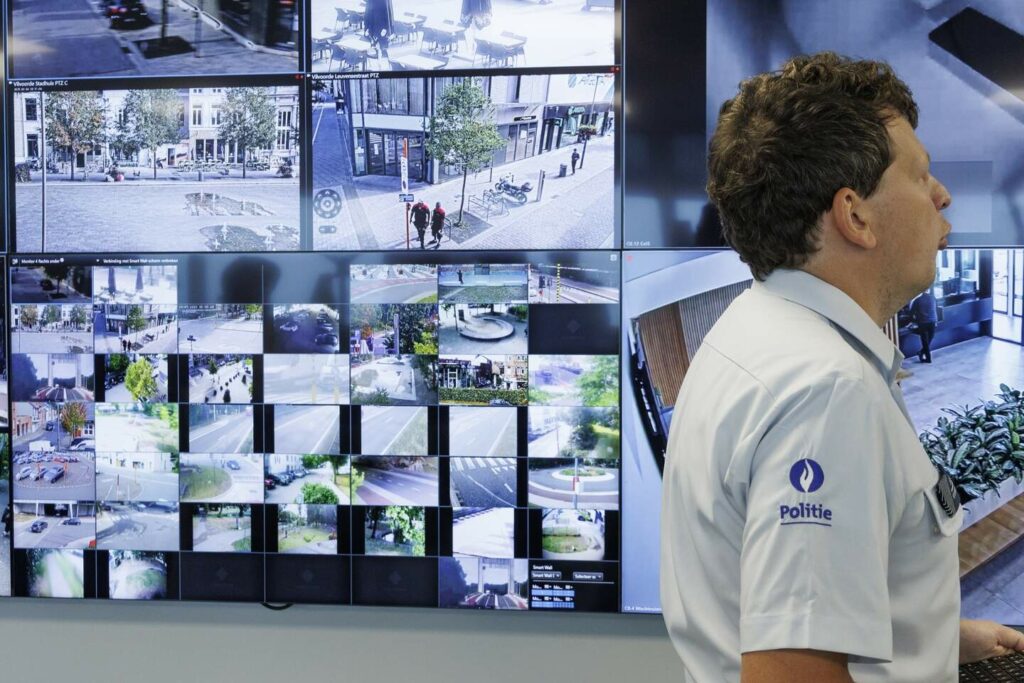
The plea of being "the most advanced," the pride in pointing to command-centre walls glowing with "real-time" feeds, the fantasy of mastering national complexity through a single dashboard: all these elements flatter an ideal of technological domination and control.
The branding, the tone, the militarised lexicon: they all perform masculinity. To question the premise of i-Police was to puncture an image of prowess. Only now, after the project has collapsed, do we see space for some questioning and public scrutiny.
It should be noted that, after the collapse of the grand design, the discourse has changed drastically. The current Minister of the Interior Bernard Quintin (MR) announced the discontinuation of a project that had already spent €78 million. A difficult but necessary decision to prevent another €200 million from being spent for nothing.
Most importantly, he has now suggested a completely different approach "based on smaller-scale, modular projects." We have moved from a hyperbolic discourse to the old and good "less is more."
Powerful promises and honest politics
The collapse of i-Police is more than a failed procurement exercise. It is a lesson in the politics of promise. For a decade, Belgium was invited to believe in a future made coherent by integrated data, secured by automation, and governed by intelligent systems.
That future was always more narrative than reality, more aspiration than architecture and governance. But promises are powerful: they shape budgets, promote political gains, silence criticism, and structure institutional desire.
If Belgium is to modernise its police in a way worthy of a democratic society, it must abandon the enchantment of grand digital promises and embrace a more honest politics: one grounded in accountability and the slow work of institutional repair.
Lucas Melgaço is an Associate Professor in Criminology at the Vrije Universiteit Brussel (VUB).
