Goodbye!
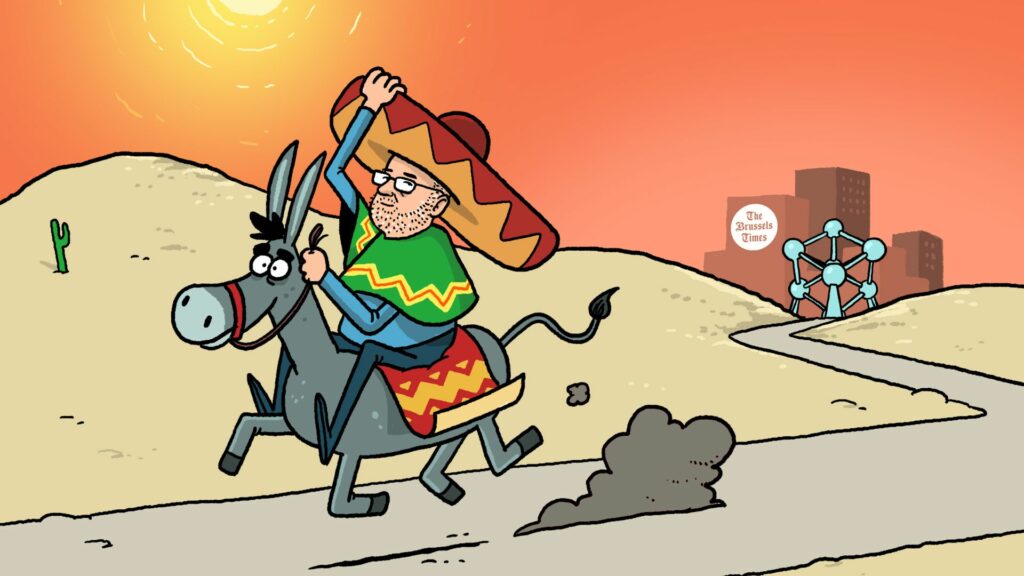
This may come as a shock, a disappointment or a blessed relief to you, but this will be my final Belgium in Brief. I have decided to take up an exciting new challenge and opportunity, and am leaving The Brussels Times. This is my last day.
Before I joined as Editor in Chief just over a year ago, I was already a consumer. As is the case for so many of our readers, it had been recommended to me as an invaluable source of information and a guide to navigating my new life in this slightly complicated land. It is all of these things still, I hope.
When I became Editor in Chief, and no longer just a reader, I had the opportunity to shape the editorial direction, set our story priorities, identify key issues we wanted to report on and begin to increase our original and longer form journalism to better reflect Brussels and Belgium in our news content.
I believe in this age of clickbait journalism, where truth and facts are less important than the sensational headline (if, of course, we can even agree what facts are) and where media organisations large and small are having to think day to day about how they survive and consolidate their readership (never mind grow) that quality journalism is more necessary than ever.
All recent studies show that people who want to consume news are craving quality over quantity, now more than ever. Just in the space of time I have been here, the use of AI in journalism content and news articles has ballooned – not at The Brussels Times, I hasten to add. AI in searches online is having a huge impact on traffic to news websites, massively affecting revenue streams, as content that used to be exclusive is freely available.
As a result, the way forward for news media has to be original, solid, human-written, factual and engaging content. This is what I believe in and what I made my mission to produce here with the team of young, talented multinational journalists – even with our limited resources. They have more than met those goals.
The Brussels Times' mission is founded on old-fashioned journalistic values. To explain and report accurately, truthfully, objectively and without bias, set developments in their proper context and to hold people to account. This last value – holding people to account – is particularly pertinent in Brussels and Belgium.
Above all else, though, it is to try to connect the large expat community to the city and country in which they live; to be a bridge. We want to explain the expats to the Belgians, and importantly, vice versa. In doing that, we also want to show the best of Belgium. There are so many great and unique things about the country and people that host us, and we want to showcase that and celebrate it in our content, and hopefully, through that, bring the two communities closer together and get them involved in each other's lives more.
When I look back to when I joined, I of course am asking myself if I achieved everything I wanted to and set out to. A year isn't very long, and it has been an eventful one. There will always be things you didn't finish or didn't get a chance to complete.
Speaking of things that never got completed, as a side note, it is frankly beyond comprehension that I will have joined The Brussels Times and indeed left it, and in that time, there has still been no Brussels Region Government. I will wait to read about its formation at a later date here.
But I do believe that we have told stories that are more engaging and more impactful. We have held people in power to account even more. We have been noticed more and have been more present in the community. We have had the confidence editorially to address some serious issues. We have been bolder in our journalism. We have been increasingly imaginative in our storytelling, and we have had the courage of our convictions. Increasingly, we have managed to speak to important people about very important issues, and our journalism is getting re-reported by other outlets.
The team from day one bought into this approach, have worked extremely hard and punched well above their weight – and that goes for The Brussels Times as a whole. In short, we have become more relevant. The figures that we can analyse and the data we can examine are up – including subscriptions. But these are fairly blunt tools and don't tell the whole story.
As important is the feedback from you, the readers. That is why I made it my job to go and speak to as many as possible. To attend events and places where you were, to hear firsthand what you thought of our product. I have to say, on every occasion, I was heartened and so proud of the whole team when you consistently and proactively told me how much you valued what we did, how you were impressed by the standard of our reporting and how you felt we were writing engaging original content and were improving all the time.
After all, ultimately it's you, the readers, who will decide if what we are doing now is what you want, but I really think we have a much better understanding of and relationship with our readers and the wider community than we did even a few months ago.
Our journalists are part of the community. They live and walk amongst you. They are from a wide variety of backgrounds and countries and they are of different ages. The one thing they have in common is that they are passionate about telling stories about where we all live.
Being part of a small newsroom with a passion to write good stories and expose important things is invigorating – leading it is even more satisfying. To you, they are The Brussels Times newsroom. To me, they are Maïthé, Ugo, Katie, Rita, Izzy, Anas, Eva, Kosmos, Bence, Ken, Léa and Raphaël (and other contributors). I am immensely proud of the work they are doing and will continue to do, and I will miss them all terribly.
I will continue to read their stories, but only as a consumer again. And I will support what they do. I ask that you do too, and if you feel inclined, that you tell them that what they are doing is important and invaluable in this city. Times are tough for journalists at the moment, and for small media organisations. But we need them more than ever.
As the saying goes, you don't know what you've got till it's gone.
Thank you for all your support over the past year.
Belgium in Brief is a free daily roundup of the top stories to get you through your coffee break conversations. To receive it straight to your inbox every day, sign up below:
1. Provoking racial civil war? ‘Accelerationists’ are greatest far-right threat in Belgium
"They distribute various manuals, glorify right-wing extremist terrorists as role models and try to incite people to carry out attacks." Read more.
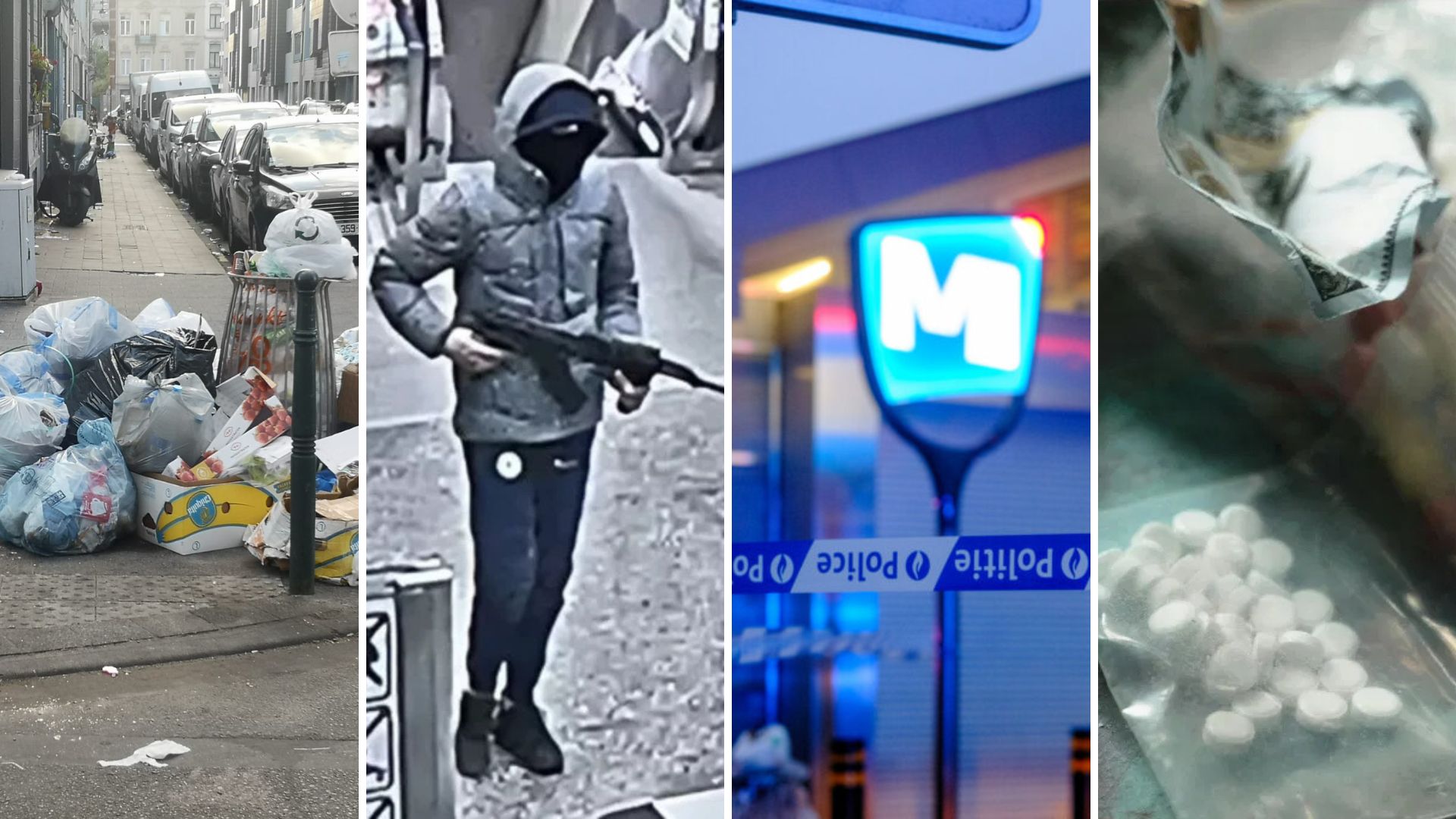
2. Brussels drug violence: Anderlecht residents call out ‘institutional neglect’ in open letter
A group of Anderlecht residents is crying for help (again) as they feel abandoned while their neighbourhood is falling victim to increasing drug violence. Read more.
3. Alert level for respiratory infections raised to code orange
The orange level indicates a significant spread of respiratory infections when a surge in cases is typically expected. Read more.
4. Belgian MP shows AI deepfakes of herself to warn against Grok danger
"The photo is shocking, humiliating and could have been real. That's where the danger lies." Read more.
5. Farmers’ blockade at Brussels Airport to continue until Saturday
Since Thursday evening, farmers have been stopping trucks at the entrance to the cargo area using tractors with a filter blockade. Read more.
6. Belgium’s brand new justice department system runs aground
A new €40 million digital system introduced to modernise Belgium’s justice department is reportedly plagued with serious operational flaws. Read more.
7. What is Brussels ‘zwanze’?
Belgians may not always agree on language or politics, but they do share zwanze. Read more.
