
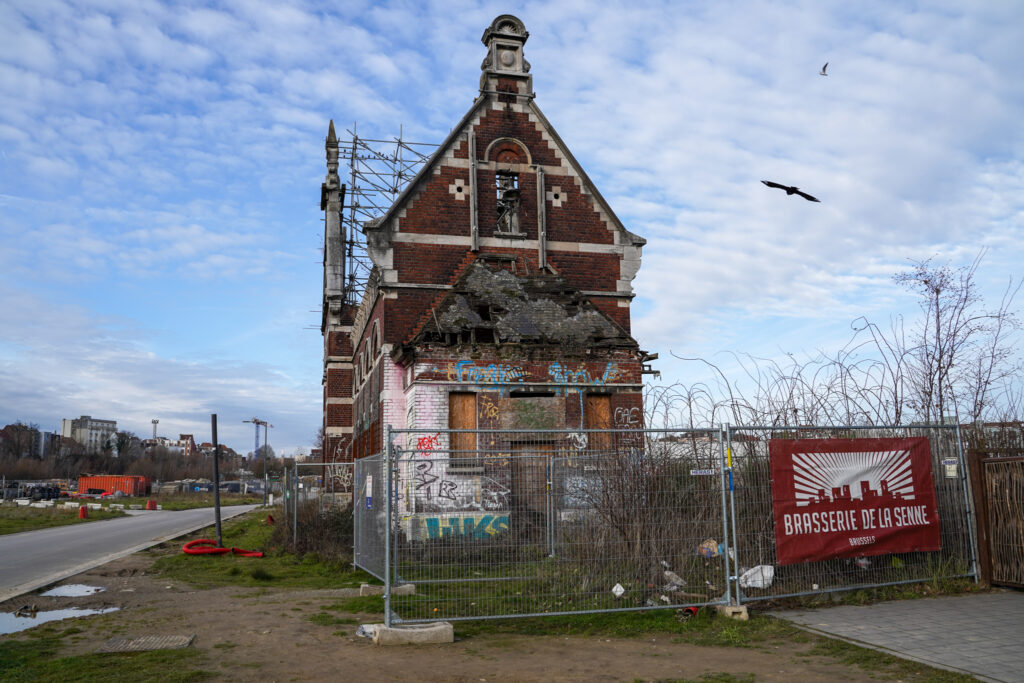
The historic La Chapelle shunting station at the Tour and Taxis site may soon be demolished after its owners failed to secure the investments needed for renovation.
The building is severely damaged, with several fires having broken out there over the years. Only the exterior walls remain. Unless an investor is found soon, the Port of Brussels may move ahead with demolition – even as campaigners are calling for it to be developed for the community.
“We realise that De Kapel [the Dutch name for the building] is a heritage and would rather preserve it, but someone has to restore and maintain the building, and neither the Port nor the Region has the money for it,” Director General Gert Van der Eeken told Bruzz.
Built in the 1900s as part of a freight station next to the Brasserie de la Senne, La Chapelle has been decaying for decades, regularly occupied by squatters.
When the station closed in the late 1990s, the Belgian national railway company (SNCB-NMBS) sold most of the railway site to a project developer, the predecessor of the current Nextensa, but 'La Chapelle' remained the property of the Port of Brussels.
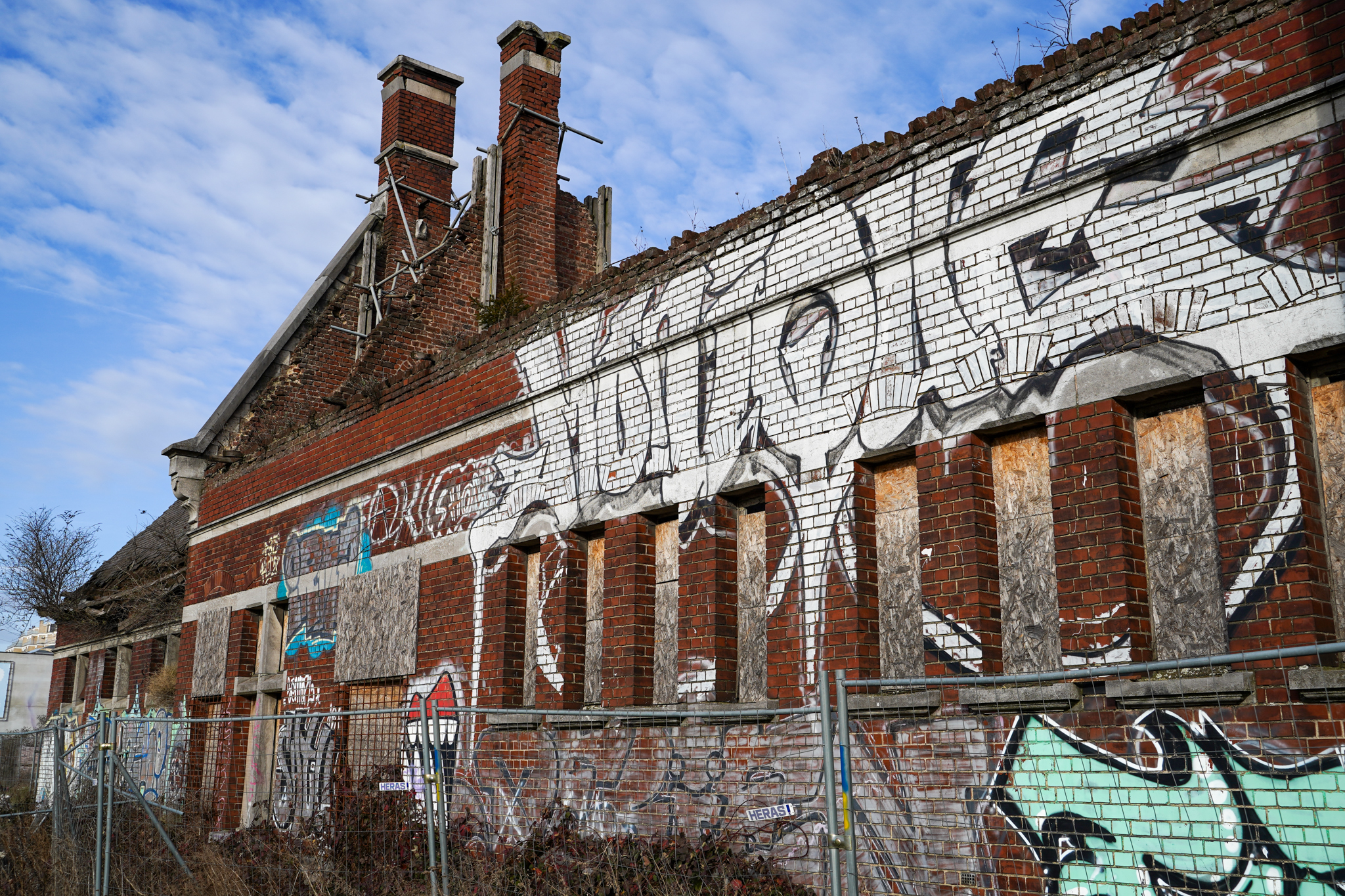
'La Chapelle' building at Tour and Taxis has been largely abandoned, often occupied by squatters in recent years. Credit: The Brussels Times / Vicente Torre Hovelson
While Nextensa gradually redeveloped its part of the site, La Chapelle continued to deteriorate.
Brussels-based non-profit civil action group, BRAL, has been a leading campaigner for the redevelopment of Tour and Taxis in recent years. BRAL fought for the preservation of the industrial heritage of the area and its development into a more sustainable, inclusive neighbourhood.
"We understand that the public government is really in tight financial debt right now, but that doesn't mean that you can't think long term about societal profits to develop that particular building," Sofie Vermeulen of BRAL told The Brussels Times.
BRAL sees developing La Chapelle as an opportunity to create public services for the neighbourhood, catering to the future inhabitants of the nearby 'Lake Side' housing project, where more than 1,000 people are expected to live.
"There is a real lack of public services and municipal meeting points. Why not develop a tea house with a kindergarten, or a place for kids to have their after-school homework classes, where parents can encounter, a place for music activities or theatre?" said Vermeulen.
"This is my personal standpoint, but preserving things is not always the best decision. However, in Le Chapelle's case, it is a unique piece of architecture. It will be a shame to lose it, not just in terms of industrial heritage and culture, but also for the current and future readability of the neighbourhood," Vermeulen said.
Former Brussels Minister Brigitte Grouwels (CD&V), who has been living in an apartment at Tour and Taxis, also joined the outcry. “That historic station is a beacon on the site. It can't be that gone," she told Bruzz.
Unprotected heritage
Unlike some of the neighbouring buildings at the Tour and Taxis site, La Chapelle does not have a status as a protected heritage site. The Royal Commission for Monuments and Landscapes (CRMS/KCML) has confirmed to the Brussels Times that La Chapelle is included in the inventory list of historical heritage. However, currently, it is not subject to any protection.
CRMS previously issued an opinion regarding the La Chapelle site, emphasising the heritage value of the building and encouraging appropriate reallocation, while calling for the preservation of its architectural characteristics.
At the end of 2024, the Port of Brussels called on Nextensa to integrate the shunting station into its development plans, but an estimated €2.5 million restoration cost was too high, according to Van der Eeken. Nextensa did not provide additional comments on this.
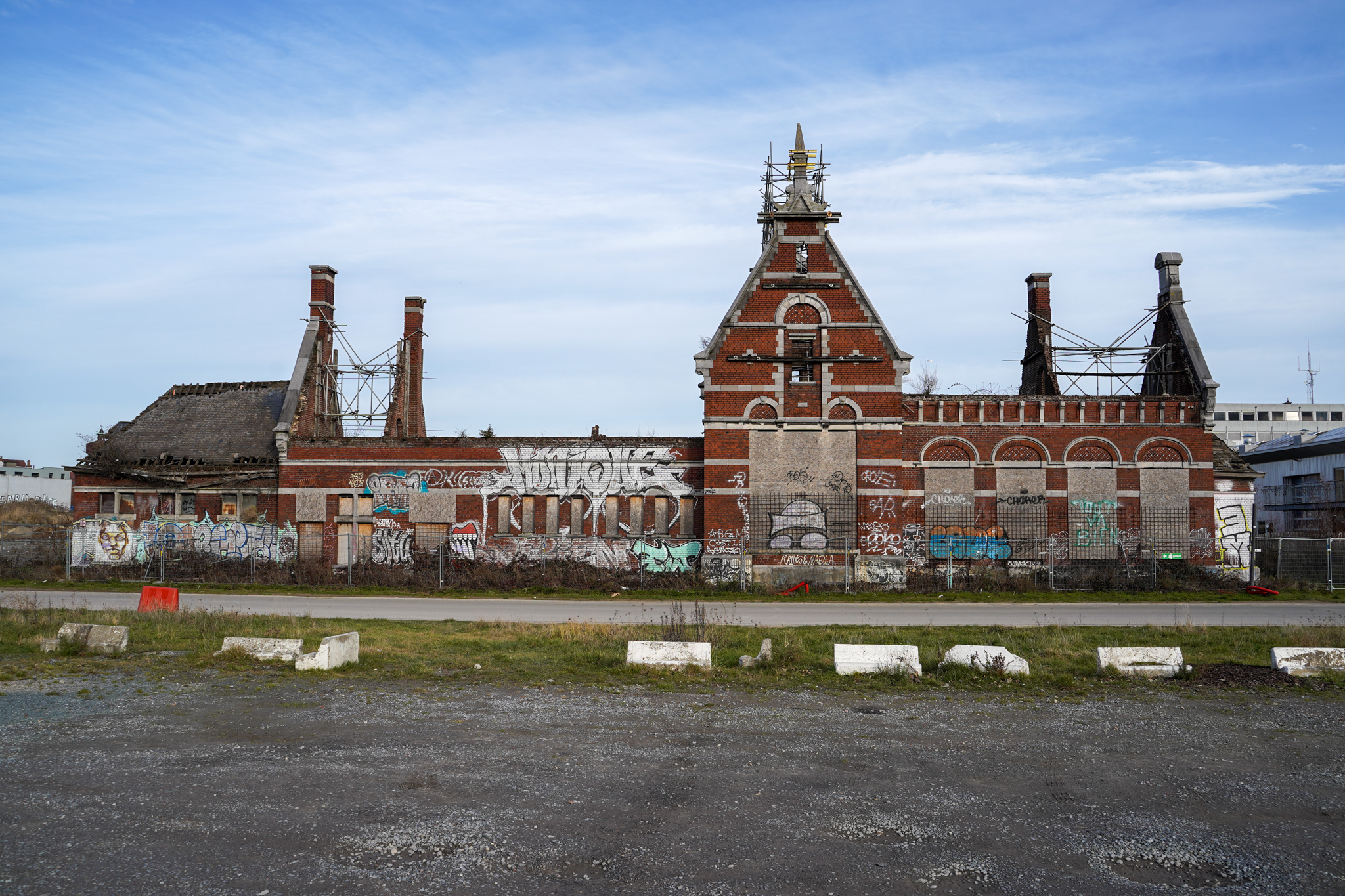
'La Chapelle' building at Tour and Taxis site in Brussels, 22 January 2026. Credit: The Brussels Times / Vicente Torre Hovelson
The Port of Brussels has reportedly received several proposals for the site, but none were deemed feasible. "There was a padel project and also the plan for a cat hotel," said Van der Eeken.
"But the proposals did not immediately lead to a real solution. For example, the initiative for the cat shelter only allocated a budget of €50,000 for the restoration. That is not realistic.”
According to BRAL, the Port's strategic vision for the land is unclear for now. "We always refer to the strategic development plan, which prescribes the framework for development for the land here in the entire region," said Vermeulen.
