
The European Court of Human Rights (ECHR) has ruled in favour of a Belgian national who claimed he was denied both a fair trial and the presumption of innocence when convicted of benefit fraud.
On Thursday, Europe's top human rights court found the individual's right to a fair trial had been prejudiced by the same judge appearing in two different courts for the same case.
It also found that the man's presumption of innocence had been breached by the public prosecutor's comments about him and the case in Flemish media, suggesting he was guilty before the end of criminal proceedings.
What happened?
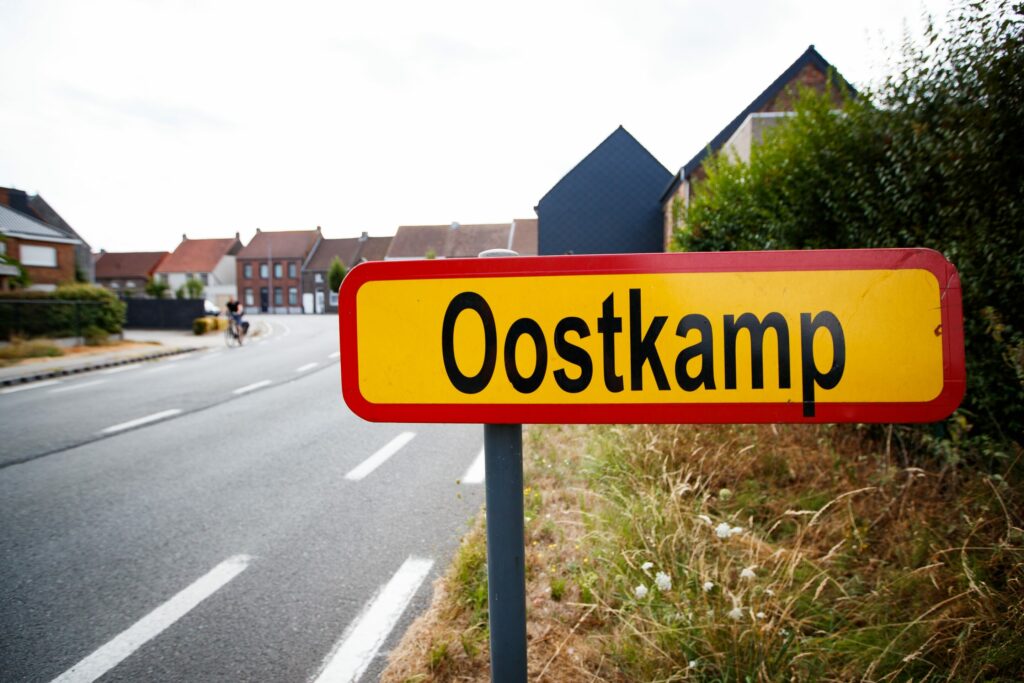
Born in 1965, and referred to by the court as Kaya, the man was living in Oostkamp. He was summoned to appear before the Ghent Criminal Court by a public prosecutor, referred to as D.M., in 2010.
He was facing charges of social security fraud, illegal secondment of labour to third parties, operating an agency which seconded labour, failure to pay social-security contributions and non-payment of an employee’s wages.
After being convicted on all counts, the man was sentenced to one year’s imprisonment and handed a fine of €5,500. Both sides subsequently launched appeals.
However, while Kaya's appeal was still pending, Flemish newspaper De Tijd published a five-page article in 2011 titled Ali Baba's cave – How Turkish labour providers are undermining our economy through exploitation and fraud.
The article contained statements attributed to D.M. (the public prosecutor) about him, citing his name and that of his company.
Legal ping-pong
The Ghent Court of Appeal acquitted Kaya in 2012 for the offence of illegal secondment of labour, due to his right to a fair trial having been "irretrievably prejudiced" by D.M.'s comments in the press. It further noted that D.M. had shown "clear bias" against him.
It lowered the fine to €2,750, but the Belgian national was still convicted for the other offences, namely, failure to pay social-security contributions and non-payment of an employee’s wages.
The case was then sent to Belgium's highest court, the Brussels Court of Cassation, which quashed this last judgement, dismissing it as "inconclusive".
In 2016, Kaya was convicted again by the Brussels Court of Appeal, which found him guilty on all counts. It threw out the claims that his presumption of innocence and right to a fair trial had been breached, sentencing him to four months’ imprisonment and a fine of €6,000.

A statue of Minerva is seen during the inauguration of the first renovated part of the facade of the Brussels Justice Palace and of the Minerva statue, in Brussels, Friday 24 May 2024. Credit: Belga
One year later, the Court of Cassation partly allowed the appeal and quashed the part of the 2016 judgement concerning the calculation of the fine. Importantly, it rejected the argument that the applicant’s right to the presumption of innocence had been infringed due to the media coverage.
Following this, Kaya's application was lodged with the European Court of Human Rights on 22 February 2018. He alleged that the principles of impartiality and the presumption of innocence had not been complied with during his proceedings.
Victory for Kaya
On Thursday in Strasbourg, the ECHR upheld the Belgian national’s claims against the Belgian justice system.
In its ruling, the human rights court pointed out that members of the Public Prosecutor’s Office were required to respect the presumption of innocence and exercise particular caution if speaking to the media about a specific case that is ongoing.
In its comments to De Tijd, D.M. had not confined himself merely to providing information about an ongoing criminal case.
He had expressed certain opinions about Kaya, in particular by describing him – without nuance or reservation – as a "crooked fraudster who knew the tricks of the trade". This was, undoubtedly, a very negative personal opinion, the court ruled.

Illustration shows a visit to 'Justitia', the new courtroom at the former Nato headquarters building, in Haren, Brussels, Thursday 03 December 2020. Credit: Belga / Eric Lalmand
Indeed, the prosecutor’s remarks implied to the general public that Kaya had committed the offences with which he had been charged, despite the fact that the criminal case was still ongoing.
For the ECHR, D.M.’s remarks to the press had incited the public to believe that the applicant was guilty in the appeal proceedings that were then pending, and had infringed his right to the presumption of innocence.
Same judge
Furthermore, it found that the participation in the same case of a judge (A.B.), first as a trial judge and subsequently as a Court of Cassation judge, had impeded Kaya's right to a fair trial.
It noted that this was the first time that it had been called upon to examine a situation in a criminal case where a judge had participated in the same case, which is prohibited in the Belgian Judicial Code.
It observed that A.B. had "clearly played a not insignificant role " within two judicial formations which
had delivered unfavourable decisions in respect of the applicant.
As a settlement, the Court held that Belgium must pay the applicant €6,000 in respect of non-pecuniary damage and €4,754.39 in respect of costs and expenses.
