
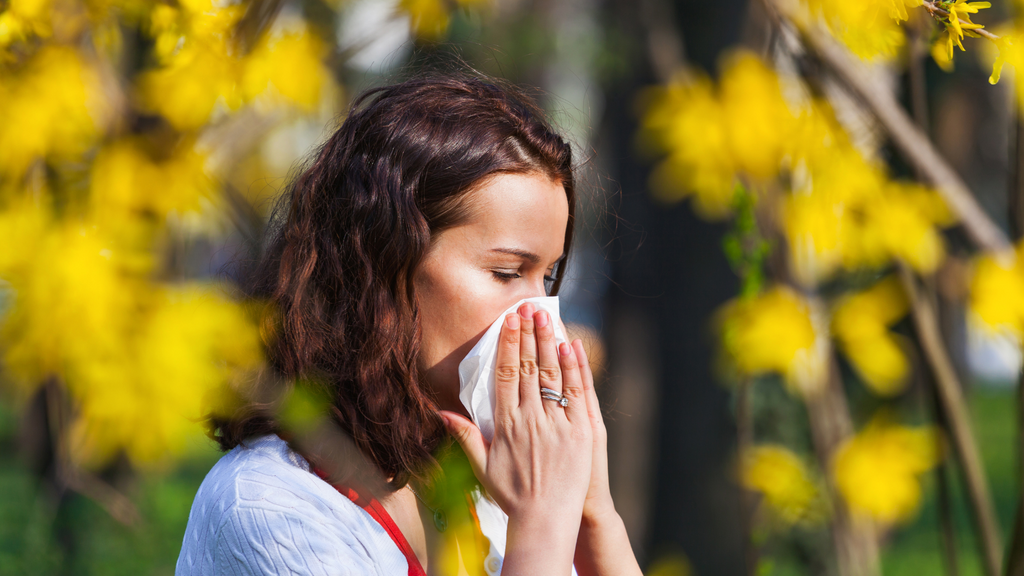
Belgium's national aerobiological monitoring network AirAllergy has announced that the 2026 pollen season has officially begun.
The first alder and hazel pollens have already been measured in the air. If weather conditions remain broadly stable, pollen concentrations are expected to rise.
People sensitive to pollen from these trees may begin to experience allergic symptoms.
Flowering may intensify pollen peaks
Alder and hazel catkins, traditionally the first trees to release pollen each year, are currently visible.
Concentrations recorded in recent days, exceeding 100 grains per cubic metre in Brussels, mark the start of the pollen season.
According to the AirAllergy network, levels could increase further in the coming days depending on weather conditions.
While an early hazel flowering had been expected due to relatively mild temperatures in November and December, a marked cold spell in January suddenly delayed pollen release from hazel catkins.
As a result, hazel flowering now coincides closely with that of alder.
"This synchronisation can lead to more intense exposure to pollen from both species," explained Nicolas Bruffaerts, a scientific researcher in the Mycology and Aerobiology department at Sciensano.
"Instead of a gradual spread over several weeks, a more concentrated pollen peak may occur, increasing the risk of significant allergic reactions in sensitive individuals."
At present, pollen concentrations remain relatively low due to variable winter weather. However, in dry and windy conditions, pollen can spread more rapidly and in larger quantities.
"We advise people with pollen allergies to be particularly vigilant on such days," Bruffaerts added.
