
While the world knows Carnival as a global party, few nations embrace the spirit with as much local fervour as Belgium.
From the satirical chaos of Aalst to the medieval traditions of Binche, Belgian Carnival is more than just a parade; it is a centuries-old ritual of symbolic rebirth, where social norms are traded for costumes.
Though celebrated in over 50 countries, few places embrace Carnival with the same local pride as Belgium. From city to city, the country offers a diverse map of festivities, each putting a signature, local spin on the concept.
What we now refer to as “carnival” most likely comes from the medieval Latin phrases carnem levare or carnelevarium, which refer to the removal of meat – a common thing to give up for Lent in Catholicism.
Carnival is celebrated in the days leading up to Lent, which begins on Ash Wednesday, 40 days prior to Easter. It is intended as a way to prepare for the period of fasting and abstinence.
Although each carnival celebration is slightly different depending on which city or country it's in, they are all characterised by the excessive consumption of meat, alcohol, and other things which are not consumed during Lent, as well as festive costumes and masks, which promote both anonymity and social cohesion.

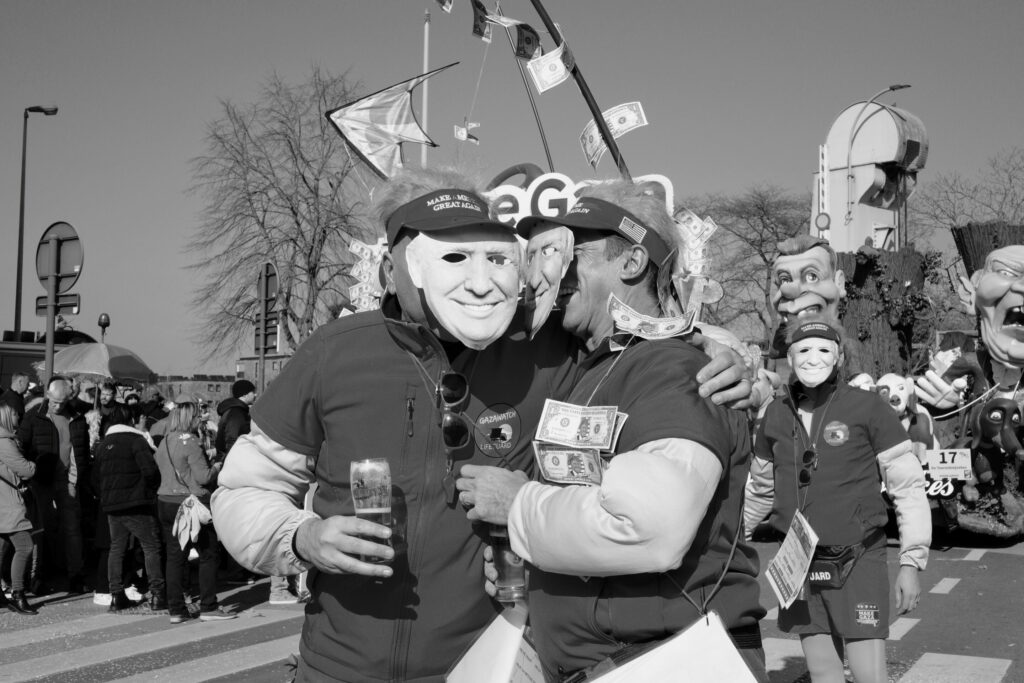
A man at the Aalst carnival parade 2025, portraying a Vuil Jeanet, a practice where men dress in absurd, traditional women's clothing. Credit: Vicente Torre Hovelson/ The Brussels Times.
Despite Carnival's correlation to Catholicism, it is rooted in ancient European celebrations like the Greek Dionysian rites, which honoured the Greek god Dionysius (The god of wine) and the Roman Saturnalia, an ancient Roman festival from 17 to 23 December in the Julien Calendar, honouring the god Saturn, characterised by seven days of feasting, role reversals, gift-giving, and revelry.
These events, as well as carnival, are characterised by a temporary escape from social responsibilities and norms. They typically involve humour and excess. Ultimately, Carnival has and still does function as a period of symbolic rebirth by briefly replacing order with chaos so that society can emerge refreshed and ready for the next cycle of the year.
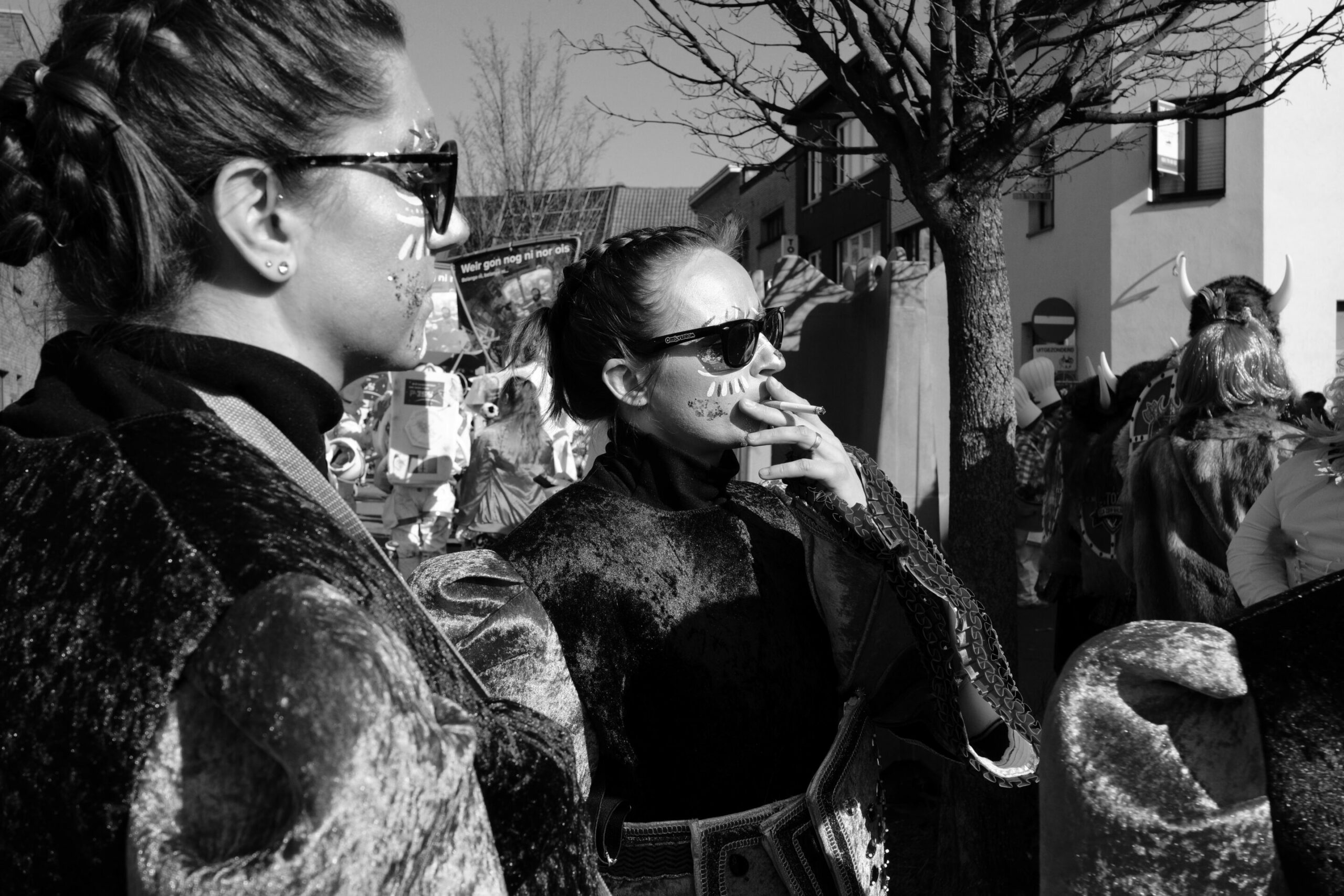
Women sporting elegant braids and fur coats at the Aalst Carnivals parade 2025. Credit: Vicente Torre Hovelson/ The Brussels Times.
Carnival in Belgium
In Belgium, carnival dates back to the 14th century, with the first one being held in Binche, with written records dating all the way back to 1394.
Although Binche is the oldest Carnival in Belgium, there are a variety of other cities you can choose to celebrate in, like Aalst in East Flanders, Cwarmê in Malmedy, or Blancs-Moussis carnival in Stavelot.
All four of these carnivals have traditions unique to them. For example, in Binche, oranges are thrown at attendees by the 'Gilles' who wear a traditional costume which includes a wax mask, a blouse, a white hat, and jute trousers with patterns. In Aalst, meanwhile, you will find the Vuil Jeanet – men dressed in dirty women's clothes.
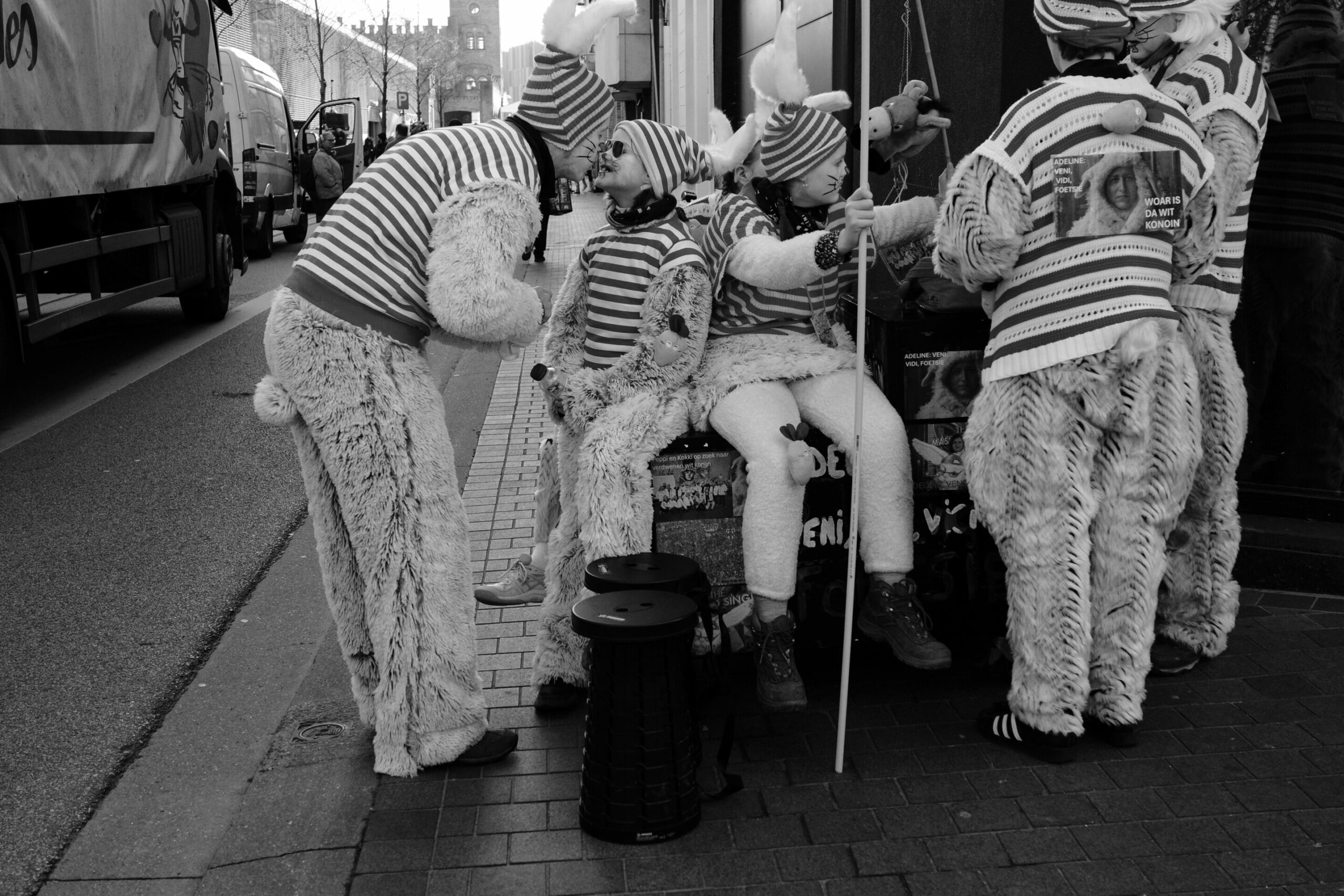
A group dressed in mascot-like suits at the Aalst carnival parade 2025. Credit Vicente Torre Hovelson/ The Brussels Times.
Ultimately, though in order to truly understand the Belgian Carnival, you have to participate in it.
