
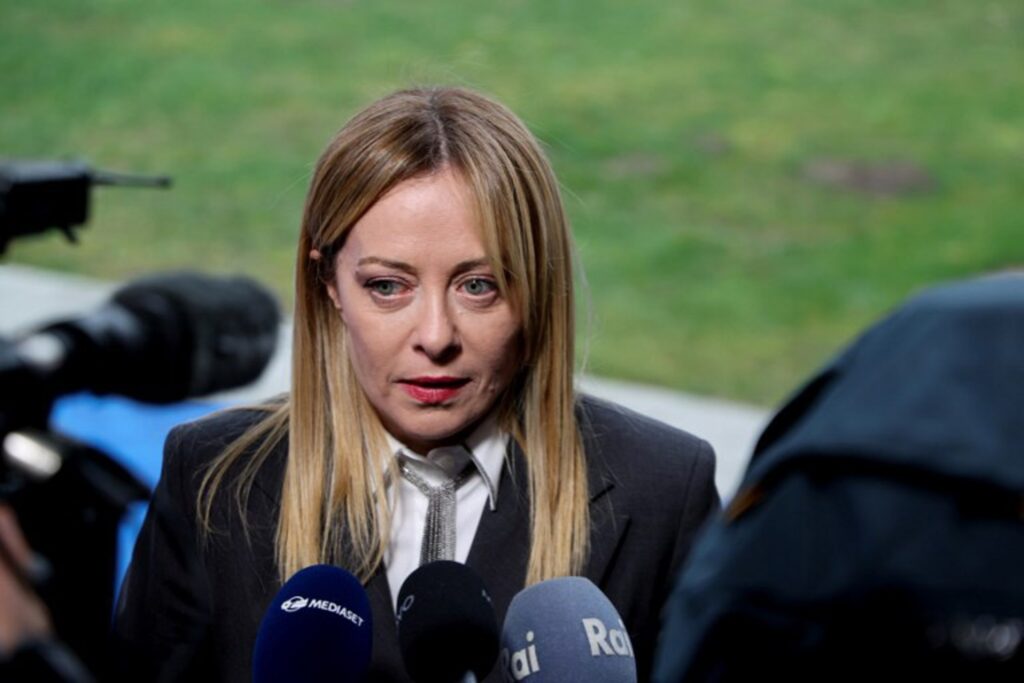
Italian Prime Minister Giorgia Meloni has expressed her support, in principle, for issuing joint European debt to boost investment in the EU economy.
Speaking ahead of a European summit in Alden Biesen on Thursday, Meloni told journalists she personally favours the idea. At the summit, EU leaders are discussing measures to support the European economy.
Meloni acknowledged that joint debt, or eurobonds, remains a contentious issue among EU Member States.
French President Emmanuel Macron reiterated his support for the concept earlier this week, but Germany promptly opposed it.
The topic of public financing is not officially on the agenda of the summit in Alden Biesen. German Chancellor Friedrich Merz clarified that such discussions are scheduled for March.
Germany, with a lower national debt compared to France or Italy, traditionally opposes joint debt at the European level. While Berlin made an exception during the pandemic under then-Chancellor Angela Merkel, she emphasised it was a one-off measure.
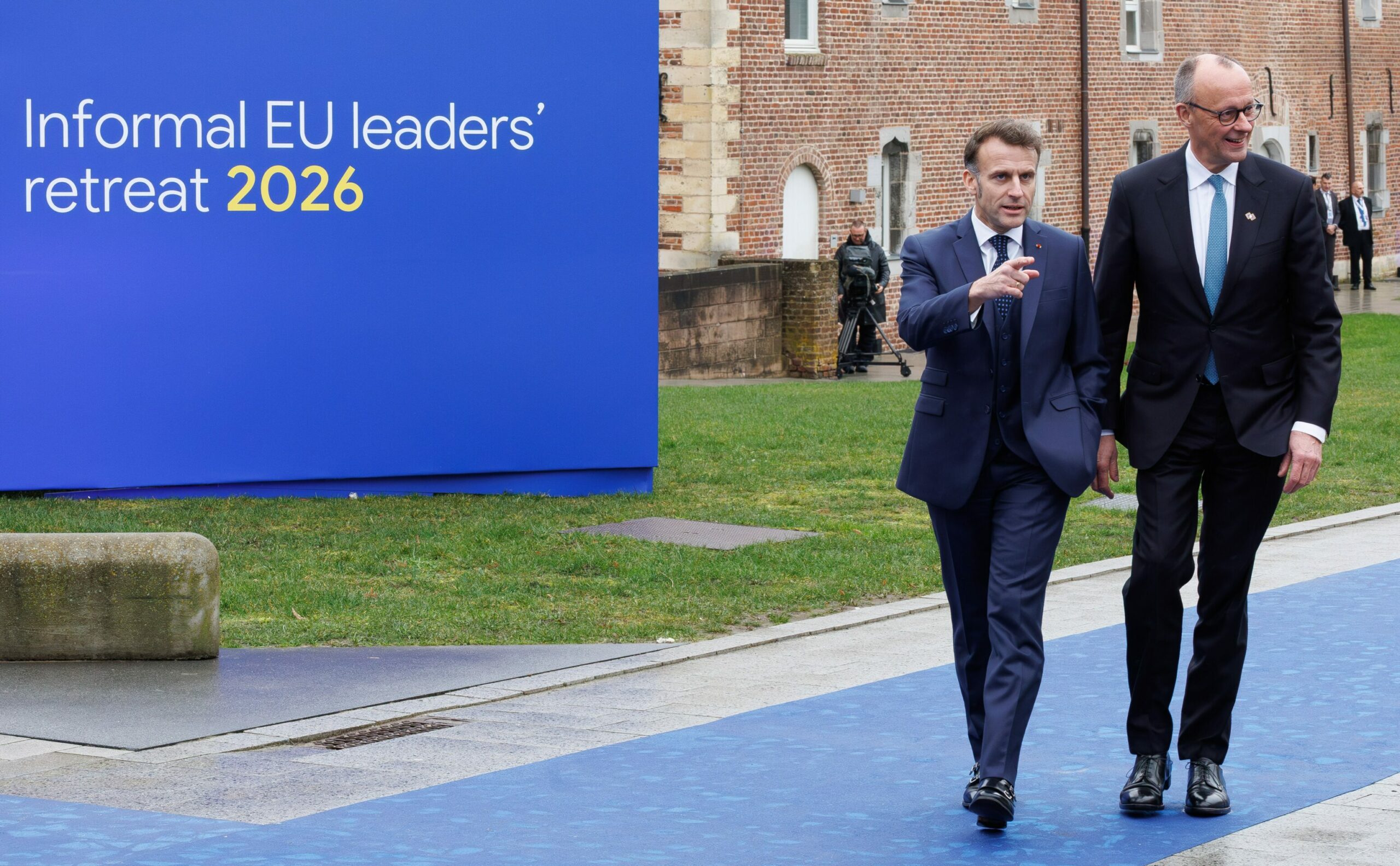
French President Emmanuel Macron, German Chancellor Frierdrich Merz and pictured prior, in the Landcommanderij Alden Biesen, in Bilzen, Belgium Thursday 12 February 2026. Credit: Belga / Benoit Doppagne
However, the debate over shared European debt is ongoing in Germany. Bundesbank governor Joachim Nagel recently voiced conditional support for the idea, suggesting strict criteria could make Europe more attractive to external investors. He argued that a liquid market for secure European assets would enhance investment appeal.
Nagel’s comments sparked immediate backlash within the Bundesbank.
The German news agency DPA reported that his statements reflected only his personal view and were not coordinated with the central bank’s board. No new central bank position has been adopted on the matter.
De Wever 'proud' about retreat
European leaders share a sense of urgency about the need to act to support the European economy and competitiveness, several of them said upon their arrival at the informal retreat being held on Thursday. They intend to ask the European Commission for concrete proposals to be implemented before the end of this year.
Upon arriving in the castle courtyard, Bart De Wever said he was proud to be behind this "informal retreat" of the 27 heads of state and government on the theme of European competitiveness, which has been undermined by growing pressure from the United States and China and by geopolitical tensions.
The day began with a preparatory meeting between 19 countries. "This club is called ‘the friends of competitiveness', which says it all," said Belgian Prime Minister Bart De Wever.
The day of reflection at Alden Biesen is not intended to produce decisions, but the Commission will be tasked with proposing short-term measures by the formal summit in March, Bart De Wever stressed.
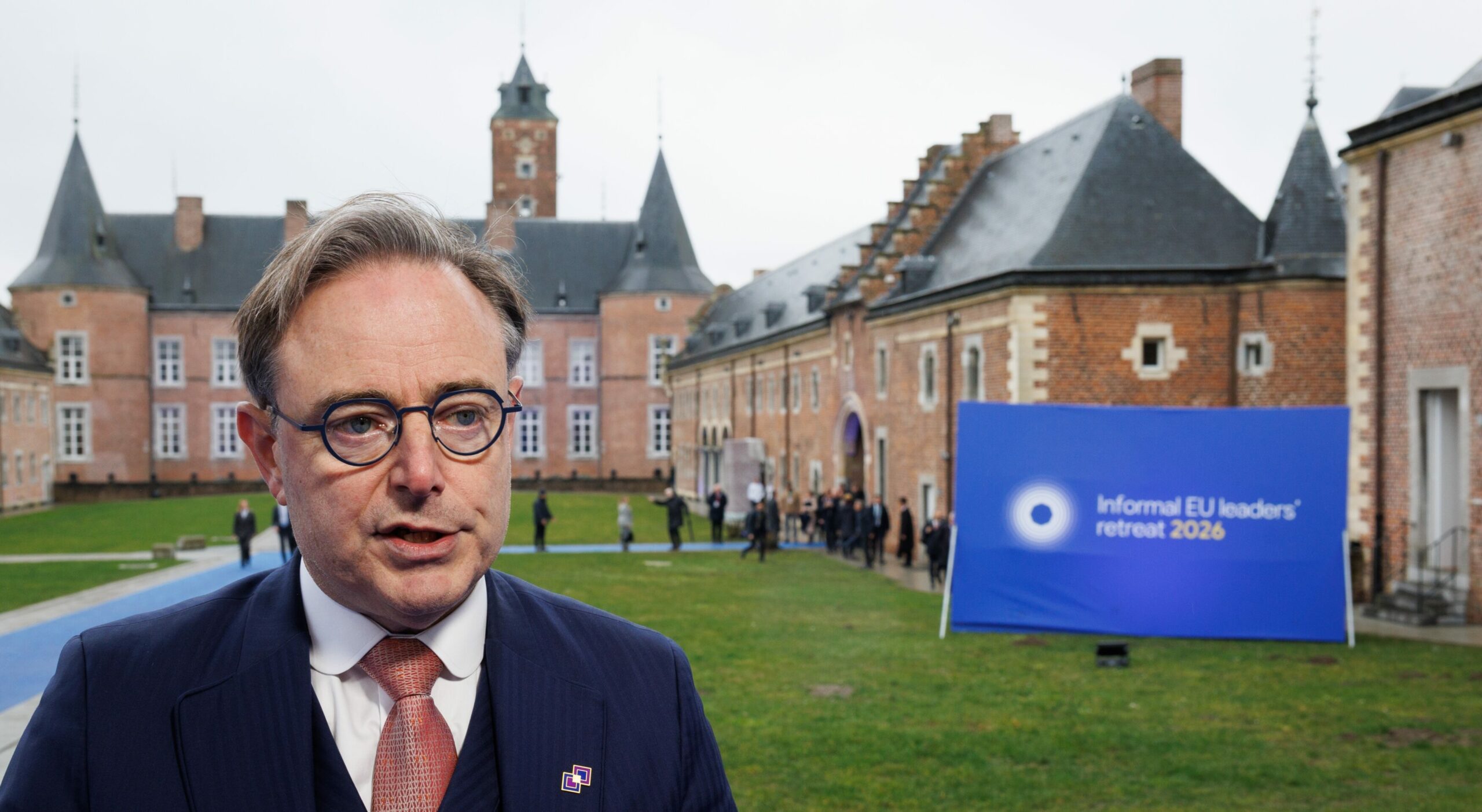
Prime Minister Bart De Wever and pictured prior to an informal meeting of the Heads of State or Government of the European Union, in the Landcommanderij Alden Biesen, in Bilzen, Belgium Thursday 12 February 2026. Credit: Belga / Benoit Doppagne
He relayed the demands of the petrochemical and steel industries to see energy costs fall, repeating that industry was in "serious difficulty" in Europe.
After divergent statements in the press on the idea of giving “European preference” to local goods or on the possibility of common European debt, German Chancellor Friedrich Merz and French President Emmanuel Macron arrived side by side.
Friedrich Merz said that the two countries were “almost always in agreement” on the issue of competitiveness.
"I am pleased to see that we share this sense of urgency, that our Europe must act," commented Emmanuel Macron, who is calling for a “very short-term” response from the EU.
"We must implement everything we agree on: simplification, deepening of the single market," and the capital markets union to free up investment. According to him, there is a very strong “Franco-German agreement” on the latter issue.
Emmanuel Macron expects concrete decisions to be made by June. He pointed out that enhanced cooperation between several motivated countries is possible.
This formula proved its worth last December, when leaders decided to support Ukraine through a joint loan of 24, without Hungary, Slovakia, and the Czech Republic.
Bart De Wever noted that Belgium, which shares borders with France and Germany, was well placed to help forge compromises between the different approaches.
"This will be the year of competitiveness for the European economy," said European Council President Antonio Costa.
To fuel the day's discussions, he invited two former Italian prime ministers: Mario Draghi and Enrico Letta. Both had submitted ambitious proposals in 2024 to revitalise the European economy and strengthen the single market.
The discussions, which began around 11 a.m., were to focus in the morning on the impact of the new geopolitical environment on the EU's competitiveness, and then on the single market in the afternoon.
