
The Brussels Court of Appeal has confirmed the guilt of a Leuven medical student for rape and sexual assault and endorsed the decision to allow him to escape punishment for his crime.
On 1 April of last year, a 24-year-old KU Leuven gynaecology student was found guilty of raping a young woman (a fellow student) on the night of 8 November 2023.
According to the Leuven Criminal Court, the young woman attended a Halloween party in the city, during which she became intoxicated. The defendant took the woman back to his accommodation, where he raped her.
Following the verdict, the university has prohibited him from entering its premises.
Nonetheless, due to his young age, clean criminal record, and alleged talent, the judge did not issue a sentence. "By finding him guilty but not imposing a sentence, he will realise his guilt and future offences will be prevented, without disrupting the man socially," the judge said at the time.
Following the ruling, the Leuven Public Prosecutor's Office stated that it disagrees with the lack of legal consequences. The case was set for retrial by the Court of Appeal in Brussels.
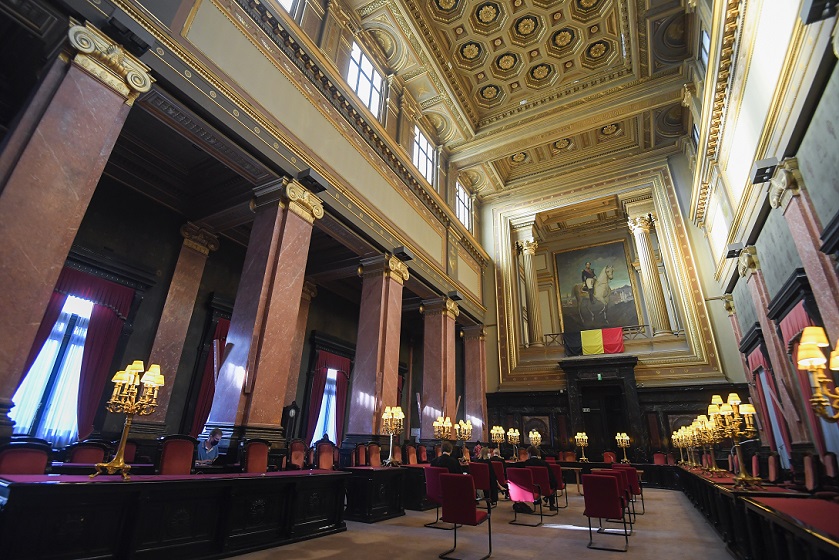
The Brussels Court of Appeal upheld the conviction on Thursday while again granting a suspension of sentence. The medical student will not receive an immediate custodial or financial penalty.
Speaking to VRT, press judge Annelien Verschaeve explained that the legal qualification of the facts has not changed. "It is and remains rape," she said. "A suspension does not equate to impunity."
What does a suspension mean?
Under Belgian criminal law, a suspension means the court finds the defendant guilty but decides not to impose a sentence, taking into account specific circumstances of the case and the personality of the offender.
The suspension is granted for a probationary period of five years. If the man commits a new offence during that time, the suspension can be revoked, and a sentence may still be imposed.
The court emphasised that sentencing decisions are based not only on the legal classification of the offence but also on the concrete circumstances and the profile of the defendant.
Court's reasoning
According to the judgment, the court took into account evidence including camera footage, witness statements and elements in the case file. It found that the sexual acts took place while the woman was under the influence of alcohol and unable to give valid consent.
The court described the defendant's actions as a "miscalculation", stating that he should have recognised that the woman could not consent in her condition. It noted that he acknowledged this and did not dispute the legal qualification of the facts.
The ruling further states that the defendant showed a strong sense of guilt, recognised the victim's suffering and paid damages exceeding the amount ordered by the court. He also stopped his training in gynaecology and obstetrics.
The court considered that the extensive media coverage and hostile reactions following the first-instance ruling had had a severe impact not only on the defendant but also on his family and the victim.
It concluded that imposing a sentence would not contribute to protecting the public interest and would have disproportionately adverse consequences for the defendant.
The court also assessed the risk of reoffending as limited, citing factors such as his family responsibilities and social engagement.
Reaction from both sides
The defendant's lawyer, An-Sofie Raes, told VRT that her client was relieved that the earlier ruling had been upheld. She stated that he had never denied the facts and had taken responsibility from the outset.
The victim did not appeal the first-instance decision. Her lawyer, Sanne De Clerck, told VRT that the ruling had been carefully considered and expressed hope that calm could now return.
The case has prompted fierce public debate, particularly among students in Leuven, about consent, sentencing policy and the handling of sexual violence cases.
