
For more than three centuries, Antwerp’s skyline was dominated by a five-pointed reminder of who was really in charge.
The citadel ordered by Spain’s Duke of Alva in 1567 did not so much defend the city; it disciplined it. Its cannons were trained as much on Antwerp’s own rooftops as on any foreign threat. To generations of citizens, it was less a shield than a shackle, and it became perhaps the most potent symbol of repression in the Southern Netherlands.
Now, a new exhibition at the Royal Museum of Fine Arts Antwerp (KMSKA) revisits that uneasy legacy, and reflects on how memory, propaganda and art intertwine in the story of a structure long since erased from the skyline but not from the city’s psyche.
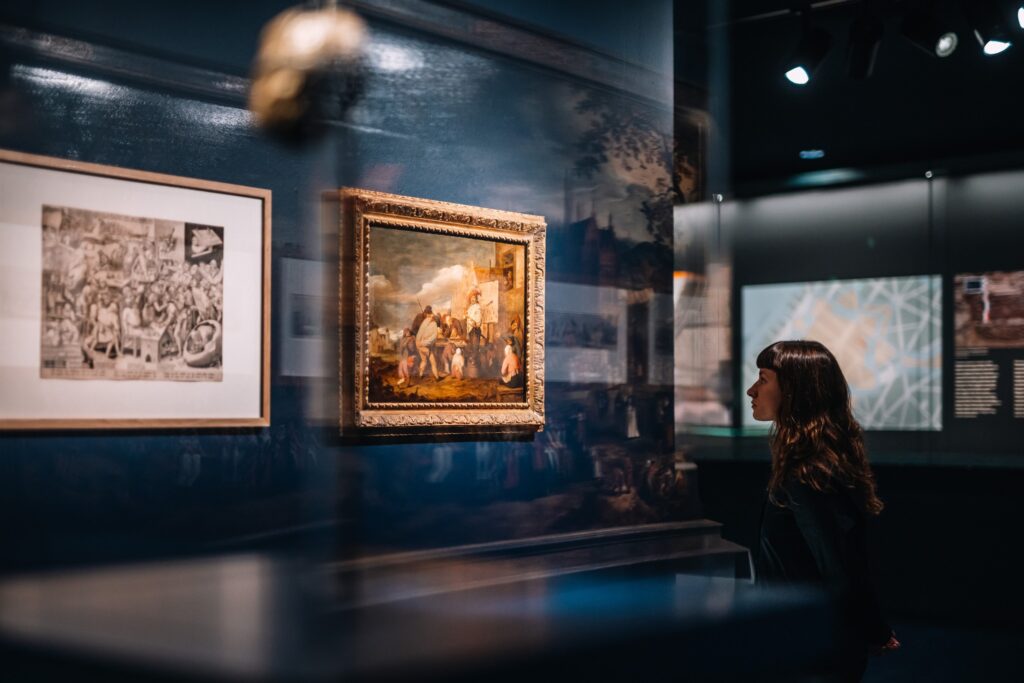
The exhibition, entitled The Fall of Alva’s Citadel. Image and Memory in Turbulent Times, is on view in the museum’s print room until mid-May. The exhibition examines not simply the destruction of the fortress in 1577, but the ways that event was reframed, retold and visually manipulated in the decades that followed. While KMSKA is known for its handsome building and its lavish art collection, this is also about its own history: the museum itself was built on the footprint of the Alva fortress.
The historical backdrop is well known, if rarely uncomplicated. In 1566, waves of Protestant iconoclasm swept through the Low Countries. A year later, Philip II dispatched his hardline governor, Fernando Álvarez de Toledo, 3rd Duke of Alba, to restore order.
In Dutch-language sources he is almost always called Alva, reflecting a contemporary spelling; in Spanish and modern English, Alba is more common. The exhibition title uses Alva, echoing the name familiar in Antwerp’s own historical memory, but both refer to the same formidable figure – a soldier-administrator whose arrival marked a decisive hardening of Habsburg rule.
Spanish Fury
Alva’s answer to unrest in Antwerp was architectural. A vast pentagonal fortress rose on the city’s southern edge, designed by Italian military engineers and integrated into the broader Spanish defensive network. Officially, it protected a major commercial hub. In practice, it served as a permanent garrison and warning. The message was clear: rebellion would be watched from above – and, if necessary, crushed.
Resentment simmered. It boiled over in November 1576 during the so-called Spanish Fury, when mutinous, unpaid troops rampaged through Antwerp, killing thousands and leaving swathes of the city in flames. The following year, amid shifting alliances and fragile truces, Antwerp’s citizens and sympathetic forces took control of the citadel. In August 1577 they began dismantling the bastions that faced inward, towards the town. For some, it was an exhilarating assertion of civic pride. For others, it was mob rule masquerading as heroism.
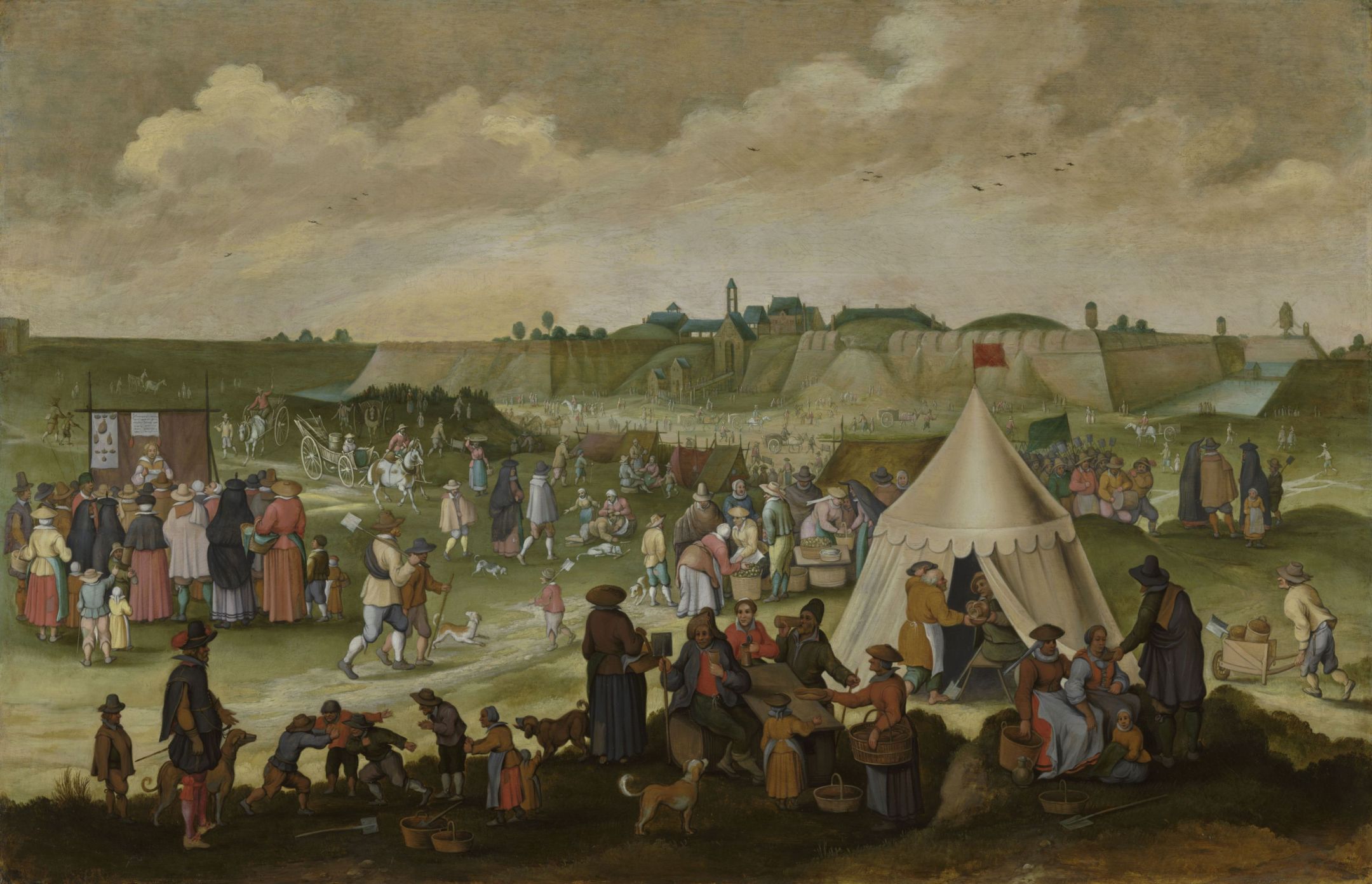
The Antwerp Castle Demolished in 1577, unknown painter (17th Century)
It is this ambiguity that animates the KMSKA show. The centrepiece painting, created around 1620 in the circle of Sebastiaen Vrancx, depicts the demolition as a bustling urban tableau. At first glance, it looks almost festive: crowds mill about, children scuffle, the citadel’s masonry yields. But conservation research has revealed that the work is not a straightforward record of 1577. It is a revised image, layered with meaning.
Rebuilt
An earlier composition appears to have presented the demolition in more celebratory tones. By the time the painting was altered – when Antwerp was again under Spanish control and the fortress had been rebuilt – new figures were inserted. Most striking is a quack doctor operating on the margins of the scene. Above him hang bladder stones, once displayed as proof of miraculous cures. In this context, they function as loaded symbols. Is the fall of the citadel a purging of disease from the body politic? Or is it a dangerous illusion, peddled by charlatans and reckless leaders?
Even the children at play take on a darker cast. Their scuffles suggest unruliness rather than righteous revolt. What might once have read as communal solidarity begins to look like chaos. The painting thus becomes a subtle exercise in reframing: the same historical event, nudged into a different moral register.
By isolating this single canvas and unpacking its layers, the exhibition makes a broader argument about the instability of historical memory. Images are not passive witnesses. They are interventions. They can legitimise authority or undermine it; they can elevate a rebellion into a founding myth or reduce it to a cautionary tale. In early 17th-century Antwerp, where loyalties had shifted and Spanish power had reasserted itself, the demolition of 1577 needed reinterpretation. The brush obliged.
The citadel itself would continue to cast a long shadow. After the Spanish reconquest of Antwerp in 1588, it was rebuilt and strengthened. Over the following centuries, it passed into Austrian, French and eventually Dutch hands. During the Belgian Revolution of 1830, Dutch troops once again used the fortress as an artillery platform, bombarding neighbourhoods such as Sint-Andries before surrendering in 1832. The fortress was finally demolished in the late 19th century as Antwerp expanded, leaving only fragments beneath the Zuid district and a solitary ornamental vase – now standing outside the museum – as a reminder of its presence.
Museum today
There is a certain poetic symmetry in the KMSKA hosting this reckoning. The museum sits atop part of the former citadel site, and archaeological excavations during its renovation uncovered remnants of the bastions below ground. A solitary ornamental vase, once displayed within the fortress, now stands on the museum forecourt, a curious survivor of a structure otherwise reduced to traces. Visitors entering the galleries are therefore literally walking over and past the layers of history the exhibition seeks to unpack.
The story does not end there. The trauma of 1830 left its mark on Belgian strategic thinking. Determined never again to see Antwerp used against itself, the young Belgian state embarked on an ambitious programme of fortification. New rings of defensive works – culminating later in the 19th century in the Brialmont fortifications – encircled the city, this time oriented outward against potential Dutch aggression. The logic of the citadel was inverted: no longer a tool of internal control, Antwerp’s defences were recast as national protection. The Dutch never came but, unlike the Alba citadel, this line of fortresses remains mostly intact.
That arc – from fortress of repression to fortress of independence – lends the KMSKA exhibition an added resonance. The hated stronghold ordered by Alva (or Alba), may be gone in stone. But in paint, and in the arguments embedded within it, it continues to ask uncomfortable questions about power, perception and who gets to write the past.
