
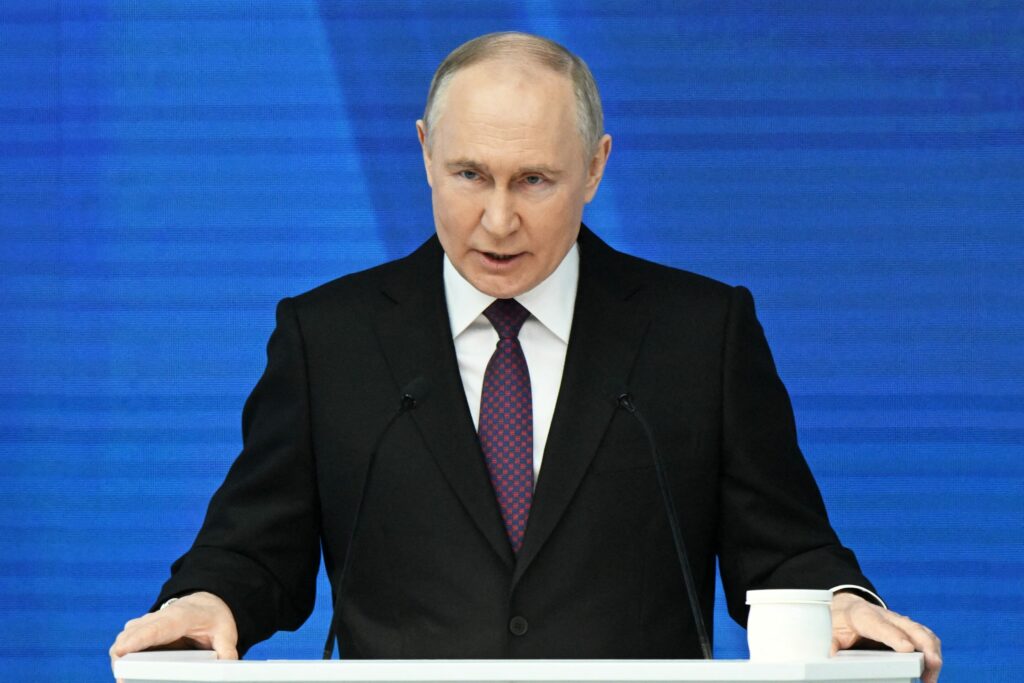
Russia has offered to renew oil and gas supplies to Europe, based on a new "long-term" cooperation which would include not putting political pressure on Moscow, President Vladimir Putin said on Monday.
Oil prices have surged after the US-Israeli attack on Iran, launching a global energy crisis as almost all the supplies passing through the Strait of Hormuz were halted, and multiple refineries across the Middle East ceased working.
The second week into the conflict, oil prices surpassed $100 a barrel for the first time since Russia launched its all-out war on Ukraine in 2022.
"If European companies and European buyers suddenly decide to reorient themselves and provide us with long-term, sustainable cooperation, devoid of political pressures... We've never refused," Putin said.
Speaking at a meeting with government officials, he also confirmed that Russia will continue to supply oil to "reliable" partners in Asia, as well as Hungary and Slovakia, who have been the most reluctant EU Member States to reduce imports.
In light of the Middle East conflict, the EU has expressed concern over energy prices surging. However, a spokesperson for the European Commission confirmed on Monday that the bloc has no imminent threat of stock shortage.
The EU has systematically been reducing its dependence on Russian energy resources, with a complete ban on gas to hit in late 2027, and a phase-out of oil imports no later than the end of 2027. As a result, Russia has had to sell more oil and gas supplies at steep discounts to Asia.
Happy Hungary?
Moscow's comments have come soon after the Hungarian Prime Minister Viktor Orbán called on the EU to suspend sanctions on Russian oil and gas to counter soaring prices.
Orbán has been in confrontation with the EU over the bloc's policy on the Russian energy phase-out, making energy security the focus of his campaign ahead of the parliamentary elections in Hungary in April.
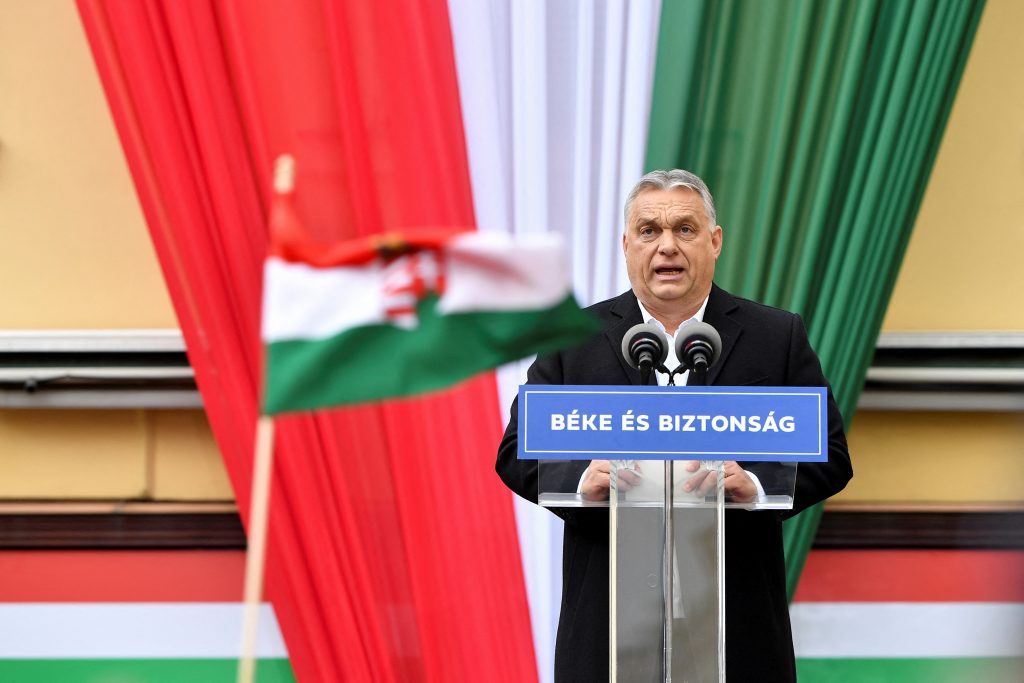
Hungarian Prime Minister Viktor Orbán. Credit: Belga
He has also blocked new EU sanctions on Russia and a €90 billion loan for Ukraine over deferred Druzhba pipeline repairs, which Russia hit in a missile strike in January.
Speaking to EU ambassadors in Brussels on Tuesday, EU Council President António Costa said that Russia has been the only winner of the Middle East conflict.
"[Russia] gains new resources to finance its war against Ukraine as energy prices rise. It profits from the diversion of military capabilities that could otherwise have been sent to support Ukraine. And it benefits from reduced attention to the Ukrainian front as the conflict in the Middle East takes centre stage," Costa said.
