
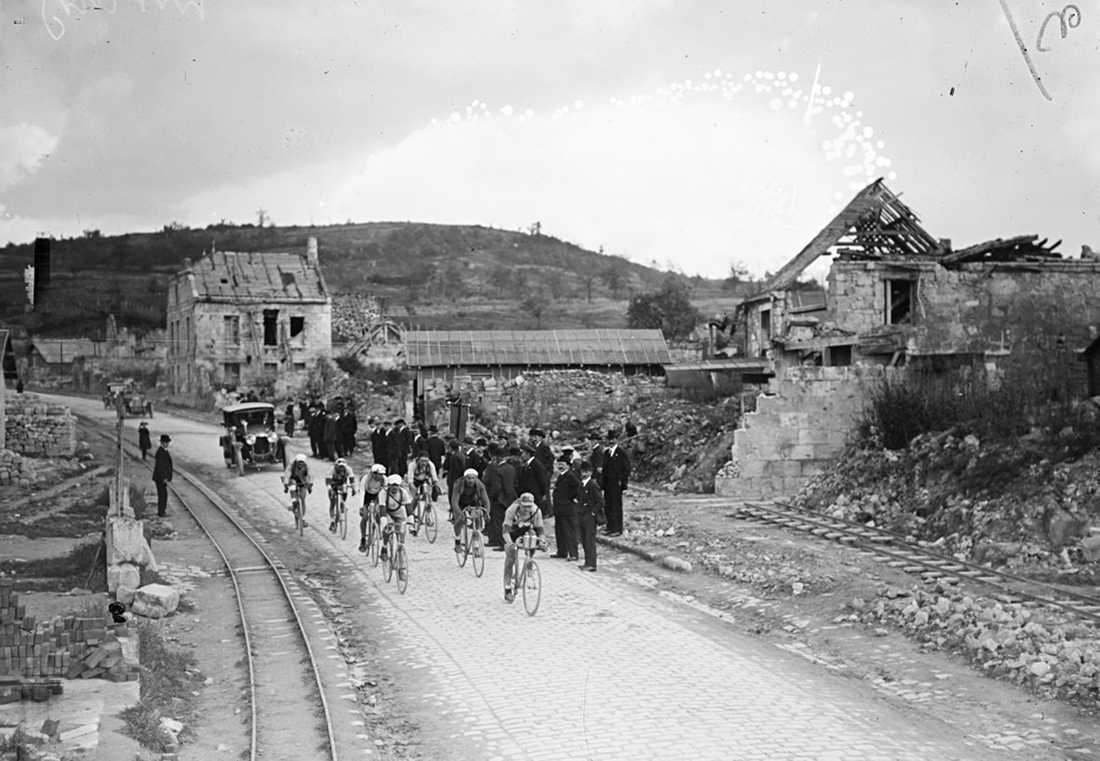
As the Great War ground to a halt in November 1918, leading French newspaper Le Petit Journal began planning a series of sporting events to celebrate the end of hostilities and the Allied victory.
Centred around the newly liberated city of Strasbourg, the sporting events were to include running races, swimming races, an air race, and a cycle race. Before the war, when newspapers were the only form of mass communication, they regularly organised sporting events to boost circulation. The Tour de France and Giro d’Italia bike races, probably the most famous examples, and organising newspapers expected to treble or even quadruple their circulation when these events were on.
With this in mind, Le Petit Journal planned a bike race across the battlefields of Belgium, Luxembourg and France. The Circuit des Champs de Bataille would take place over seven stages, with a rest day between each stage, running in an anticlockwise direction from Strasbourg to Luxembourg, then Brussels, Amiens, Paris, Bar-le-Duc, Belfort and back to Strasbourg. The route would not only include the newly reclaimed Alsace and Lorraine regions, but also cross the significant battlefields of Passchendaele, Cambrai, the Somme, the Marne, Verdun and the Vosges.
Each stage was around 300km in length, a distance that would typically take the riders around 12 hours to complete.
What the organisers didn’t realise is that the war had caused far more damage to north-eastern France and western Flanders than anyone realised. The race was also to start in late April 1919, which made it vulnerable to the weather.
However, the organisers’ plans turned out to be hopelessly optimistic, and their carefully planned race rapidly unravelled on terrible roads and in appalling weather.
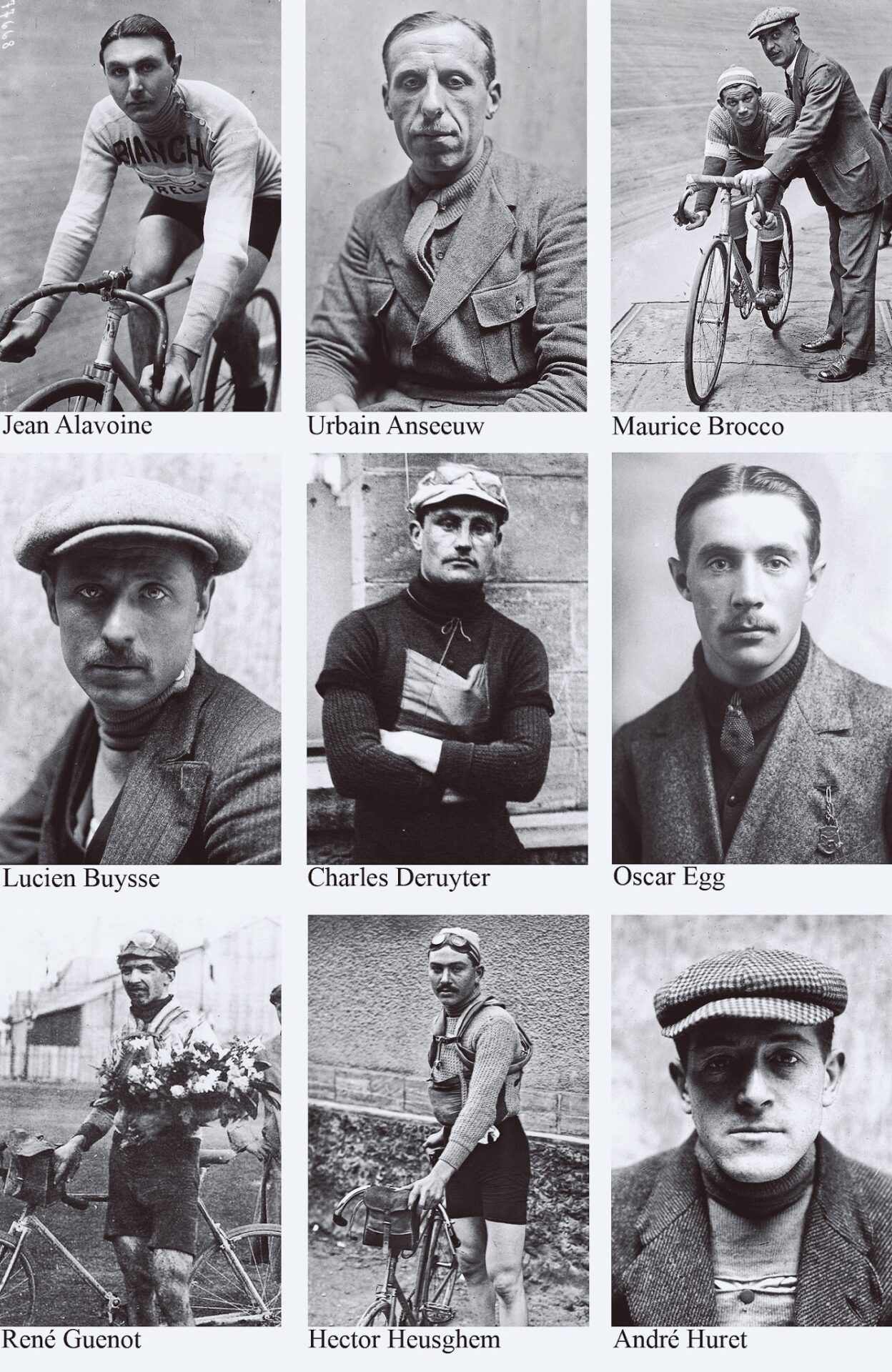
Eighty-seven riders lined up for the start in Strasbourg on April 28, 1919. Among those were some very well-known riders, including Jean Alavoine, winner of 17 Tour de France stages; Charles Deruyter, Belgian star of the 1913 Paris-Roubaix; and Paul Duboc, who was deliberately poisoned during the 1911 Tour de France. The prize money for the race was equivalent to several years’ wages for a working man, so riders were naturally keen to compete.
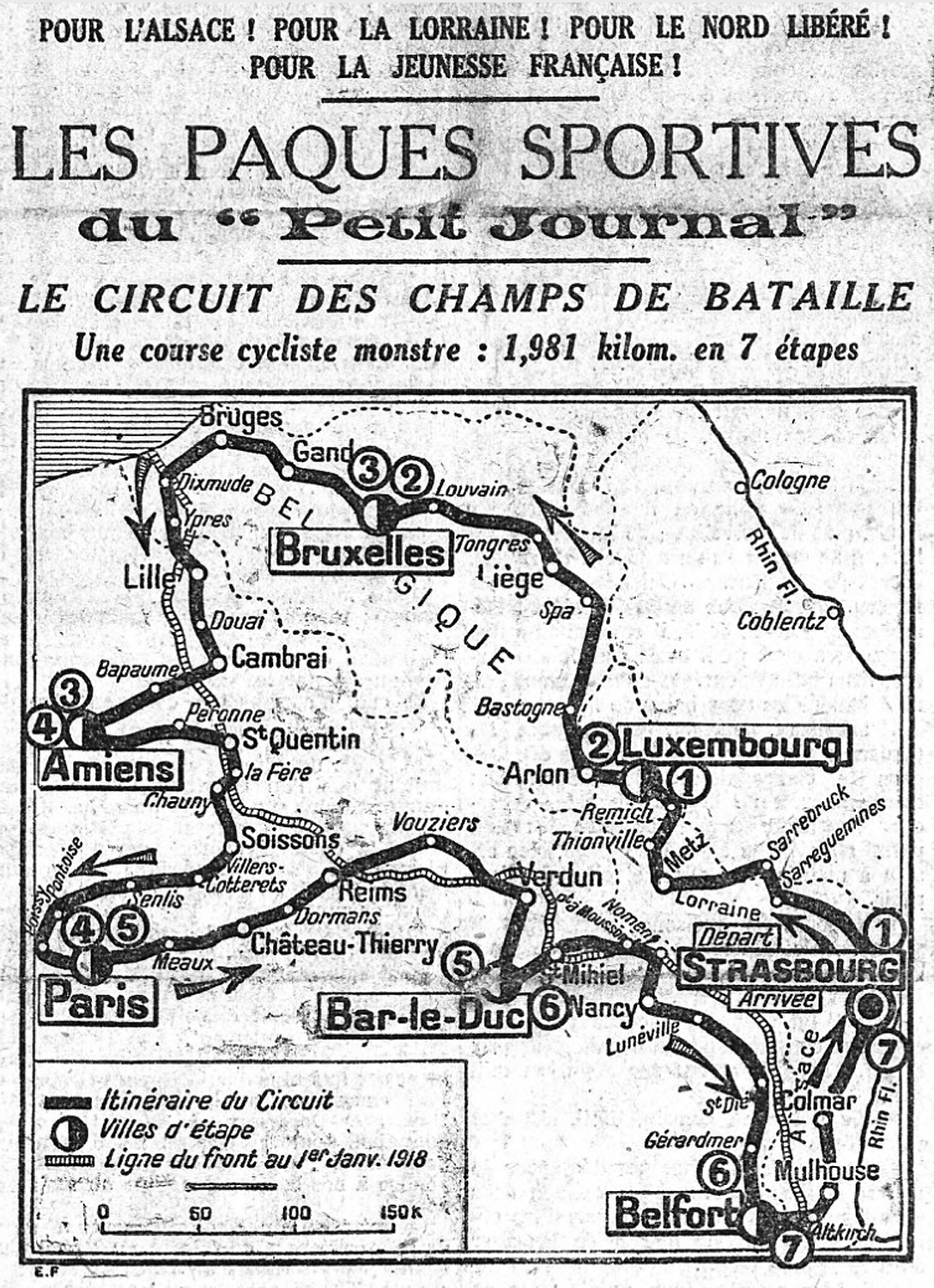
Le Petit Journal announcement for the Circuit des Champs de Bataille - the WW1 battlefield bike race
Inhuman racing
The first stage from Strasbourg to Luxembourg went reasonably well, but by the time the peloton reached Metz, a strong wind had sprung up, bringing flurries of sleet on the wind.
Thick snow was falling as Swiss rider Oscar Egg (yes, that really was his name) struggled to the finish in Luxembourg, followed a few minutes later by Van Hevel and Buysse, who had surrendered a 16-minute lead when they lost their way. The riders were given the most basic route instructions and often got lost.
Belgian rider Albert Dejonghe won the second stage in appalling conditions, and 30 minutes later the spectators were treated to the startling sight of Charles Deruyter pedalling across the finish line wearing a full-length woman's fur coat, which his wife had given him to keep out the cold. Most riders raced in a pair of woollen shorts, a woollen jumper, and a waxed-cotton jacket, but this was wholly inadequate when temperatures dropped below freezing and a metre of snow fell on Northern Europe in late April.
Setting off at 4.30am from Brussels, and expected in Amiens at 3pm, Stage 3 saw the riders race across the battlefields of Ypres, Artois, and the Somme. Scarcely five months after hostilities ended, the riders were required to negotiate 323km of this brutalised land in temperatures barely above freezing. One commentator was moved to describe the race as “inhuman”.
Many riders were recently demobbed soldiers, and one wonders what they must have been thinking as they rode through the ruins of the Menin Gate in Ypres, negotiated Hell Fire Corner and struggled up the Menin Road, past the vast mine crater at Hooge and the blasted remnants of Sanctuary Wood. Away to the right, Messines Ridge, to the left, the distant pile of shattered bricks that once was Passchendaele. Half a million men fought and died in these "fields".
The wind was now so strong that it blew direction signs away and brought down telegraph poles. Now the riders had no way of knowing which way to go, and the organisers were no longer able to keep track of the riders along the route.
The Circuit des Champs de Bataille had turned from a bike race to an exercise in survival. At times, the average speed of the leading riders was 7km/h, and two riders took a wrong turn leaving Douai, rode for six hours in the freezing rain, then found themselves back in Douai.
Either side of the muddy, slippery roads, the remains of war were everywhere – blasted tree stumps, fields obliterated by shelling, concrete bunkers, mine and shell craters, and wrecked gun carriages. It was a hellish landscape, battered by appalling weather.
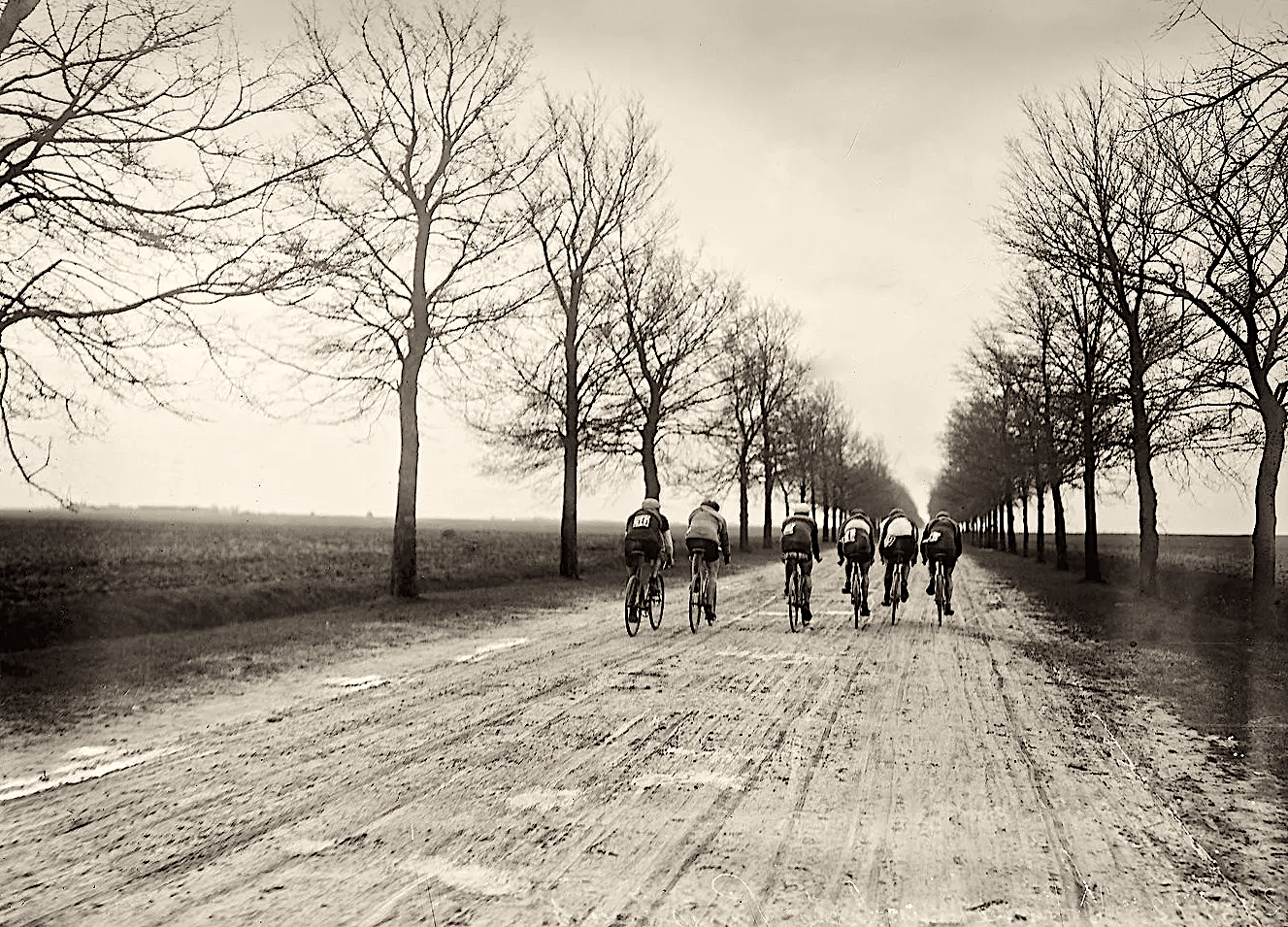
The 1919 bike race on the First World War battlefields
Unsurprisingly, with very little official scrutiny in evidence, some riders were tempted to bend the rules, and on this stage, there appeared to be wholesale cheating. Riders got trains, and thumbed lifts in cars and trucks. One rider was recorded as being in fifth place on the road at the penultimate checkpoint but was in 24th when he arrived at the finish, despite no riders having overtaken him. The organisers were pretty sure that cheating was going on, but they also wanted to keep their race going and so turned a blind eye to most of it.
Eighteen hours and 28 minutes after he set off from Brussels, Charles Deruyter crossed the finish line in Amiens. The man who finished in fifth place arrived at 8.00 the next morning, having spent an uncomfortable night sheltering in a trench somewhere on the Somme battlefield.
The last-placed finisher took 36 hours to complete the 323km stage. Imagine riding your bike almost non-stop through mud and freezing rain for 36 hours! Many riders, overcome by the sheer difficulty of racing under these conditions, threw in the towel and retired from the race.
Home straight
If Stage 3 was the important one for the Belgian riders, Stage 5 from Paris to Bar-le-Duc was the important one for the French riders. This stage crossed the Marne, Champagne and Verdun battlefields. Verdun had always been important to the French, and in 1916, a million French soldiers stood toe-to-toe with a million German soldiers and fought a desperate war of attrition in the forests and valleys around Verdun.
At the checkpoint in Verdun, the 21 riders that remained paid their respects to their fallen comrades and turned south on the Voie Sacré, slipping and struggling through the carnage, as cold and muddy as the soldiers that fought for their lives there a couple of years earlier.
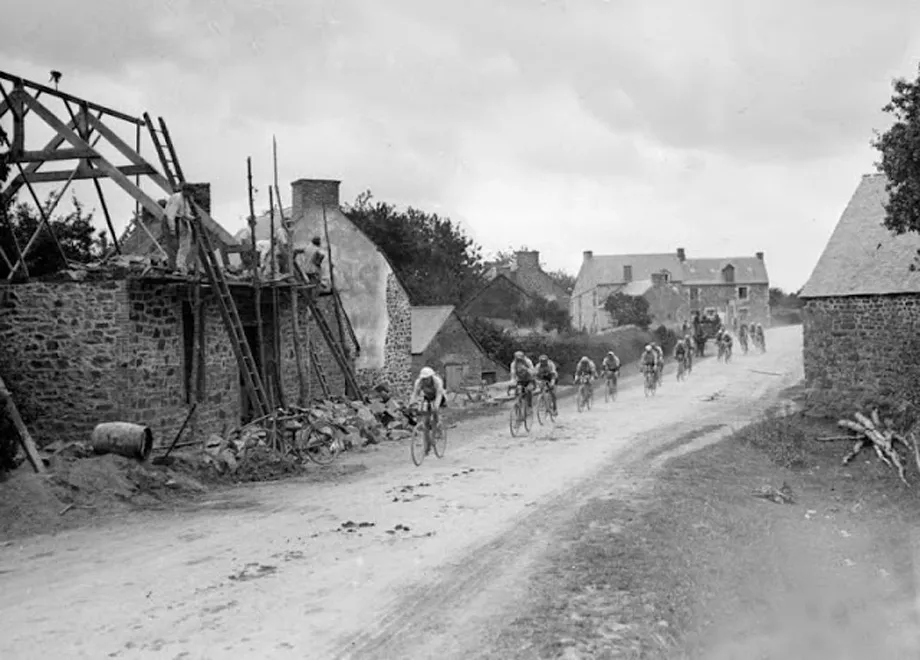
Photo from the First World War battlefield bike race in 1919
The race was now on the home straight, with the climb over the Ballon d'Alsace on Stage 6 representing the last remaining obstacle. Snow started to fall in the Vosges, and by the time the riders reached the foot of the Ballon, the weather was terrible. Slipping and sliding in the snow and ice, the riders resorted to carrying their bikes as they battled towards the summit through waist-deep snow.
On the final stage, Deruyter put in a huge effort and took off on a long breakaway, which he maintained all the way to the finish. Leader on the road, and leader of the race, he crossed the finish line in Strasbourg to the acclaim of a huge crowd that had gathered to see the exhausted remnants of the peloton struggle home.
The Circuit de Champs de Bataille returned one more time in 1920, but as a poorly attended single-stage day race. The logistical problems of putting on a multi-stage race in a part of Europe that had almost no infrastructure were far greater than anyone had expected, and a race plagued by terrible weather and blatant cheating was allowed to slide into obscurity.
All of the above would have been fine for the organisers, but for one thing: halfway through the race, the terms of the Treaty of Versailles were announced. This news pushed the race off the front pages and rendered it an irrelevance, because all anyone wanted to know was how the Germans were going to be made pay for plunging Europe into war. Despite all that effort, the race didn’t produce the boost in circulation they were hoping for.
When Tom Isitt “rediscovered” the Circuit des Champs de Bataille, he decided to write a book about it, and as part of his research he rode the route of the race on his bicycle 100 year later. That book, Riding in the Zone Rouge, by Tom Isitt, is published by Weidenfeld & Nicolson.
